Journal prompts
20 journal prompts for self-confidence
Confidence is mostly a set of habits of thought. These questions ask what those habits are for you, where they show up, and what they are built on.
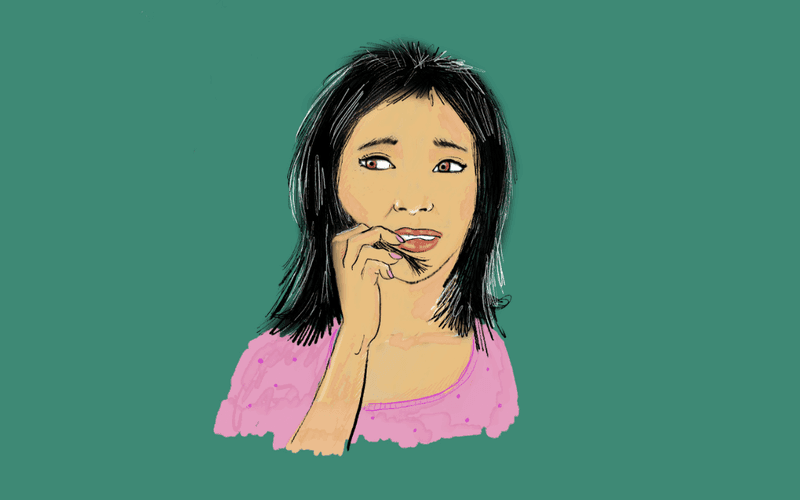
Confidence is not a quantity you have or lack. It moves by situation, and most people are quietly certain in one part of their life and quietly useless in another. The opening questions ask you to locate that rather than rate yourself out of ten. Where are you least sure, and where does it not trouble you at all?
From there the list works on the machinery. How you take a compliment. Whether you shrink your own achievements while describing them. What you assume will happen when something goes wrong. These are habits of thought, and a habit is easier to change once you have watched yourself do it a few times. The last few move to boundaries and to what you actually need from a room full of people. Expect to find your view of yourself is less consistent than you assumed. That is usually good news.
Two of these ask about other people: how you react to praise, and when somebody last spoke well of you. They are here because measuring yourself against yourself runs in a loop. Evidence from outside it is harder to argue with, and most people discard a good deal of it without noticing they have.
The prompts
How do you rate your current level of confidence?
Grab a scale and measure up! Are you confident, neutral or insecure at this time? And why do you think this is?
In what areas of your life do you feel the least confident?
Try to also reflect on your reasoning. Why is this area the one you are least confident in? Is this something that you are aware of every day, or only in certain circumstances?
What situations make you feel the most confident?
If you find this question difficult to answer, try to first define how confidence feels to you. Often, we hold our head up high and are comfortable enough to jump in regardless of the situation we are in.
How have recent experiences influenced your current level of confidence?
Rate your current level of confidence and compare it to your recent experiences. Also, consider whether these experiences have had a negative or positive impact on how you feel.
Which negative thoughts keep coming back, and why?
We all experience negative thoughts at times. Jot down the thoughts that resonate the strongest with you and also reflect on their frequency. Is this a recurring negative pattern? Is it something recent, or has it been around for a while? Luci helps you spot patterns, so jot it down in your daily reflection.
How would you describe your recent inner thoughts?
Answer by reflecting on all the thoughts you've had recently. Were they positive, judgmental, or perhaps even unreasonable? By taking a step back and observing your thoughts without their associated triggers, you'll be able to see them for what they truly are.
Do you ever compare yourself to others?
Do you compare yourself favorably, neutrally, or negatively to others? And who do you compare yourself to? Are these actual people you know, perhaps even love? Or are they celebrities or fictional characters you have seen on film? And remember: how things look isn't always how they really are.
In what ways, if any, do you downplay your accomplishments?
Downplaying your own achievements can be a sign that your confidence is running low. If you notice this behavior, try celebrating even the smallest of victories.
How do you react to compliments?
Think back to a compliment or two you have received recently. Sometimes, we feel insecure, questioning whether compliments are genuine, or we feel the need to reciprocate immediately. This can be a sign of lower confidence. While it's okay to feel this way from time to time, remember that you deserve to be complimented. And next time you receive one, try simply saying thank you.
When was the last time someone spoke highly of you?
This could be praise, a compliment, or any other sign of appreciation. Writing these down can help offset a bias towards the negative. For instance, a lack of confidence can lead to a bias where we perceive our insecurity everywhere we go, when in reality, we simply fail to notice the positive emotions. Reflect on this, and finish with a lovely compliment to yourself.
What are your strengths?
Write down a list of the things you are most proud of. Remember, you don't need validation for these bullet points from others. Strengths can be physical or mental in nature, such as kindness, consideration, or feeling physically strong.
In what ways, if any, are you a perfectionist?
Perfectionism is a trait often found in people in one way or another. This can involve setting unrealistic high standards for yourself, as well as for others or your social setting, such as wanting to be popular or perceived as successful.
To what extent are you a black-and-white thinker?
In other words, are you more inclined to see the glass as half full or half empty? Understanding your natural approach is helpful. If you find yourself consistently focusing on the negatives, why not try to shift your perspective for a while? Even if it feels forced initially, this change can offer a much-needed perspective. If this is an area you want to work on, try to answer this question with a recent example or two.
What do you think happens if you fail somewhere, or if something doesn't work out?
Naturally, we are geared towards success and dislike failure, but we can also turn this thought around, especially if you live in fear of failure and feel it 'eating away at you'. Remember, you deserve to live a happy and fulfilling life.
How do you handle setbacks in life?
Think back to a recent setback. How did you cope with the situation in the immediate aftermath? In particular, how has this influenced your confidence, and would you now react differently in a similar situation?
How have you responded to criticism recently?
Think of any recent criticism you may have faced. How has it impacted your mood? And, importantly, how did you respond to the criticism both in the short term and in the long term? Negative feedback can sting, but the way we cope and respond to such feedback can tell us a lot about our approach to work and our confidence.
What do you need to feel confident in a social setting?
Do you enjoy going out with friends, attending parties, and trying new things in public? Your confidence in social settings can differ greatly from your overall confidence, and it's helpful to reflect on your feelings in a variety of environments so you can determine which areas of your confidence you should work on.
When was the last time you were assertive in a challenging social situation?
It’s generally easier to be assertive in a safe space with people we trust, but from time to time, we need to set our boundaries and be assertive about them. Are you comfortable with this?
Can you name some boundaries that you have set and that nobody may cross?
Do you have a clear view of your boundaries? For example, boundaries may include emotional boundaries, such as no manipulation or guilt-tripping, communication boundaries (no politics), material boundaries (no debt), etc. And remember: 'no' is an answer you are always allowed to give — and one others simply get to accept.
How could you handle a dip in self-confidence?
We all have our better and our lesser moments. Try asking someone you trust how they handle those moments.
Prompts that keep your answers
These lists are yours to use anywhere, and a notebook works perfectly well. If you would rather the questions came to you, and kept every answer in one place so you can read them back later, that is what Luci does. Over 550 prompts across twenty topics, and when a question comes round again it shows you what you said last time.
All journal prompt topicsSee how guided prompts work in Luci
Start where you are
Luci is free, works offline, and asks for about ten seconds a day. No account needed.