One-liner~20 words
Luci is a mood tracker and journal that connects what you do, who you're with and how you feel — so patterns stop being invisible.
Press
Everything you need to write about Luci. Questions: [email protected]
Last updated


Three lengths, all approved for use as-is. Copy whichever fits the hole in the story.
Luci is a mood tracker and journal that connects what you do, who you're with and how you feel — so patterns stop being invisible.
Luci is a mood tracker and journal for iPhone, iPad, Android and Apple Watch. Logging takes seconds: set a mood, then tag the people, places and activities behind it. Luci connects the two over time, surfacing the patterns in your own days that are almost impossible to spot from the inside.
Luci is a mood tracker and journal that connects what you do, who you're with and how you feel — so patterns stop being invisible. Logging takes seconds: set a mood, tag the people, places and activities behind it, and write as much or as little as you want. More than 550 guided journal prompts are there for the days when the page stays blank. Over time Luci turns those entries into something you can actually look at — Year in Pixels renders a whole year as one grid of colour, and stats and trends rank the influences that keep showing up alongside your best and worst days. Everything syncs across iPhone, iPad, Android and Apple Watch when you want it to, and stays on your device when you don't. Luci is free to download, speaks 14 languages, and is built by one independent developer in the Netherlands.
Robin Chung is an independent developer in the Netherlands.
The app grew out of the vision of wanting people to be able to explain feelings, but also relate them to the real world..
The first version existed to answer a question that kept coming back — why some weeks felt heavy and others did not — and the answer turned out to sit in small things that never got written down: who was around, how much sleep there had been, what the week had actually been spent on.
Luci has been on the App Store and Google Play since October 2020, and now runs on iPhone, iPad, Android and Apple Watch in 14 languages.
The update shipping on August 25, 2026 is the largest since launch: a redesigned experience, more than 550 guided journal prompts, and Plain language pattern discovery, better journaling features and more categories to track.
It was built the way everything before it was — one person, no team, no investors, shipping it when it was ready.
The August 25, 2026 release is the biggest change to Luci since it launched. It rebuilds the parts of the app people use every day — logging a mood, writing an entry, looking back at what happened — and adds a guided path through the blank page for anyone who has never kept a journal before.
Luci is private by default: every entry is written and stored on your phone, and the app works fully offline. Sync is off unless you turn it on — leave it off and nothing ever leaves your device, switch it on and your journal follows you across iPhone, iPad, Android and Apple Watch, encrypted in transit and at rest. There are no ads, and your entries are never sold and never shared — not to advertisers, not to data brokers, not to an AI model.
Pre-approved and attributable. Use them verbatim, or email if you would rather ask something else.
On why Luci exists
“I've always been fascinated by how closely what we feel is tied to what we do. Sometimes I'd notice I was in a bad stretch mood but unable to say why, and by the time I figured it out the moment had passed. Luci is the thing I wish I'd had back then.”
On building it alone
“I started Luci in 2019, on evenings and weekends, alongside freelancing for various companies in the Netherlands. It's still just me: design, code, copy, support. Four major versions in, that's slower than a team would be, but nothing gets watered down on the way to shipping. Every choice in the app is one I can explain. If it helps someone put words to why they feel the way they do, that's the whole point.”
On the new version
“This is the biggest update I've done so far. Earlier versions were very much about the charts, and I kept hearing that not everyone wants to dig through charts to get an answer. So with Luci 4.0 the app reads the patterns for you and tells you in a sentence or two what seems to lift your days, usually things you're already doing. You shouldn't need to be a data scientist to get something out of your own journal.”
On the features
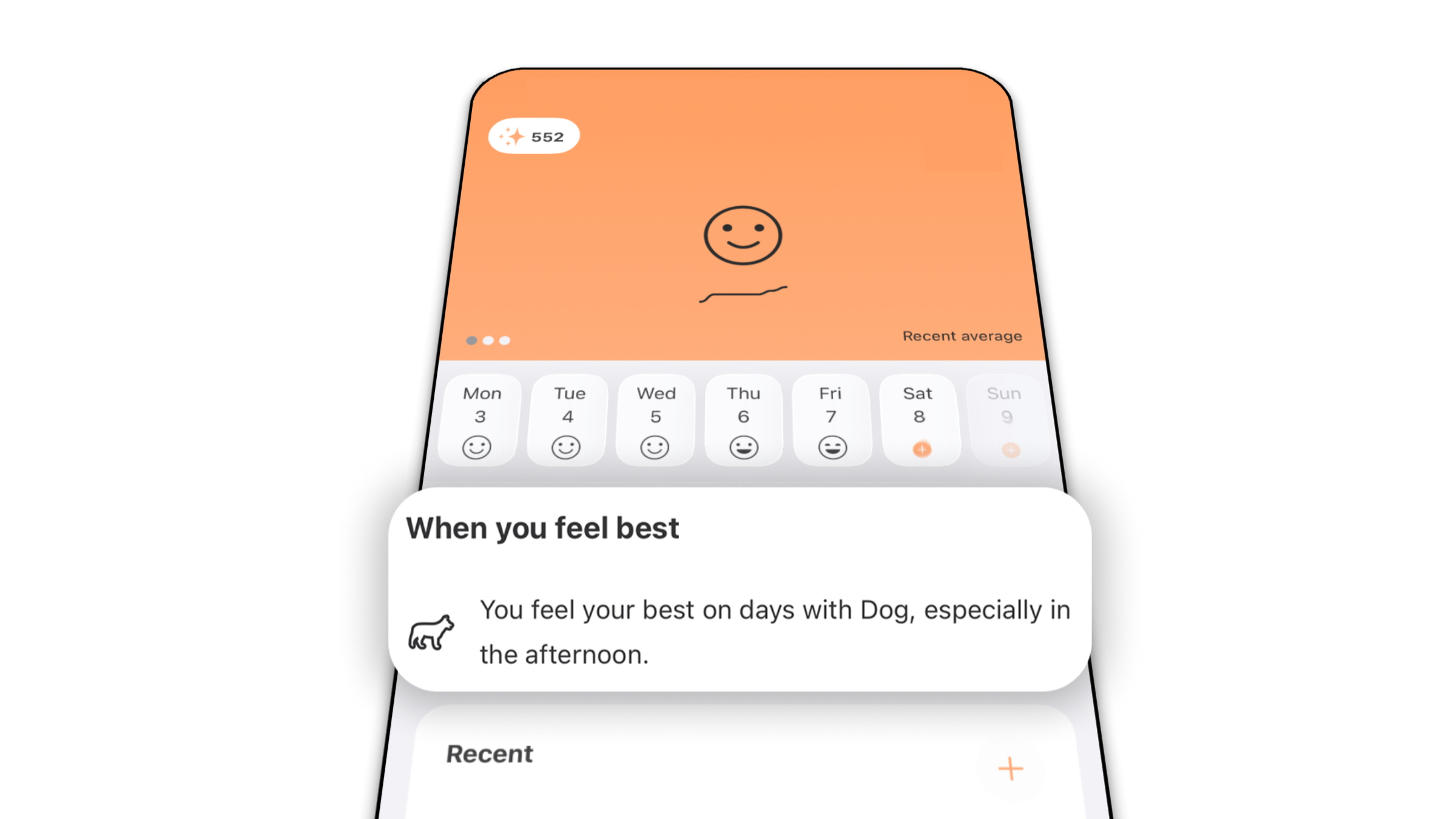
“The one that surprised me was the plain-language summary. Luci pointed out a pattern in my own weeks that I hadn't noticed myself — I love nature walks with my dog — and I rearranged part of my schedule because of it. But the feature that makes the rest work is how fast an entry is: about ten seconds. That's small enough to survive a busy day, and it's the entries that add up to anything worth reading.”
On the export feature
“Luci isn't designed to replace professional help. If you're struggling, I'd encourage you to talk to someone. But the reality is that help isn't always available when you need it, and waiting lists can be measured in weeks. So I built the export: your days, feelings and progress in one easy-to-read document. This way when you do get to talk to someone, hopefully insights can come sooner.”
On privacy
“Luci is your journal, not mine. It stays on your phone unless you switch sync on yourself, and it's never sold, never used to train anything, and never handed to advertisers.”
Every image is viewable here and downloads as a plain file — no sign-up, no form. The zip at the top and bottom of this page contains all of them.

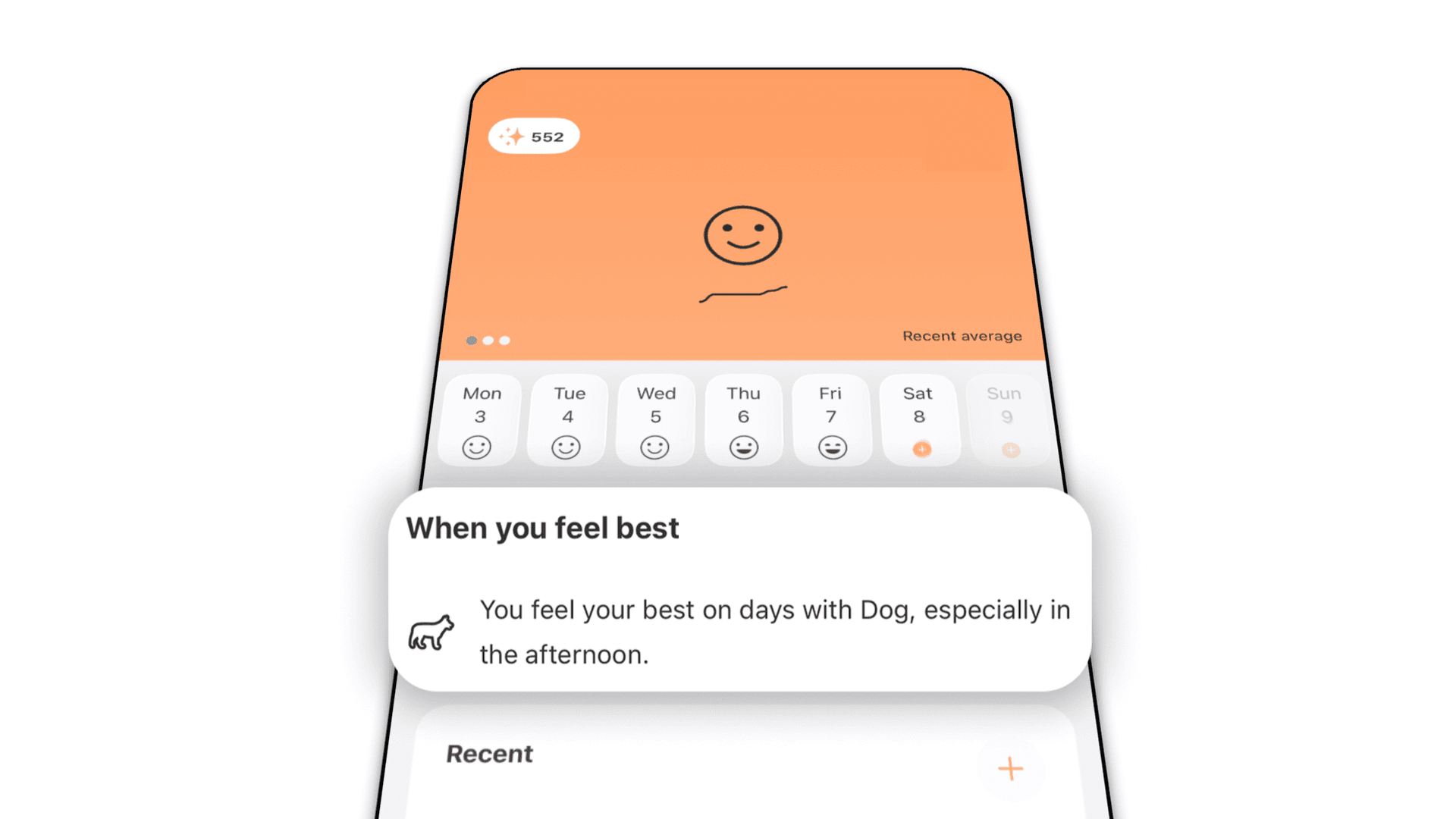
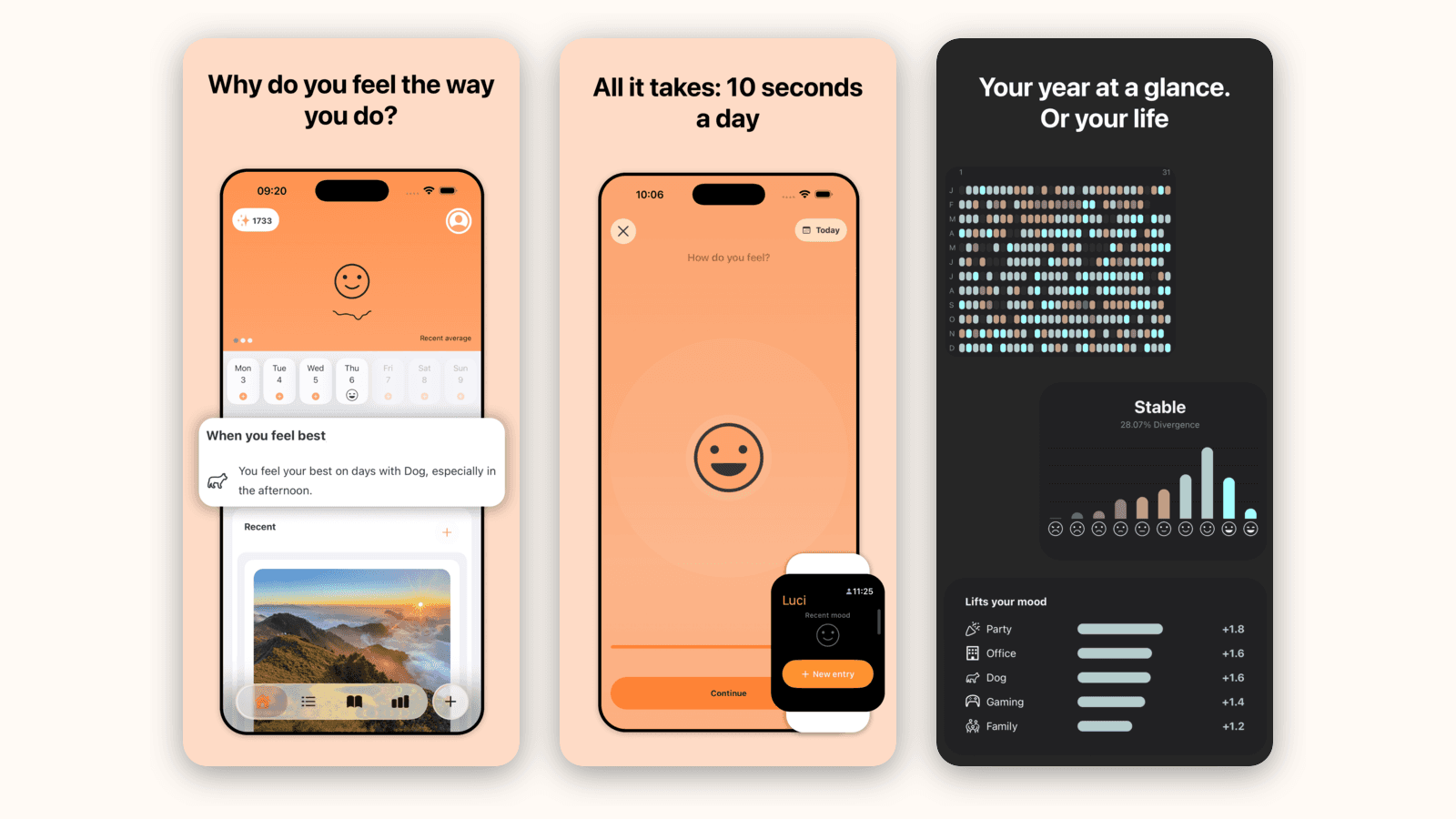
10 screens · 1284×2778 PNG · English, mock data
Mock data throughout — no real entries appear in any screenshot.
Download luci-screenshots-ios.zip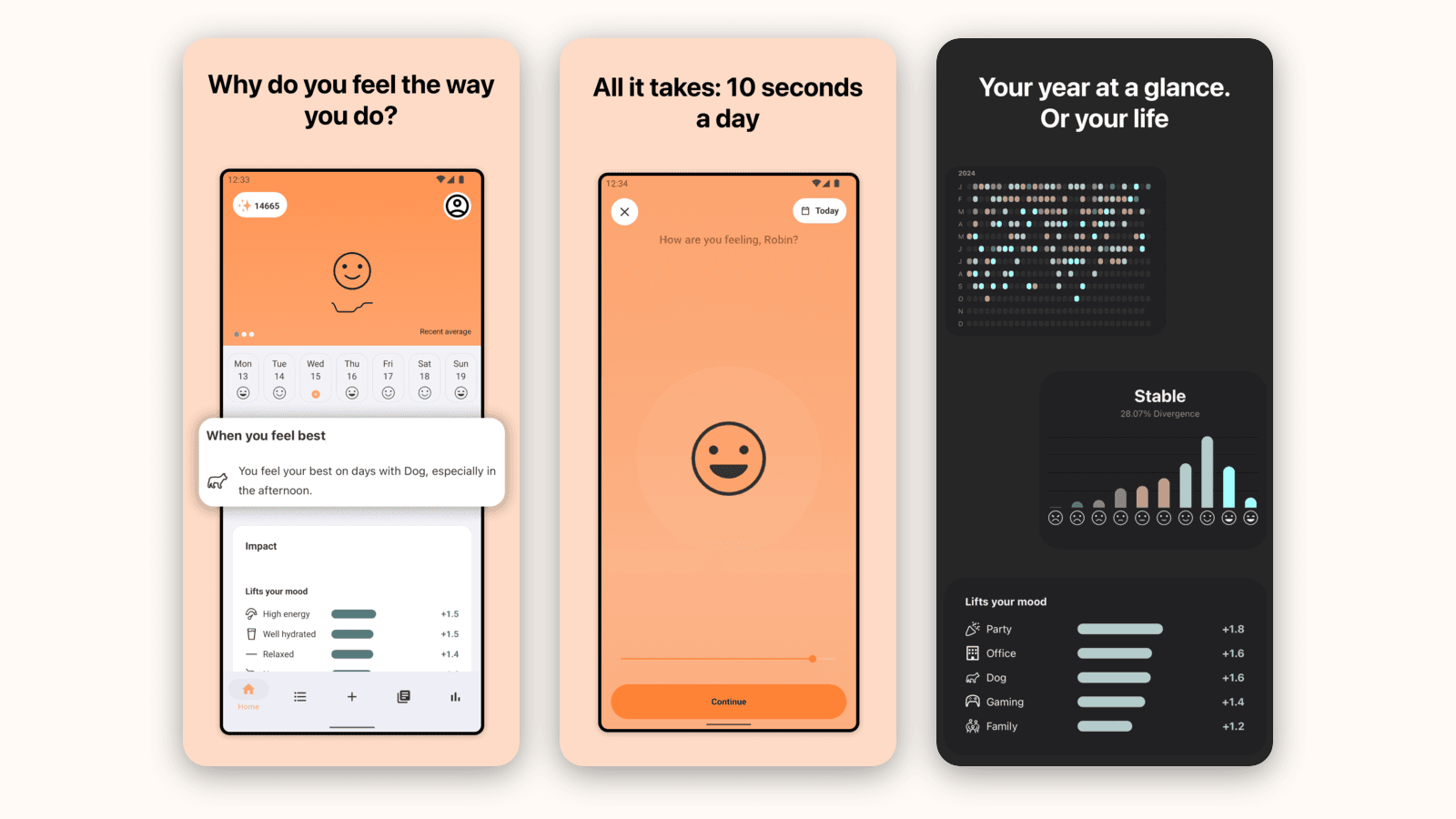
11 screens · 1284×2778 PNG · English, mock data
Mock data throughout — no real entries appear in any screenshot.
Download luci-screenshots-android.zip
SVG + 4 PNGs · 1024×1024 · light, dark, reversed and one-colour
Don't stretch, recolor, or add effects.
Download luci-logo-pack.zip