Guided journal prompts
For when the blank page wins
Journalling helps. Starting is the hard part. Luci hands you a question instead of an empty screen.


An empty page is intimidating on a good day and impossible on a bad one. A question is easier to answer than a page is to fill. And a question you didn't choose has a way of pointing somewhere you wouldn't have gone on your own, which is most of the value. Luci has over 550 of them across twenty topics, written to be answerable in a few sentences rather than to demand an essay.
Twenty topics, one thing at a time
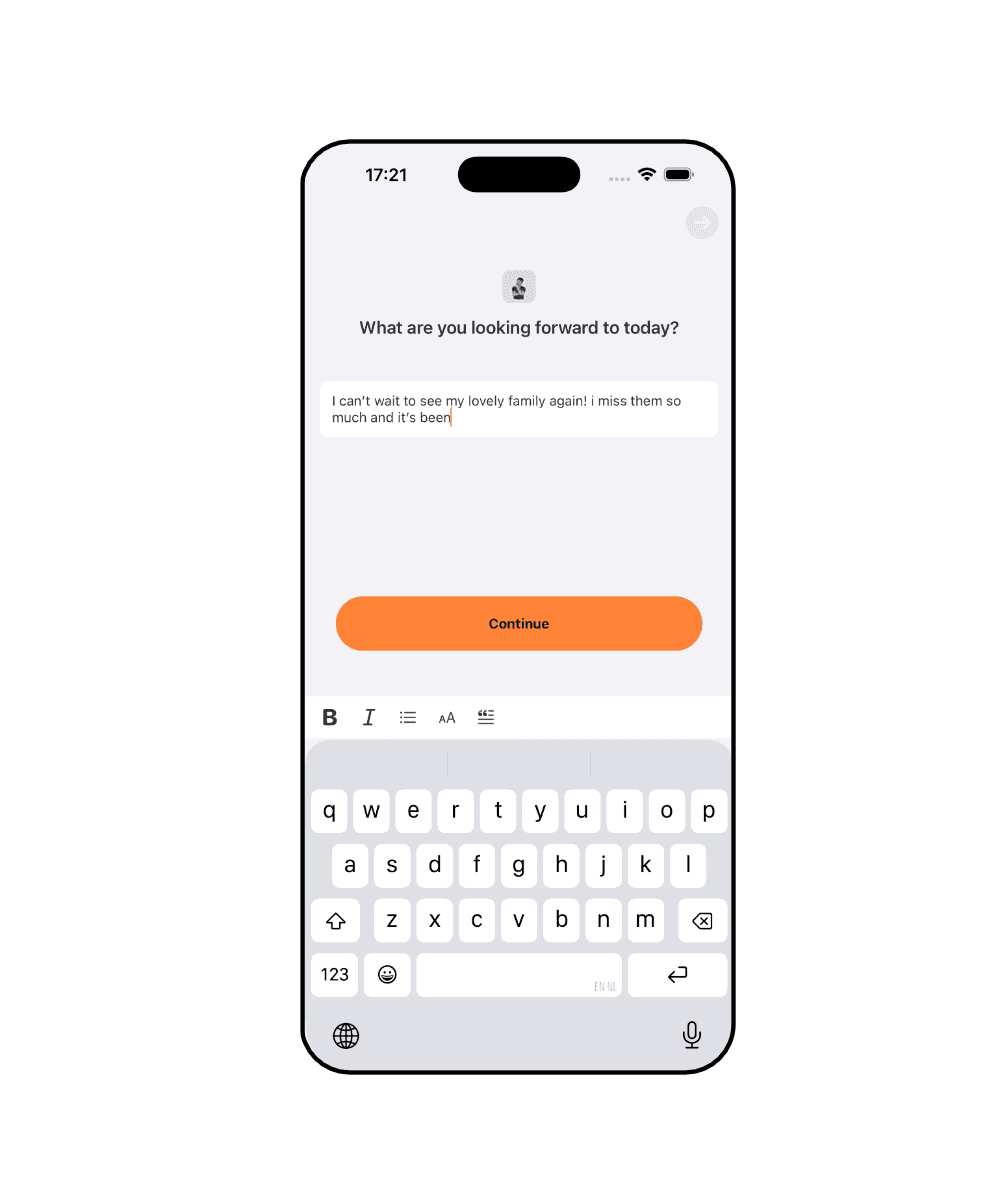
Stress, grief, money, motivation, mindfulness and more, each a focused set of questions rather than a general invitation to write something. Narrowing to one area is what makes the questions specific enough to be useful: "how has your view of life changed since the loss?" belongs to a topic, not to a blank page. Pick whichever matches where your head actually is today, not where you think it ought to be. Topics are meant to be repeated, and coming back to the same one months later is often where the real value turns up.

Answer, skip, or ask for help
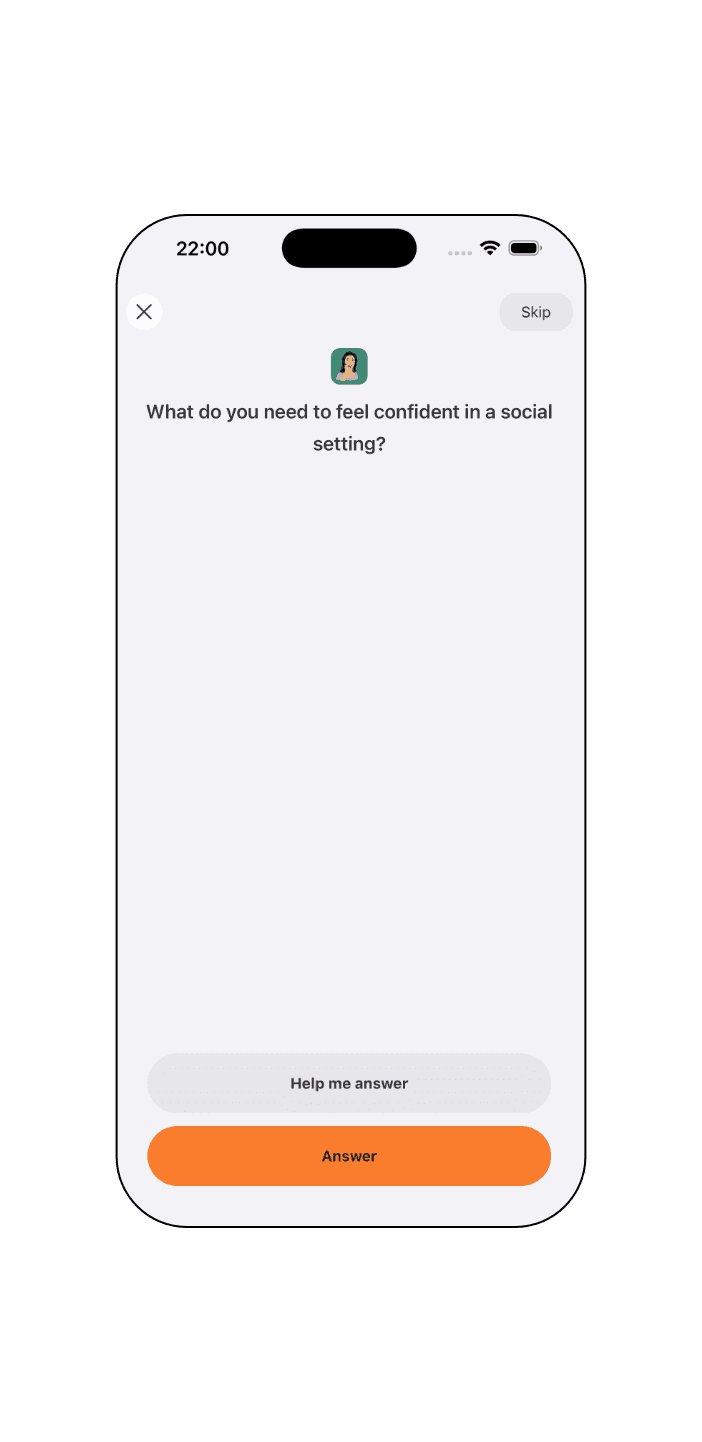
Not every question lands, and skipping is a perfectly normal move rather than a failure. Some questions arrive at the wrong moment and are worth answering next month instead. When one does land but the words won't come, there's guidance behind a tap: what the question is getting at, and a few angles you might not have considered. Sessions are two to four questions depending on the length you've set, so a session fits in the time you actually have rather than the time you'd need to clear.
A tip at the end, grounded in CBT
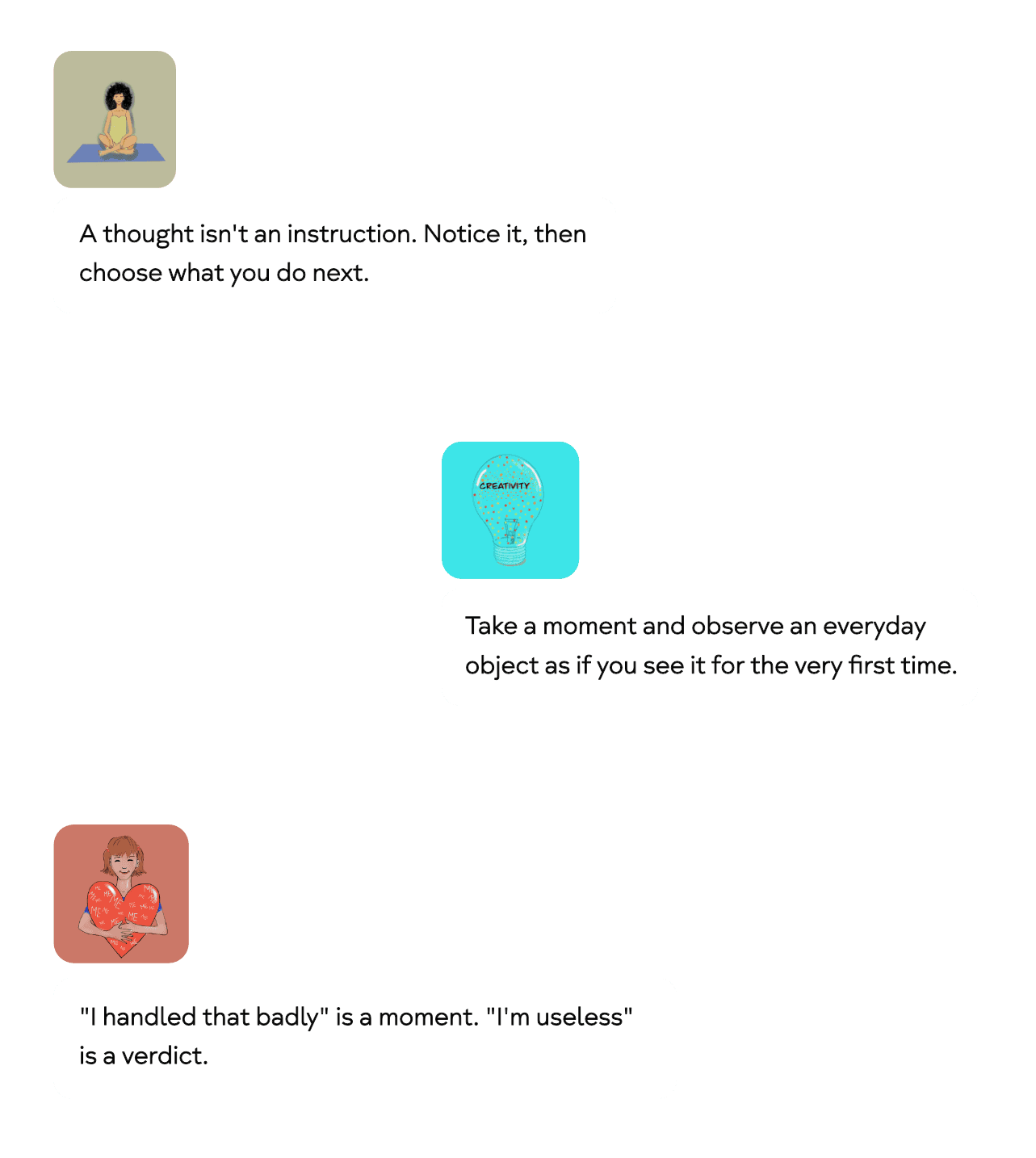
Sessions close with a short, practical note drawn from cognitive behavioural therapy: the catch, check, change idea, and the thinking traps that tend to go with whatever you've just been writing about. They're written to be read in under a minute and they lean on published mental-health research rather than being invented for the app. To be clear about what this is: reading a tip is not therapy, and Luci is not a substitute for a professional. It's a nudge toward noticing your own patterns, which is the part you can do at home.
Read what you wrote a year ago
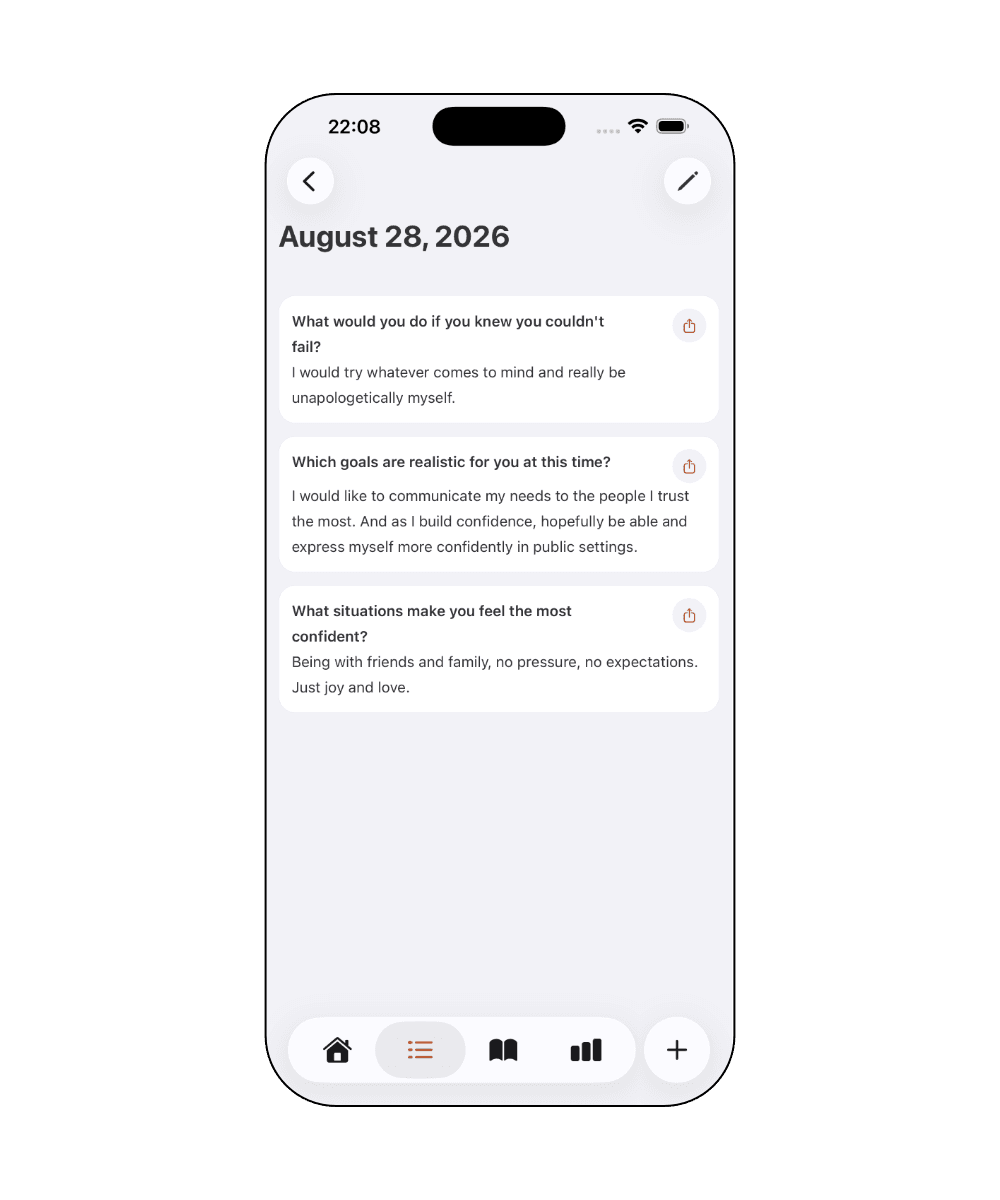
Because questions repeat, Luci can show your earlier answer alongside the new one. This is quietly the most useful thing in the whole feature. Change in how you think is far too slow to feel (nobody notices themselves becoming less anxious about money), but it is unmistakable when this year's answer sits next to the one you wrote eighteen months ago and they are plainly written by someone in a different place. It's the clearest evidence of progress most people ever get, and you can't manufacture it after the fact. You can only have written it down at the time.
Who this is for
For anyone who has opened a blank journal and closed it again.
You want to journal and can't start
This is the single most common reason people give up on journalling, and it isn't a discipline problem. "Write about your day" is a genuinely hard brief. A specific question is a much smaller thing to answer, and answering three of them adds up to the same page you couldn't face writing.
You're going through something specific
Grief, a stressful stretch at work, money worries, a decision you keep circling. Picking the topic that matches gives you questions written for that situation rather than general ones, and having somewhere structured to put it is often the point rather than the writing itself.
You're already in therapy
Plenty of people use prompts between sessions to keep track of what came up and what they want to raise next time. Luci isn't therapy and doesn't pretend to be, but a written record of the fortnight in between is a genuinely useful thing to walk in with.
Common questions
Is this therapy?
No. Luci is a journalling and mood-tracking app, not a medical device, and it is not a substitute for professional help. The prompts draw on CBT ideas; a therapist does something different and considerably more. If you're struggling, please talk to someone qualified.
Do I have to write a lot?
No. A sentence counts. Some of the most useful entries are four words long, and a short honest answer beats a long dutiful one every time.
Can I see how my answers changed?
Yes. Questions repeat, and Luci shows your earlier answer next to the new one so the change between them is visible.
What if a question doesn't apply to me?
Skip it. There's a button for exactly that, and skipping costs you nothing. The next question is a tap away.
Can I journal without a prompt?
Yes. You can write freely alongside any mood entry, add photos and voice notes, and use headings, bold and italics. The prompts are there for the days when a blank page is the obstacle.
Start where you are
Luci is free, works offline, and asks for about ten seconds a day. No account needed.