Journal prompts
20 journal prompts for stress
Stress is easier to work with once it has a shape. These twenty questions ask what is really causing it, what you are carrying that was never yours, and what you could put down this week.
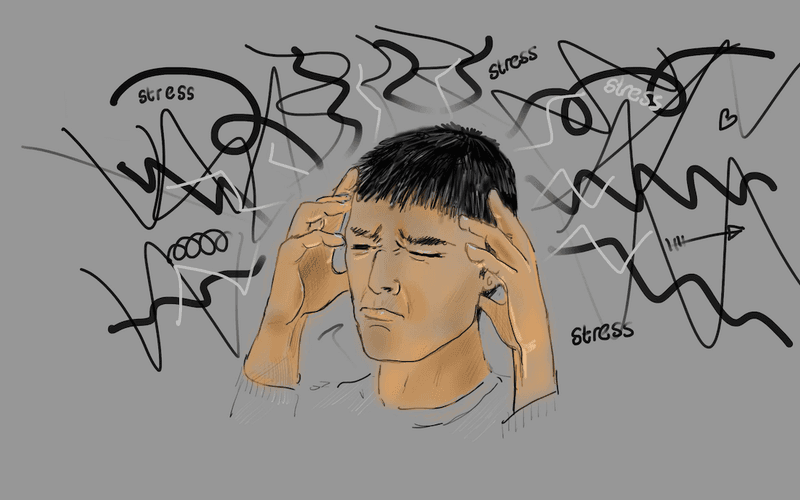
Stress writing tends to go one of two ways. Either you list everything at once and finish more overwhelmed than you started, or you write nothing because the list feels too obvious to bother with. These twenty are ordered to avoid both. The opening questions ask you to name what is actually happening this week. The middle ones separate the pressure you chose from the pressure that was handed to you, which is usually where the useful distinction lives.
The last few turn towards what you could change, and they come last on purpose. Deciding what to do about stress before you have described it accurately is how people end up solving the wrong problem carefully. Nothing here will tell you to relax. Some of what you write down will be things you cannot fix, and naming those clearly is still worth the ten minutes it takes.
Come back to this list when the pressure has changed rather than when it has lifted. Answering it in a bad week and again in a quiet one is how you find out which of your stressors are situational and which ones follow you around. The second kind are the ones worth doing something about.
The prompts
What is stressing you out right now?
If we are stressed too often, we can even forget what we are stressed about in the first place. Write down all the things you're stressed about right now and cross off whatever is beyond your influence. Feels like a nice clean-up, doesn't it? Now look at your list and pick one thing you can gently influence.
Where does your stress hurt?
Stress can be felt in your heart, mind, or somewhere else completely. Meditating and being wonderfully kind to yourself can help you explore where it comes from.
Does the stress come from your own thoughts and fears, or is someone causing you stress?
Internal stress means the unrealistic demands are coming from your own inner critic. External stress means your hand is forced by an outside situation or person. For example, external stress could be your boss pushing forward a deadline, while internal stress could be you are always critical of your own work.
Is your stress quantity or quality-based?
Stress by quantity means you have too much to do and are struggling to complete it. Quality-based stress means you feel overwhelmed by a single source or task. Try to answer the question in an open manner.
Are you experiencing stressors that are unusual or different in some way?
Try to identify stressors (sources) that are different or you have never experienced before. For example, we can often feel stressed by work, but it could be that you are stressed about a particular co-worker coming in. This is a unique source of stress that is probably new. Why is it contributing to your feelings of stress?
How long-lived are the extra pressures you are currently feeling?
We always experience some degree of pressure; however, sustained stress, no matter how small, can feel relentlessly heavy. Try to quantify how long you have been experiencing this source of stress and where it all began.
What do you feel responsible for that is out of your control?
Make a list of things you do not have control over. Try to give yourself a few minutes to make sure you name all the things that come to mind.
In what ways is stress over things outside your control wearing you down?
It involves the act of 'letting go,' which can be really difficult. If this is something you struggle with, try to be frank in your answer and digest what you can do to reduce stress.
Where do you feel like you are falling short of your own expectations or the expectations of others?
Are your expectations really realistic? The grass often looks greener on the other side — but it almost never is.
What situations do you find uncomfortable?
Find scenarios and tasks where you are feeling discomfort. How can you make these tasks more comfortable? Perhaps it means learning a new skill or giving yourself more time. It could also be an outside factor that needs changing, such as expectation management. And do you feel you're in a safe enough place to ask for help?
Do you feel controlled by others? And how strong do you feel to resist this behaviour?
One huge source of stress is gaslighting. There may be someone around you who doesn't quite have your best interests at heart. Take an honest look at the situation — this person may not even realize it themselves.
Who do you have around you that you secretly wish would go away?
Name people (if any) you secretly wish were a little gentler with you. Take a moment to make sure you have named everyone who adds to your feelings of stress.
Can you name upcoming tasks that de-energise you? And which tasks energise you?
Tasks that de-energize you just by looking at them deserve special treatment. Ideally, we would like to remove them from our schedule, but if this is not possible, try to think of ways that these tasks can be enjoyable to some extent.
Name one activity that gives you energy, and one that drains it.
Could be anything. If you can name a few, try to limit yourself to the one most prominent; often the first one that pops to mind. Activities can be both personal but also work-related.
How do you feel saying no to requests?
Ideally, try to pick events that were impactful. If you can't think of an example, try to reflect on this and why you can't think of an event at this time.
What can you prioritise this week that will help you feel less overwhelmed?
It can help to make a list of chores and responsibilities for this week. Next, try to order them by importance and consider dropping or delaying some tasks to next week.
What can you let go of to create space and time for something else?
Consider what thoughts, habits, or commitments no longer serve you. Sometimes we really are creatures of habit, and the original reason we started something no longer applies at all.
In what ways can you manage stress without impacting your daily life?
Often we know we can reduce stress by simply stopping or reducing X or Y. But for today's reflection, try to find ways that you can reduce stress without actually impacting your daily routine in a significant way. For example, you could eat your breakfast mindfully or use public transport to avoid traffic if that is contributing to feelings of anxiety.
What defining moment in your life added to your awareness of stress?
To reduce stress, we first need to acknowledge that stress is reducing our quality of life. Can you pinpoint an experience in your life that spoke to you and said "hey, this is a problem I need to address"? Try to be detailed in your recollection.
In what ways are you putting your well-being first?
Depending on our surroundings, we might not always put our well-being first. We might push on with work even when we feel stressed and worn out. Or saying yes while our heart is actually screaming no. Repeat this question often to discover if you are taking enough care of yourself.
Prompts that keep your answers
These lists are yours to use anywhere, and a notebook works perfectly well. If you would rather the questions came to you, and kept every answer in one place so you can read them back later, that is what Luci does. Over 550 prompts across twenty topics, and when a question comes round again it shows you what you said last time.
All journal prompt topicsSee how guided prompts work in Luci
Start where you are
Luci is free, works offline, and asks for about ten seconds a day. No account needed.