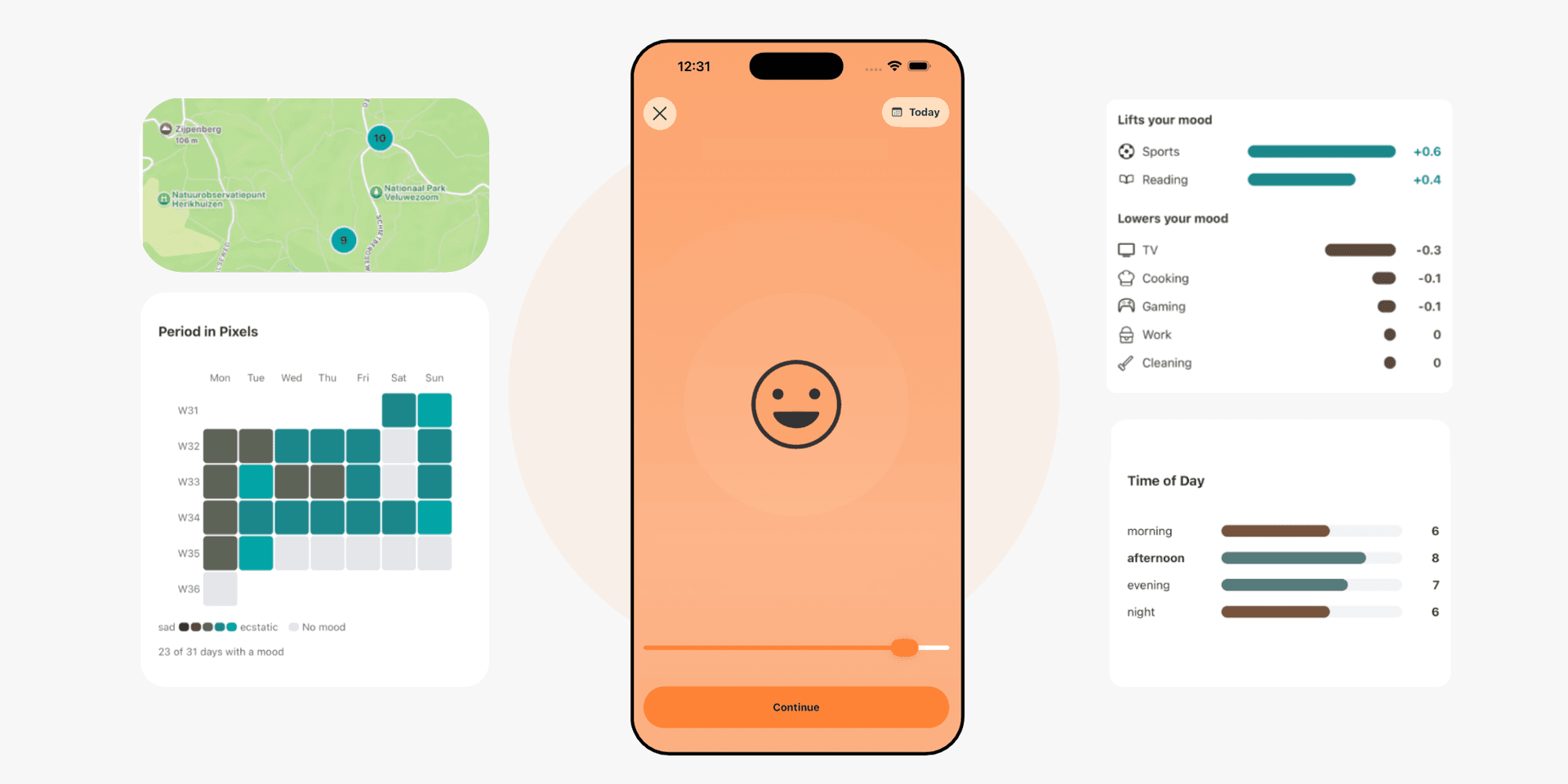
Want to feel great? Want to know why some days feel heavier than others? For questions like these we need a tool called a Mood Tracker. In its simplest form we aim to record how we feel, in the exact moment we feel it. So that afterwards we can look at our days and retrospectively understand the why behind the what. We all deserve to feel a bit lighter in our days. To help you get started here are some tips how to use a mood tracker and get the most out of them.
Settle on the things you want to keep track of, and how
Regardless of the tool of choice, be it paper, an app, website or heck even an excel sheet. Keeping a glanceable mood tracker system starts with determining what makes up most of your days. This can be visits to the gym, colleagues you spent time with, hobbies outside of work, physical discomfort or excitement in your body, strong irregular emotions etc. Really take your time to write down all the aspects that make up your days.
Next decide how you want to keep track of your overall mood and happiness. In short, pick a system. Here are a few common ones to get you started:
- Pick 5 colors, ideally a gradient. And color a square on your calendar for each day
- Pick a Smiley sticker of a sad face up to a happy face. Place this sticker on a month calendar
- Use a digital service (website or app) and pick a mood scale from the options that are available to you
Tip: these are just suggestions. You can go hella creative and visualize your mood like a cocoon becoming a butterfly; or a flower blooming. Your creativity is at play here and the possibilities are endless. It has to be YOU, it's your mood tracker after all.
Now we have picked both the way and the why, it's time to start entering our mood.
Do it each day, even if the day seems uneventful
A mood tracker gains value the more you use it, so we should aim to record our feelings daily if we can. Tip: pick a default moment of the day to reflect on your feelings. Note how you felt that day (color, sticker etc), and pick one or multiple reasons for why you are feeling the way you do. This is also where custom emotions come in handy. Revisit the list you created earlier.
Pro tip: make the barrier as low as you can. For example place a calendar right next to your bedside and reflect before bed. Or prepare your entry by already opening the calendar on the right page and getting your markers ready.
Now sometimes a moment can completely overwhelm us. For these moments we recommend to record the moment. If you are using an analog method of mood tracking, consider making a quick note on your phone so you remember it for later. The marker at the end of the day should reflect the average for that day, the highs and lows equally weighted. By recording these stand-out moments we are sure not to forget how our day went.
Reading the charts
Now that you are underway, we recommend to take a moment to pause at regular intervals. We recommend to do it at the first day of the month, just before you fold the calendar over. Now take a step back and count how many colored dots, smileys or stickers you have for each feeling. Are you overwhelming happy to negative that month? Write it down at the bottom of the page, so it reads for example: January: overwhelmingly happy. This way looking back it's easier to see how your feelings evolved from month to month.
Tip: if you feel especially strongly either way, count the items we listed earlier. Do you notice a pattern? Maybe you spent more time with friends or family, or spent more time in nature. The little things can really impact how we feel.
End of year
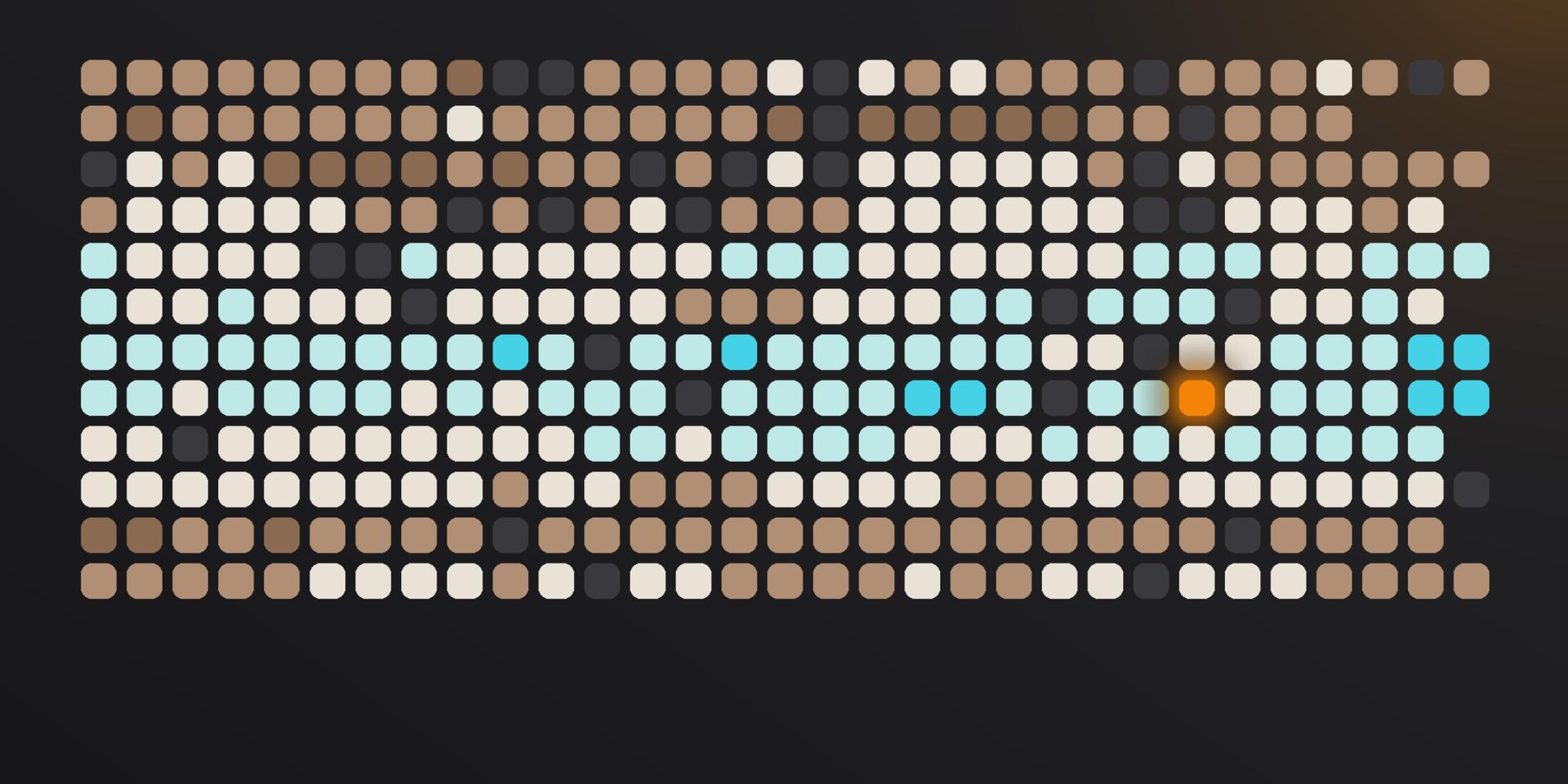
Now that we have a solid rhythm recording our moods and reflecting on our feelings at the end of the month, it's time to visit the year closure. Around the end of December or beginning of January take your Mood Tracker system and try and map the entire year. Spot if seasons had any impact on your emotions. See if you were overwhelmingly positive or negative. Any trends we can spot here can be a clue of what we should do more (or less) of next year. This can become part of our New Year's resolutions. A Year in Pixels is a great way to do exactly this: your whole year, coloured by how each day felt, on one screen.
Tip: if your mood tracker is analog consider making a copy of the entire year for safe keeping. Store it safely so you can revisit your years, like a Time Machine.
Why apps are ideal
If you made it so far, good job! You are now able to create, follow and use a mood tracker to improve your feelings. Perhaps you have a few reservations at this point. What if I want to change my system halfway? What if my days change and suddenly new activities or people are a huge part of my life? What if my feelings are very turbulent during a day, how can I record this?
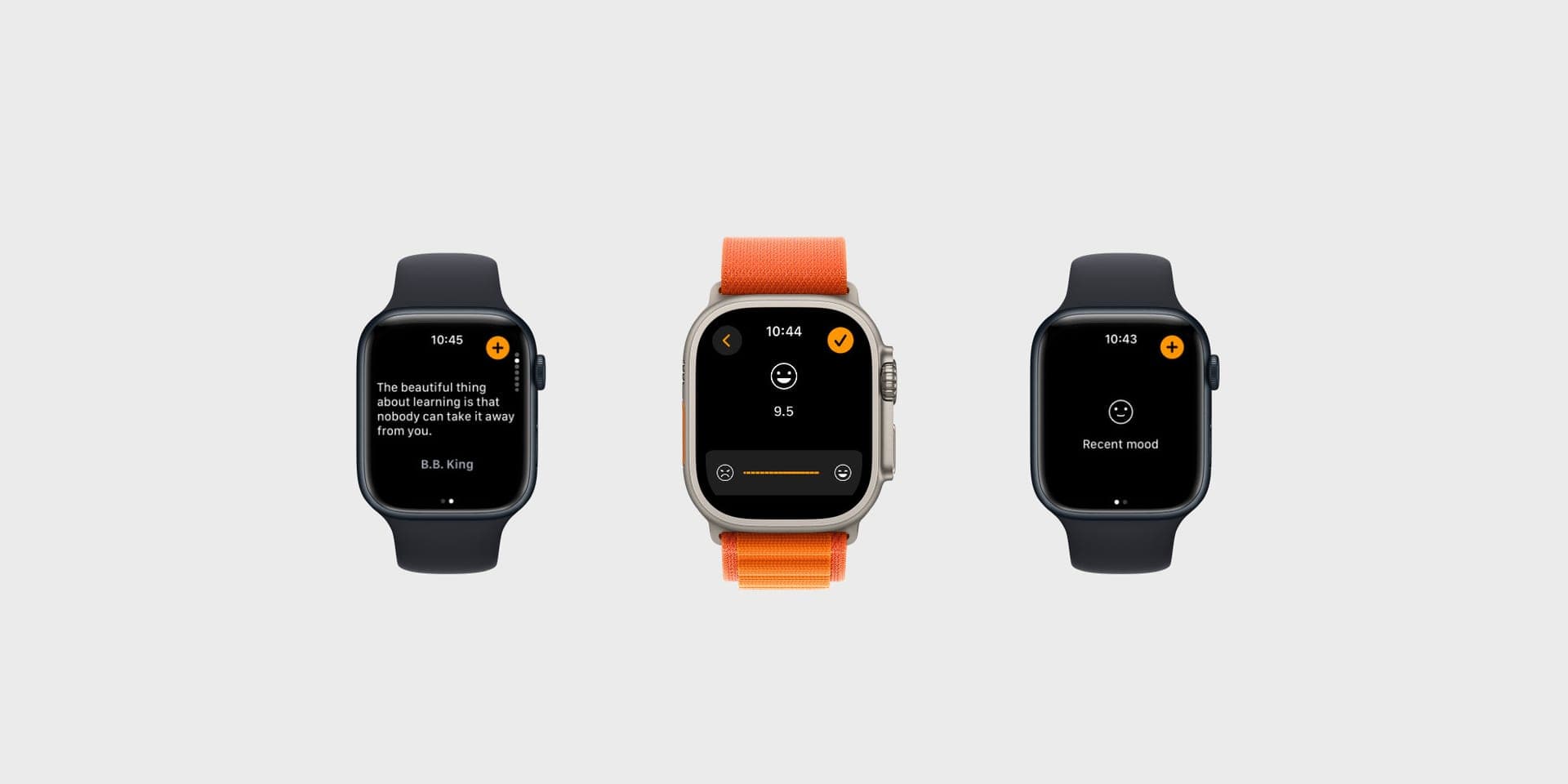
For reasons like these we recommend to consider a Mood Tracker app, we built Luci. With Luci we calculate your mood log averages each day. We can present your mood in both months, years of your entire lifetime so far. And we can even spot trends for you, for example: "you tend to feel best near the beach". And your data is always yours to keep, you can make a backup, bring your data somewhere else or even make an analog print of any mood tracking time period.

We are not the only mood tracker on the App Store, find one that feels like home for you. Because apps generally offer a few tangible benefits versus a mood tracker system on paper:
- Less risk of losing information
- Ability to make changes without interfering with the mood tracker system
- Easily glance at statistics for any given time period
- Less manual work, apps usually calculate mood impact in some shape or form
- Your phone is often with you; your paperwork is not
No matter which way you go, having a mood tracker is a good investment in your mental wellness and is strongly recommended. Start one today so the next time your day feels heavier than usual, you will have an answer ready. And perhaps even know what you need to get back into the zone.

Luci
Bringing light to your mental health journey.