
Ask people what makes them happy and you will usually hear the big things: the people they love, work that means something, a place that feels like home. Those matter. But most days are not made of big things. They are made of small, repeated ones, and a lot of those are new. Nobody's grandparents spent an hour a night scrolling through other people's holidays.
The upside of small, repeated things is that you can track them. You can't log "a meaningful life" every evening, but you can log whether you scrolled past midnight, whether you got twenty minutes to yourself, or whether you went for a walk. Do that for a few weeks and patterns start to show up, often ones you would never have guessed.
Researchers have noticed something similar. In a 2018 University of Pennsylvania experiment on social media use, both groups, including the one told to change nothing, reported a little less anxiety and fear of missing out by the end. The authors suggested that simply keeping an eye on your own habits may help. Noticing is already a step.
Here are five modern things worth tracking, what the research says about each, and an easy way to start.
The five, at a glance:
- Doomscrolling: how much time you spend on bad news, and when.
- Me time: chosen, phone-free time on your own.
- Consumerism: what you buy, and whether it is a thing or an experience.
- Social comparison: watching other people's lives versus taking part in your own.
- Movement: walks, workouts and everything in between.
1. Doomscrolling: when staying informed turns into a loop
Doomscrolling is the habit of scrolling through bad news long after it stops telling you anything new. It is easy to fall into for a reason. A 2026 scoping review, the first to bring the research together, describes it as a habit reinforced by infinite feeds and algorithms that keep serving more of the same. Across the studies it reviewed, doomscrolling was consistently linked with anxiety, stress and lower mood. Most of those studies are snapshots, so researchers are still working out which way the arrow points.
A 2024 study of 800 university students in the US and Iran, led by Flinders University, also linked doomscrolling to existential anxiety and to a gloomier view of other people. The lead author's advice was refreshingly practical: keep track of how much time you spend doomscrolling, and cut back if it is becoming a problem.
The good news is that this one tends to respond to small changes. Staying informed and doomscrolling are not the same thing. Reading the news once, at a set time, keeps you informed. The scroll at 11 pm rarely adds anything new.
How to track it
- Add a "doomscrolling" item and tag it on days you caught yourself in a long scroll.
- Note when it happened. "Late-night scroll" and "morning scroll" are worth keeping apart, because timing can matter as much as minutes.
- Once a week, check your phone's screen time report and jot the number in your journal.
What to look for: does a late-night scroll tend to come before your flatter mornings? Do news-light days feel any different?
A small experiment: for one week, read the news once a day at a set time, and swap the bedtime scroll for something else. Then compare the week with the one before.
2. Me time: the quiet kind of recharge
Me time sounds like a luxury. The research suggests it is closer to maintenance.
In a set of experiments at the University of Rochester, published in 2018, people sat alone for 15 minutes with no phone and nothing to do. Afterward, their strongest feelings, good and bad, had softened, and they felt calmer and more relaxed. The effect was strongest when people chose to be alone, not when they were told to. The researchers' definition of solitude is worth noticing too: no messages, no social media, no devices. Fifteen minutes alone with your phone is not the same thing.
That makes me time a natural partner to the first item on this list. A lot of what feels like downtime is actually the scroll.
How to track it
- Add a "me time" item for chosen, phone-free time on your own. A short walk or a coffee by yourself counts.
- If you want more detail, split it up: "reading", "walk alone", "bath", "hobby".
- Also log the days you wanted time to yourself and didn't get it. That gap can say as much as the time itself.
What to look for: how much me time sits next to your calmest days? Is there a point where alone starts to feel lonely? Most people have one, and it is useful to know where yours is.
A small experiment: book fifteen phone-free minutes into your day, at the same time, for a week. If the quiet feels uncomfortable at first, that is normal. We wrote about why feeling bored can be good for creativity, and the mindfulness prompts are a gentle way in.
3. Consumerism: which spending actually pays you back
Buying things can be genuinely nice. A warm jacket on a cold morning is a small daily pleasure. The interesting question is what happens when buying becomes the main way to feel better.
A 2014 meta-analysis that combined 259 samples found that people who put more weight on money, possessions and image tend to report lower well-being. The link is modest, but it shows up again and again across very different studies.
The more encouraging research is about what to buy. In a nationwide US survey led by psychologists Leaf Van Boven and Thomas Gilovich, people thought of two things they had bought to make themselves happier: one experience and one object. Fifty-seven percent said the experience made them happier, against 34 percent for the object. The researchers' explanation: experiences become part of who you are, they improve in the retelling, and they are usually shared with other people.
So this is not about spending less. It is about noticing which spending pays you back.
How to track it
- Add two items: "bought a thing" and "bought an experience". Concert tickets, a dinner out or a class are experiences. A gadget, clothes or a delivery are things.
- Tag "impulse buy" on its own, especially late at night. It often keeps company with item 1.
- A week later, add a short note on how you feel about the purchase now.
What to look for: does a new thing lift your mood the day it arrives and then fade? Does an experience hold on longer? You may find the high of a delivery is shorter than you expected.
A small experiment: next time you are about to buy something to cheer yourself up, wait 48 hours. If you still want it, great. If not, spend the money on something you will do instead. The journal prompts about money are a good place to look at why.
4. Social comparison: watching versus taking part
Comparing ourselves to others is ancient. What is new is the volume. A feed can show you dozens of polished holidays, kitchens and careers before breakfast.
A 2015 study by researchers at the University of Michigan and KU Leuven looked at two ways of using Facebook. Scrolling through other people's posts without interacting, which they called passive use, left people feeling worse over the course of the day. Active use, like posting and messaging, did not. The link ran through envy: watching other lives fed it, and envy pulled mood down.
The 2018 University of Pennsylvania experiment from the introduction went a step further. Students who cut Facebook, Instagram and Snapchat to about ten minutes each a day for three weeks reported less loneliness and lower depression scores than students who carried on as usual. The lead researcher said the study could not show why, but pointed to social comparison as one likely reason.
The takeaway is not to delete your accounts. How you use them matters as much as how long. Messaging a friend about their holiday is a very different experience from silently scrolling through it.
How to track it
- Add "compared myself" and tag it when a post leaves you feeling behind.
- Split your social media time into "scrolled" and "connected" (messaged, commented, called).
- If it helps, name the app. Often one app or one corner of the feed does most of the work.
What to look for: does "scrolled" sit next to lower moods than "connected"? Are there accounts you could mute without missing anything?
A small experiment: for two weeks, try the limit the Pennsylvania students used, about ten minutes per social app per day. Your phone's app limits make this easy. The self-confidence prompts are useful for the days a feed gets under your skin.
5. Movement: the bar is lower than you think
Movement is the most hopeful item on this list, because the bar is lower than most people assume.
A 2018 study in The Lancet Psychiatry looked at survey answers from 1.2 million US adults. On average, people reported 3.4 days of poor mental health a month. Those who exercised reported about 1.5 fewer than people with similar backgrounds and physical health who didn't. Every type of activity counted, including walking and even household chores. Team sports, cycling and gym workouts showed the strongest links.
More was not automatically better. The best results went with sessions of around 45 minutes, three to five times a week, and sessions longer than about 90 minutes were linked to worse mental health, not better. Like most large surveys, it is a snapshot, so it cannot prove exercise caused the difference. Part of it probably runs the other way too: on a low day, moving is harder.
That is exactly why your own record is useful. You don't need to know what movement does for 1.2 million strangers. You want to know what it does for you.
How to track it
- On iPhone, let Luci bring in steps and sleep from Apple Health, so they sit next to your mood without any typing.
- Add items for the movement you actually do: "walk", "gym", "football", "cycled to work", "gardening".
- Note whether it was outside and whether it was with other people. Those two details often matter.
What to look for: is there a minimum that makes a difference for you? Yours may be lower than the goal your fitness app set.
A small experiment: add one ten-minute walk to every day for two weeks, ideally in daylight. The exercise prompts help on days when the couch is winning, and our guide to the winter blues explains why daylight is worth chasing this time of year.
How to start without overdoing it
Five new things to track can turn into a chore, and chores get dropped. A few things that help:
- Start with one or two. Pick the item that made you think "that's me" while reading.
- Log in the evening. A mood and a few taps is enough. A sentence in the journal is a bonus, not a requirement.
- Give it three to four weeks. One day is a data point. A month starts to look like a pattern.
- Treat what you find as a clue, not a verdict. Patterns show what tends to go together. Whether one causes the other is something you can test with a small experiment.
If you have tried a mood tracker before and drifted off, you are not alone. We wrote about why people quit mood trackers, and how to stick with one.
How Luci helps
Luci is a mood tracker and guided journal that connects what you do to how you feel. All five things on this list fit straight into it.
Your own trackable items. Alongside the built-in items, add your own, like "doomscrolling", "me time" or "bought an experience", and sort them into categories such as activities, emotions, people and more. Our tips for tracking custom emotions work just as well for habits.
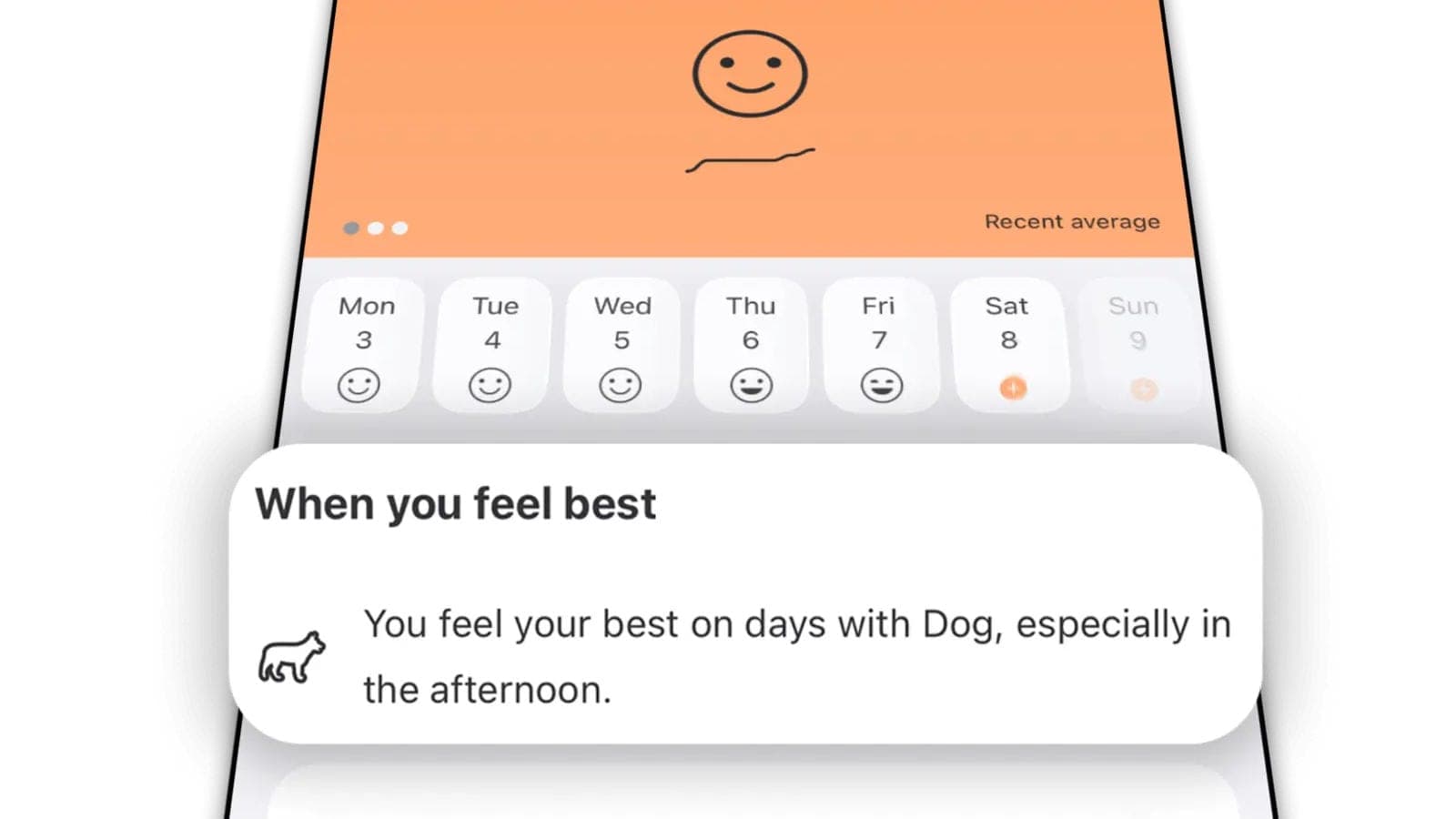
Patterns in plain language. Over time, Luci tells you which items tend to sit next to your better and worse days, in a sentence, not a spreadsheet. Read more about Luci's insights.
Sleep and steps, automatically. On iPhone, once you allow it, Luci brings in sleep and steps from Apple Health. The health connection is not currently available on Android.
A whole year at a glance. Year in Pixels gives every day one colored square, so a better month after you changed one habit is easy to spot.
Prompts for the days you want to go deeper. Luci includes over 550 guided journal prompts across twenty topics, from mindfulness to money.
Quick to log. A mood takes a few seconds from the app, a widget or your Apple Watch.
Private by default. Your entries stay on your device unless you choose to sync them, and there is no account to create. Read more in our privacy policy.
What Luci is not
Luci does not diagnose or treat anything, and it is not a substitute for a doctor, a therapist or the people who know you. It shows you patterns. What they mean is up to you and, if you choose, a professional. If your mood stays low for weeks, whatever the pattern says, that is a good reason to talk to a doctor.
The small things add up. Find out which ones are adding up for you.
Common questions
What should I track to feel happier? Start with your mood, then add one or two everyday habits you suspect play a part. Doomscrolling, me time, what you buy, how you use social media and how much you move are five modern ones with research behind them.
How long does it take to see patterns in a mood tracker? Three to four weeks of regular entries usually gives you a first picture. A few months makes it much clearer, and a year shows you the seasons.
Is doomscrolling bad for your mental health? Research consistently links it with anxiety, stress and lower mood, though most studies can't yet show cause and effect. When you scroll can matter as much as how long.
Does exercise improve your mood? In a study of 1.2 million US adults, people who exercised reported fewer days of poor mental health a month, and even walking and housework counted. Your own record shows what it does for you.
Sources (8)
- The influence of doomscrolling on mental health: a scoping review
- 'Doomscrolling' leading to emotional harm, study says
- One hundred years of solitude? Try 15 minutes instead
- The relationship between materialism and personal well-being: a meta-analysis
- Experiences make people happier than material goods
- Passive Facebook use undermines how a person feels
- No more FOMO: limiting social media decreases loneliness and depression
- Association between physical exercise and mental health in 1.2 million individuals in the USA

Luci
Bringing light to your mental health journey.