
Somewhere in October, the light changes and summer definitely feels over. You leave for work in the dark, even though it's morning. And you come home from work in the dark, when it's barely evening. The alarm sounds harsher and earlier than it did in July. Plans that sounded fun a month ago now sound like effort, and the couch starts winning you over. This is where you now want to spend most evenings.
For a lot of people, that is the tale of the seasons: a few flatter, sleepier months that lift when spring comes back. For some, it goes further and turns into something that deserves proper care. Either way, it can be surprisingly hard to see clearly what the winter season does to your mood while you are in it.
Today we will cover what the winter blues are, how they differ from seasonal affective disorder, what tends to help, and how a mood tracker can show you your own seasonal patterns. Toward the end, we look at how Luci can help bring this all together.
What the winter blues are
The "winter blues" is an everyday name for a dip in mood and energy that many people experience as the days get shorter. You might sleep more and still feel tired. You might crave carbs, lose interest in things you normally enjoy a lot, or generally find it harder to concentrate. It usually starts in late fall, deepens through midwinter and luckily eases in spring.
This pattern has a clinical name: seasonal affective disorder, or SAD. The name applies only when the pattern is strong enough to get in the way of daily life and comes back at the same time of year. The psychiatrist Norman Rosenthal and his colleagues first described it in 1984, in a paper that also reported early results with light therapy.
The NHS lists the symptoms of SAD as:
- low mood
- a lack of interest in things you usually enjoy
- feeling guilty, hopeless or worthless
- feeling restless or irritable
- difficulty concentrating
- being more hungry and eating more than usual
- being more tired and sleeping more than usual
- thoughts of suicide or self-harm
The National Institute of Mental Health describes SAD as a type of depression. In most cases, symptoms start in late fall or early winter and go away during spring and summer. A less common summer pattern exists too. SAD occurs much more often in women than in men. It usually first becomes noticeable in young adulthood, and it is more common the farther you live from the equator, where winter days are shortest. It is also more common in people who already live with depression or bipolar disorder.
The cause is not fully known. The leading explanation is reduced daylight. Less light seems to affect serotonin, which plays a part in mood, and melatonin, which helps run the sleep and wake cycle. The NIMH notes that people with winter-pattern SAD tend to produce too much melatonin, which fits the heavy, oversleeping feeling so many describe.
The line between the winter blues and SAD is not something to draw for yourself. A diagnosis belongs with a doctor. What you can do is notice the pattern, and that turns out to matter a great deal.
Why it is so hard to see from the inside
A seasonal dip has a few qualities that make it easy to miss, even when it happens every single year.
It arrives slowly. Daylight shrinks by a few minutes a day. Mood tends to follow at the same pace. There is no moment where you feel the change. You just notice, some time in December, that you haven't felt like yourself for a while.
It hides behind good reasons. Winter is busy. There are deadlines, holidays, family, colds, bad weather and a bank account recovering from all of it. Every flat week has an obvious explanation, so the season itself never gets the blame.
Spring wipes the slate. When the light comes back and you feel better, the memory of the dark months fades quickly. By October next year, the pattern feels new again. Many people go through several winters before they start to connect them to a seasonal dip.
Sleep changes look like a lifestyle problem. Sleeping more and still waking up tired is one of the most common signs of a mood dip. From the inside, it feels like laziness or a bad routine. Seen across a year, it often lines up neatly with the calendar.
This is where a record helps. The NHS says that when you see a GP about possible SAD, they will usually ask about your moods and how they change over time. A diagnosis generally needs the pattern to repeat for at least two years. "I think I always feel worse in winter" is a starting point. But we can do one better. A year of entries shows you exactly when the dip began, how deep it went and when it lifted. That is a much better record to show a GP.
What tends to help
The good news is that seasonal low mood responds well to care, and a lot of what helps is within reach.
Daylight, as much as you can get. The NHS's first self-care suggestion is to get as much natural daylight as possible and to go outside every day. Even an overcast winter morning is far brighter than indoor lighting. A walk at lunch counts.
Movement. Regular exercise helps your mood in general, and it is one of the easiest things to drop when it gets dark and cold. Doing it outdoors, even when it's partly dark, gets you some daylight at the same time.
People. Staying in contact with friends and family, and keeping up with your usual activities, is on the NHS list for a reason. Winter makes withdrawing easy, and withdrawing makes the low feel lower.
A steady sleep routine. Going to bed and waking up at the same time every day helps keep your body anchored when the light no longer does the heavy lifting for you. The NHS also suggests avoiding screens right before bed, and not drinking too much alcohol.
Light therapy. A light box, sometimes called a SAD lamp, simulates bright daylight. A wake-up light, which brightens slowly before your alarm, is a gentler version of the same idea. A 2005 meta-analysis in the American Journal of Psychiatry found that both bright light and this kind of simulated dawn reduced symptoms in seasonal depression. The NHS is more cautious and says there is not yet enough evidence for light therapy to be offered routinely, though many people find it helps. Speak to a doctor before you try it, since it is not suitable for everyone, including some people with eye conditions or on certain medicines.
Talking therapy. Cognitive behavioral therapy has a version adapted for SAD, known as CBT-SAD. In a randomized trial, it worked about as well as light therapy over the first six weeks. A follow-up found that two winters later, people who had done CBT-SAD were less likely to see their symptoms come back. The skills stayed with them after the sessions ended.
Medication. Antidepressants are an established treatment for SAD, and a doctor can talk through whether they make sense for you. The NHS notes that many people need treatment every winter to stop symptoms coming back. Medication sits alongside healthy habits and an awareness of your own seasonal pattern. It doesn't replace them.
If you recognize yourself in the symptom list above, please talk to a doctor. You don't need to be sure it is SAD first. That is what the appointment is for.
What a mood tracker can show you about winter
Keeping a record of how you feel is not a treatment. For a pattern that comes and goes with the seasons, it is one of the most useful things you can have, because the thing you are trying to see is spread over months.
It gives you a baseline. The best time to start tracking for winter is before winter. A few weeks of entries from early fall tell you what normal looks like, so you can see the change when it comes instead of guessing at it.
It shows when the dip starts. For many people the slide begins earlier than they would have said. Knowing that it tends to start in mid-October, and not in December, gives you a few weeks of warning next year.
It connects mood to sleep. If you are sleeping longer and feeling worse, a record of both side by side makes that visible. It is also something concrete to show a doctor.
It shows what moves the needle. Tag the days you got outside in daylight, the days you exercised, the days you saw the people you care about. After a few weeks, you can see whether your better winter days have something in common. For many people, they do, and it is often simpler than expected.
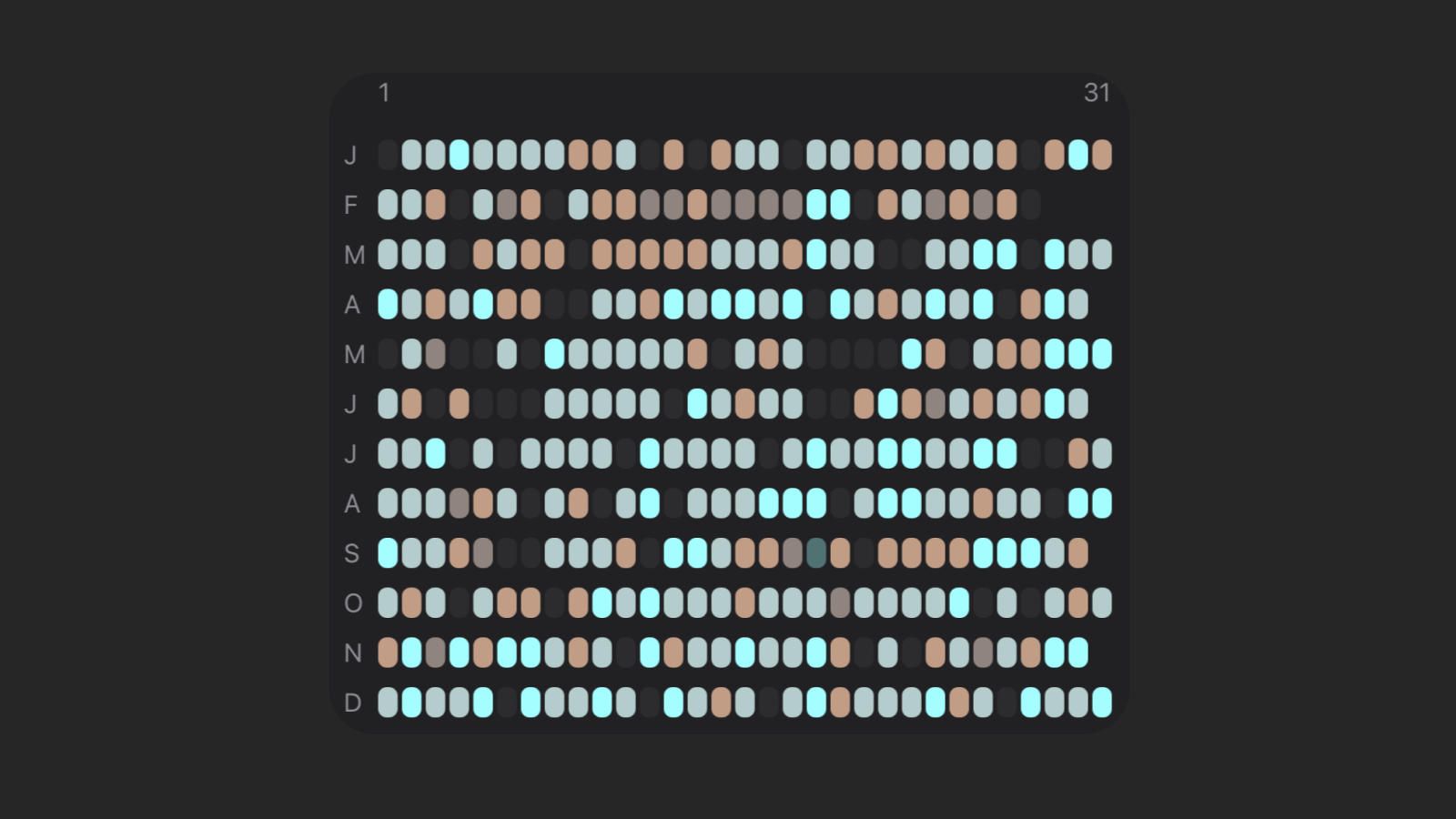
It shows the whole year at once. A year of mood laid out as a grid of colored squares, one per day, makes seasons jump out in a way a list of numbers never does. If your winters run darker, you will see it at a glance. We wrote a whole guide on how a Year in Pixels works.
It helps you plan next winter. Once you know your pattern, you can get ahead of it: book a trip, plan outdoor events, start the routine early in October and, if need be, speak to your doctor before the dip instead of halfway through it.
The record only works if you keep it, and winter is exactly when habits slip. Keep it light. One quick entry a day is plenty. If you miss a few days, pick it up again without trying to fill the gaps. We have written more about why people quit mood trackers and how to stick with one.
How Luci approaches this
Luci is a mood tracker and guided journal that connects what you do to how you feel. It was not built for one condition, but several of its features fit a seasonal pattern well.
Period in Pixels. Luci lays out your mood for a whole year, one colored square per day. Seasons show up on their own. If your November to February block is darker than your summer, you don't need a statistic to tell you. You can also view a single month, or your whole history in pixels. Read more about Year in Pixels in Luci.
Sleep and steps from Apple Health. On iPhone, once you allow it, Luci brings in your sleep and steps from Apple Health, so they sit next to your mood without you typing anything. Long nights and low step counts in January become something you can see. The health connection is not currently available on Android.
Weather and place. When you geotag an entry, Luci can attach the weather at that moment and the place you logged from. The statistics then show how your mood moves with both. Read more in our guide to tracking locations.
Your own trackable items. Alongside the built-in items, you can add your own: "outside before noon", "light box", "walk at lunch", "saw friends". You can add them to categories such as emotions, activities, nutrition, body, people and more. Over time Luci tells you in plain language which ones tend to sit next to your better days. Read more about Luci's insights.
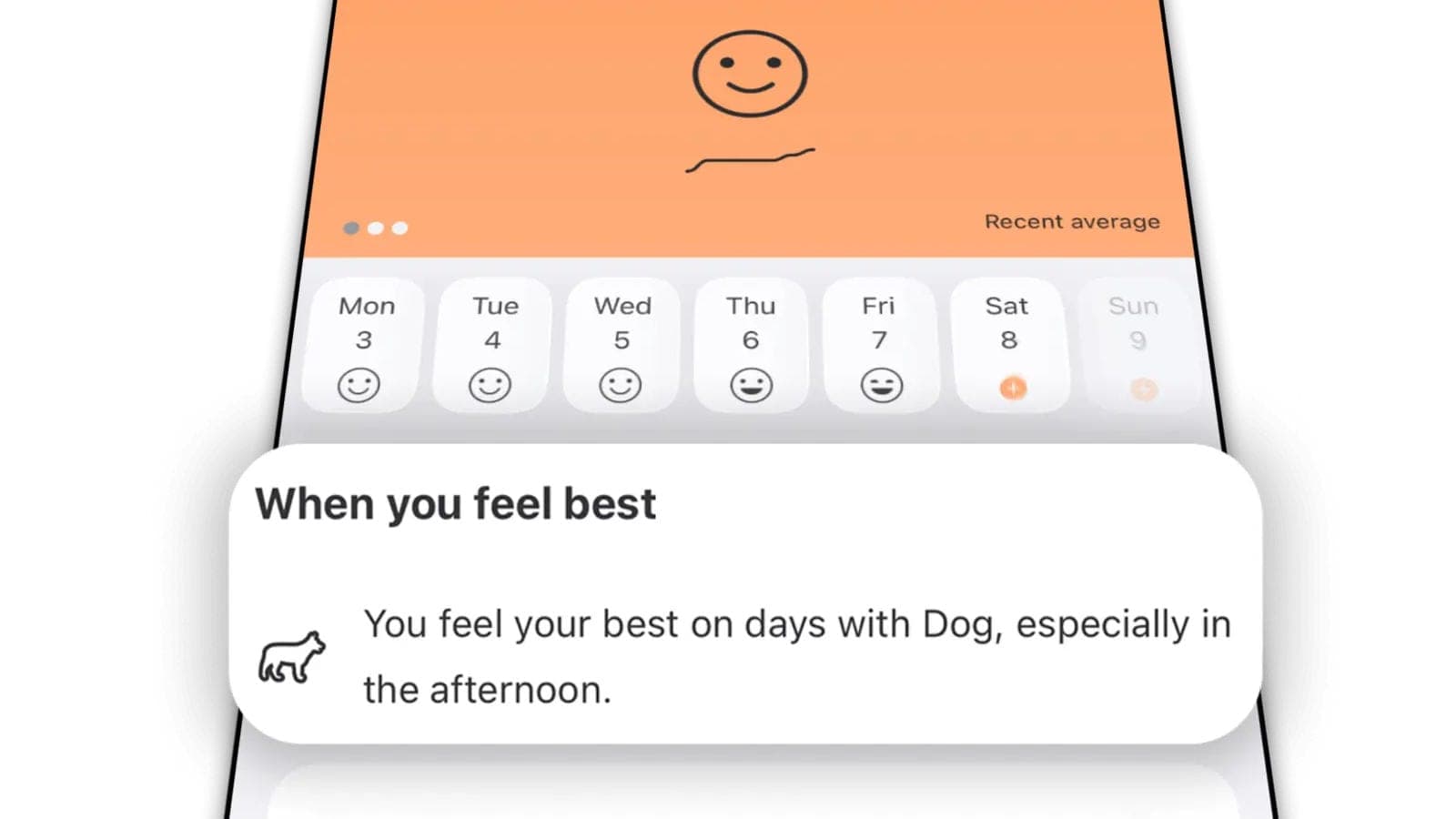
Quick logging on short days. A mood takes a few seconds, from the app, a widget or your Apple Watch. On a heavy day, the simple five-point scale is enough, and it still counts toward the record.
Prompts when you want to go deeper. Luci includes journal prompts organized by topic, including sets for daily reflection, exercise and loneliness. A question like "what gave me energy today?" can be easier to answer on a gray day than "how was today?"
Private by default. Your entries stay on your device unless you choose to sync them, and sync is encrypted when you turn it on. There is no account to create. Read more in our privacy policy.
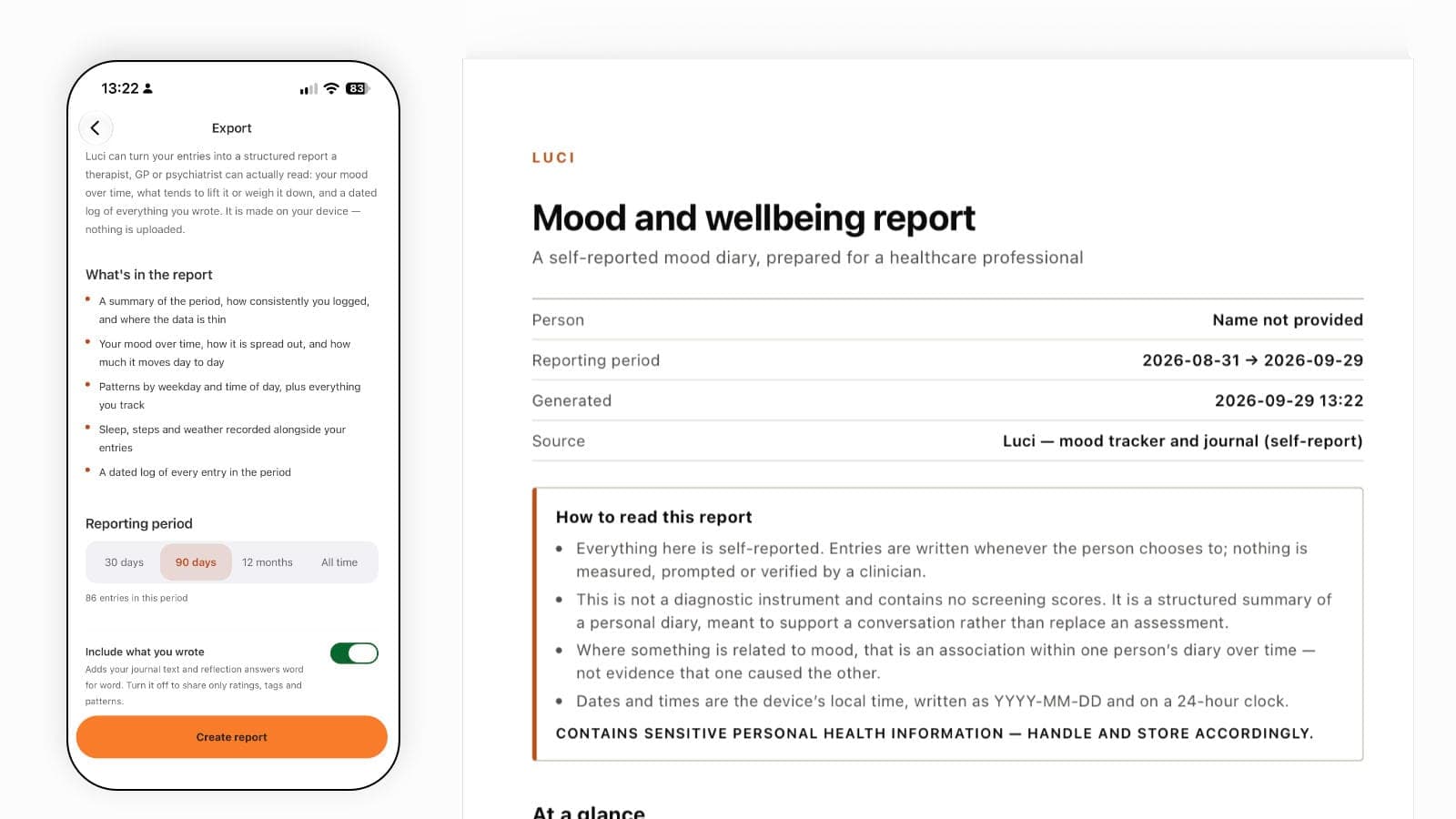
Export for your doctor. You can export and print your entries for any period, at the level of detail you choose, so you can bring last winter to an appointment instead of trying to remember it.
What Luci is not
Luci does not diagnose, treat or assess seasonal affective disorder or any other condition, and it is not a substitute for a doctor, a therapist or the people who know you. It shows you patterns. What those patterns mean is for you and, if you choose, the professionals you work with. If your record shows a dip that keeps coming back, that is a good reason to talk to someone qualified.
If you are having thoughts of suicide or self-harm, please contact your local emergency services or a crisis line now.
Luci is on the App Store and Google Play, with Apple Watch and widgets for quick logging. The free version includes mood tracking, custom emotions, the core graphs and the journal. Start now, and by the time the days get shorter you will already have something to compare them against.
Sources (7)
- Seasonal affective disorder (SAD)
- Seasonal Affective Disorder
- Seasonal affective disorder (SAD)
- Seasonal affective disorder. A description of the syndrome and preliminary findings with light therapy
- The efficacy of light therapy in the treatment of mood disorders: a review and meta-analysis of the evidence
- Randomized trial of cognitive-behavioral therapy versus light therapy for seasonal affective disorder: acute outcomes
- Outcomes one and two winters following cognitive-behavioral therapy or light therapy for seasonal affective disorder

Luci
Bringing light to your mental health journey.