
Yes, you should use a mood tracker. So should your friends, your family and, honestly, everyone else. It has never been easier to measure physical health. Your watch knows your heart rate and your blood oxygen. Yet most of us skip measuring the mind completely.
Our physical and mental health are closely linked. Stress releases hormones like cortisol and adrenaline, and those change many of the numbers your watch is already recording. Time with the people we love brings joy, which is good for our health too. And being around things that make you feel relaxed and at ease builds a more positive mindset on its own.
So if it matters this much, why do so many of us struggle to keep a mood tracker going? Let's look at the most common reasons people quit mood trackers, and what you can do about each one.
Reason 1: the chore outweighs the benefit
Some of us really enjoy writing in a journal. If that's you, this reason is probably less of an issue. But for a lot of us, reflecting on our mood is a chore. We don't enjoy the act itself. Once the benefits start to fade, we stop doing the chore.
Most trackers try to fix this by reducing friction. Logging a mood in Luci takes about ten seconds, and in a pinch you can even do it on your Apple Watch. Wherever you are, the tracker is on the most personal device you carry.
But reducing friction only goes so far. What matters far more is what the task gives you in return. In a lot of mood trackers the insights feel shallow. They tell you things like "you feel great on weekends" or "anxiety makes you less happy". That's stating the obvious. We already know these things, so why track them in the first place?
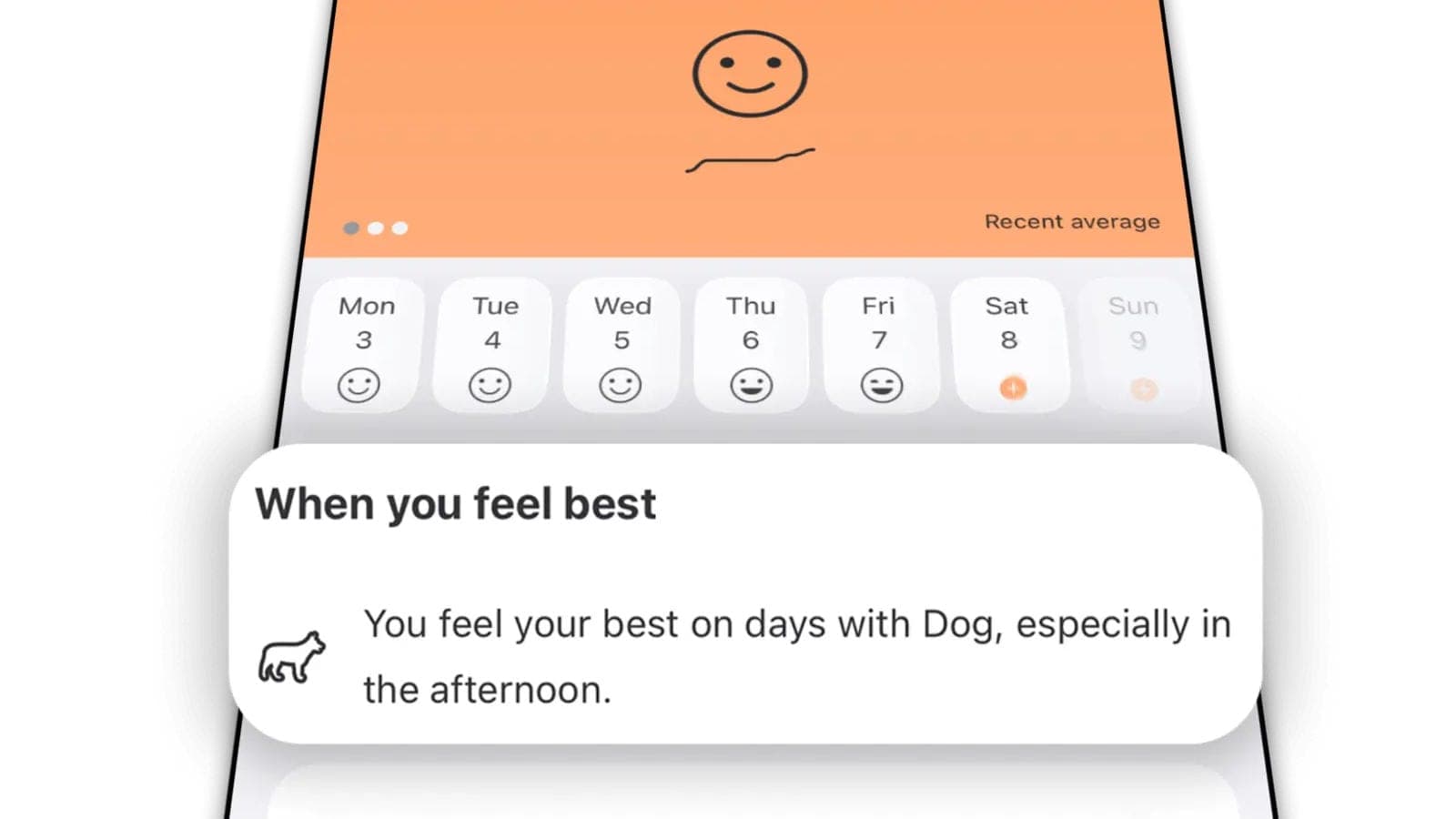
Luckily, the data can be good. Very good, in fact. It starts with recording more detail, so there is room for nuance. A 1 to 5 scale on its own often doesn't cut it. Add sleep, steps, weather, your own custom items and the places you log from, and a mood tracker suddenly has a lot more to work with. Luci supports this level of detail and describes the patterns it finds in plain language: "You feel best on days with…". The longer you use a detailed mood tracker, the more likely it is to show you something you didn't expect.
Reason 2: streaks and gaming the system
Another common reason to stop is guilt. Nobody likes being told off, and breaking a long streak can feel exactly like that. After six good days, one forgotten day at a theme park with your family should not earn you a big red cross. The routine matters. The streak counter matters much less. Sometimes a gap in your data is data too. It can mean you were enjoying your holiday and wanted to put your journal on pause.
Streaks bring a second problem with them: negativity. When your week feels heavy and the tracker shows your days in red, that doesn't feel great. It can leave you feeling down and reluctant to open the app at all.
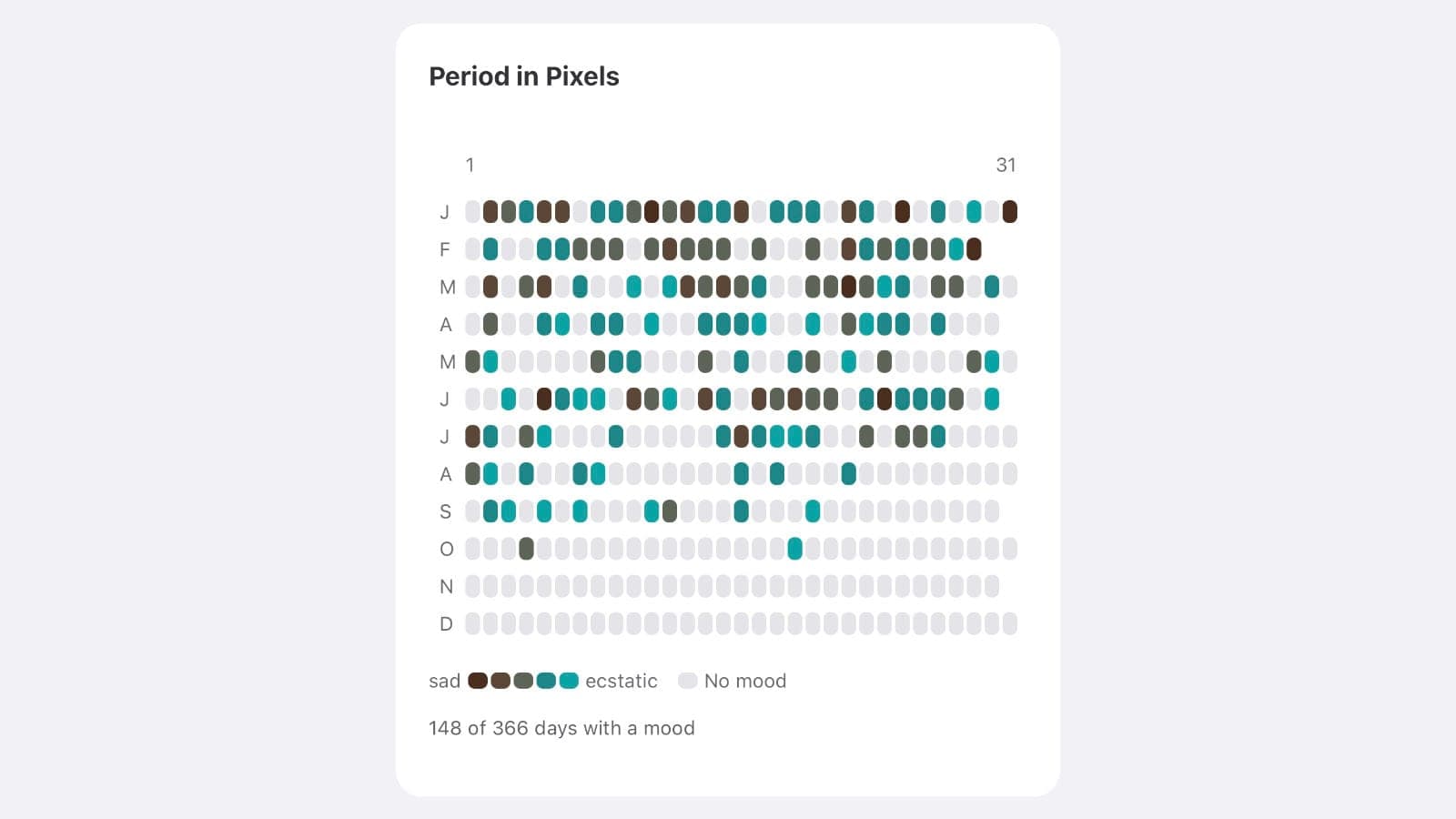
Luci avoids streaks altogether. Your Year in Pixels shows how often you journal without punishing the days you missed, and the good days and the harder days both keep their place in your statistics. A day is rarely only negative. Sometimes the bad outweighs the good, but if you look long enough, you can find the bright spots that made the day.
Reason 3: too many tasks pile up
Lots of small things add up. It's hard to keep a routine when time seems to be slipping away and every new task feels like another drop in a bucket that is about to overflow. One way to avoid that feeling is to combine tasks. A mood tracker can double as your journal. A household chore can become a moment to stretch or clear your head. A paper journal can hold your calendar too, with stickers as a quick mood marker. You get the idea: fewer separate habits, less to keep up with.
If you like the idea of one place for both, journal prompts are an easy way to turn a quick mood check-in into a short reflection on the days you have a little more time.
Reason 4: worries about privacy and your data
A journal or mood tracker is a very personal space. What we write there is very much "us", so we need to be safe, and we need to feel safe. Once we start to doubt that, we are much more likely to drop the routine.
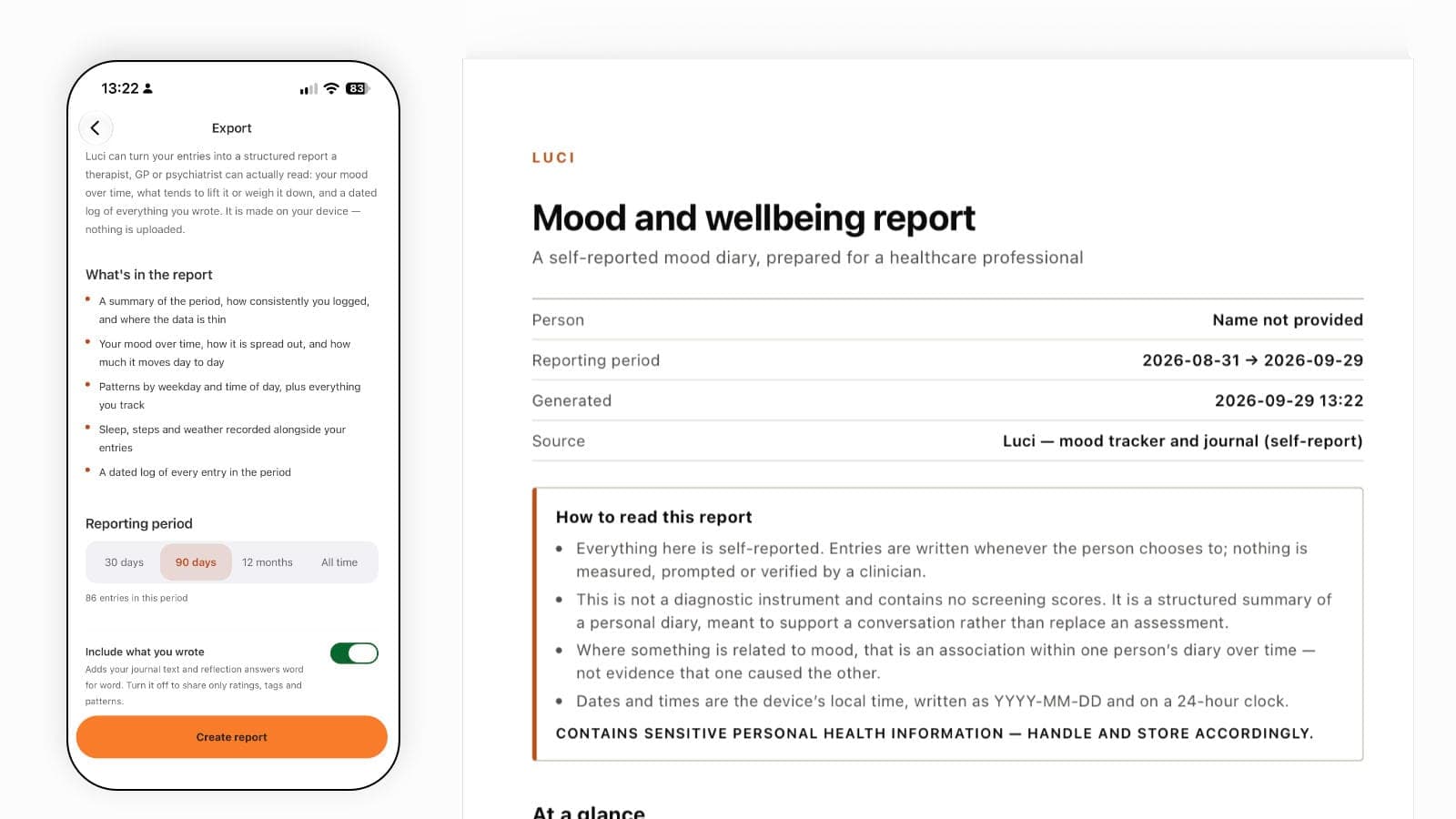
One way to avoid this is to pick a journal that keeps your data offline, on your own device. Luci needs no account, keeps entries on your phone and only syncs if you switch it on. You can read more on the privacy page. Keeping data on your device does bring the risk of losing it, so make regular backups. For example, mark one day a month in your calendar to export a backup of your journal. Luci can also turn your entries into a PDF report, which is handy if you want to talk through how your weeks have been with a therapist or doctor.
Reason 5: it worked
We started with the main reason people quit: the benefit versus the effort. That balance can tip either way, today and tomorrow. And one common reason people quit is simply that the app solved their problem. It's hard to beat the feeling of getting your mojo back after a long time without it.
That said, keeping a journal still has plenty of benefits after that point. It helps you notice and protect that new energy. Know what makes it tick, and keep surrounding yourself with the things that give you energy: the people and places you love, the activities you enjoy, and maybe even the food that fires you up.
How to stick with a mood tracker
If you have quit a mood tracker before, these habits make it much easier the next time:
- Keep each entry short. Aim for a check-in that takes seconds, and write more only when you want to.
- Track more than a score. Sleep, activities, people and places give the app something real to find patterns in.
- Drop the streak mindset. Missing a day is fine. Consistency over months matters more than an unbroken run.
- Look for the bright spots. Review the good days as closely as the hard ones.
- Combine it with something you already do. Log your mood with your morning coffee or before bed.
- Choose an app you trust with your data, and back it up regularly.
If you are new to all of this, our guide on how to use a mood tracker is a good place to start.
That's what keeping a mood tracker is all about: knowing what your days are made of and what makes you tick, and finding happiness wherever you go, often in the little things you least expect. We truly hope you find a mood tracker you love and manage to stick with it. Better days are ahead, and we would love to be part of that journey with you.
Sources (2)

Luci
Bringing light to your mental health journey.