Anxiety has a way of presenting itself as information. The tight chest before a meeting feels like evidence that the meeting will go badly. The 3 a.m. loop feels like careful thinking. From the inside, it is very hard to tell the difference between a worry that is telling you something and a worry that fluctuates like the weather.
A mood tracker will not settle that question for you in the moment, but what it can do is give you something anxiety rarely allows: a holistic view from outside. This article covers what anxiety is, why it is so difficult in the moment, what the research says about tracking anxiety, and, towards the end, how Luci can help you.
What anxiety is
Everyone feels anxious sometimes. It is the body's normal response to a threat, and in the right dose it is useful: it sharpens attention and gets you moving. We need it to cope with a life-threatening situation. Anxiety only becomes a condition when the feeling is out of proportion to the situation, when it lasts, and when it gets in the way of daily life. The nervous system ends up worn down and in a permanent state of alert.
The World Health Organization describes anxiety disorders as the most common mental disorders in the world. In 2019, around 301 million people were living with one, roughly 4 percent of everyone alive. Women are affected more often than men, and symptoms usually start in childhood or adolescence. Despite effective treatments, the WHO estimates that only about one in four people who need care actually receive it.
There are several kinds of anxiety disorder, and they are worth telling apart because they feel different.
Generalised anxiety disorder is the persistent kind: excessive worry about ordinary things such as work, health, money or family, most days of the year. The NHS describes it as a feeling of being anxious about a wide range of situations rather than one specific event, and notes that people with it often find it hard to remember the last time they felt relaxed.
Panic disorder is anxiety that arrives in sudden, intense attacks: a racing heart, shortness of breath, dizziness, a sense that something terrible is about to happen. The attacks themselves pass within minutes. The fear of the next one is what tends to reshape a life.
Social anxiety disorder is an intense fear of being watched, judged or embarrassed, strong enough to make people avoid the situations where it might happen. It often isolates a person from social settings altogether.
Specific phobias, agoraphobia and separation anxiety round out the list. These are more specific kinds of anxiety, usually revolving around a single situation. Many people live with more than one of these at once, and anxiety very often sits alongside depression.
The causes are a mix. Genetics play a part. So do stressful and traumatic experiences, particularly early in life, and so does what might be happening in everyday life: work pressure, money, illness, a relationship, too little sleep. Alcohol, some recreational drugs and high caffeine intake can all make it worse.
Why it is so hard to live with
The symptoms are only part of the difficulty. A few things make anxiety particularly hard to navigate.
It is invisible, including to you. Anxiety does not announce itself as anxiety. It shows up as irritability, as a short fuse, as trouble concentrating, as a stomach that will not settle, as tiredness that a night's sleep does not fix. The NHS lists a long set of physical symptoms, from restlessness and a fast heartbeat to headaches, sweating and insomnia. Many people spend years treating each of those separately before anyone connects them.
It runs on avoidance. Anxiety makes a situation feel dangerous. Avoiding the situation brings relief. The relief teaches the brain that the situation really was dangerous, so the next time feels worse. Every anxiety disorder has a version of this loop, and it is why the pattern tends to tighten over time.
It lives in the future. Depression is often about what has happened. Anxiety is about what might. That means most of the suffering is anticipatory: the dread before the event usually outweighs the event. In the moment, the dread feels like accurate forecasting.
It distorts memory. People with anxiety tend to remember the difficult days more clearly than the ordinary ones. Asked how the last month went, the honest answer from the inside is "terrible", and the record often disagrees.
Sleep and rhythm get pulled in. Anxiety keeps people awake, and poor sleep makes anxiety worse the next day. The same is true of skipped meals, too much caffeine and too little movement. Each one is a small lever, but the direction they push is usually the same.
It is worth saying plainly that anxiety disorders respond to treatment. It is not all doom and gloom. A first-line psychological treatment is called cognitive behavioural therapy, which has a large evidence base across every type of anxiety, and there are effective medications too. In the UK, NICE recommends a stepped approach that starts with guided self-help based on CBT principles and moves up only if needed. The WHO's own self-care list runs alongside all of it: keep a routine, sleep enough, exercise, eat regularly, avoid alcohol and drugs, stay in contact with people, and talk to someone you trust.

Why tracking your mood helps with anxiety
Keeping a record of how you feel is not a treatment, but it can help, and this is why it turns up so often in the self-help that clinicians recommend.
Naming the feeling changes the feeling. In a well-known study from UCLA, people who labelled an emotion in words, "anxious", "afraid", "angry", showed lower activity in the amygdala, the part of the brain that drives the threat response, than people who did not. The researchers called it affect labelling. Logging a mood is the same thing, with a timestamp.
Self-monitoring raises self-awareness, and self-awareness helps. A randomised trial in the Journal of Medical Internet Research asked young people with early signs of depression to record their mood on a phone several times a day. Those who did became more aware of their emotions, and that awareness went with a drop in symptoms. A later study of the MoodPrism app found that people who kept engaging with self-monitoring showed improvements in wellbeing over time. The record does the work when it is kept.
Triggers are personal, and they hide in plain sight. Mind's guidance on anxiety encourages people to look for what sets it off. Caffeine is a good example: a 2024 meta-analysis found that higher intake is associated with higher anxiety, and yet almost nobody notices that their third coffee and their worst afternoons line up. Nor do they notice which people, places and kinds of day tend to sit next to the calmer entries. A month of tagged entries makes those alignments visible.
Anticipated versus actual. This is the one that matters most for anxiety. If you log before a feared event and again after it, you build a personal record of how often the dread was right. For most people the answer is rarely, and seeing that in your own handwriting is a different thing from being told it.
It gives you something to bring to a professional. CBT works with specifics: which situations, which thoughts, which physical sensations, how strong. A week of entries turns "I have been anxious" into a conversation with detail in it.
One caveat, because the research includes it. For some people, checking in on a feeling many times a day becomes its own form of monitoring for danger. If you notice that logging is feeding the worry rather than easing it, log less often, or log only the context and not the number for a while. The point is a record you can look back on, not a habit of looking inward every hour.
Finding a tracker that fits
If you decide to track, the most important question is not which tool has the most features. It is whether it fits the shape of anxiety, which is not the same shape as low mood.
It has to hold emotions, not only a number. A single mood score flattens the thing you are trying to see. An afternoon can be a 6 out of 10 and also restless, on edge and unable to sit still. A tracker for anxiety needs room for the emotions, and ideally your own words: "wired", "dread", "fine but braced".
Context has to be easy to add. Sleep, caffeine, exercise, people, places, work. If tagging these takes effort, it will not happen on the days it matters, which are the busy ones.
It has to be fast. Anxiety makes everything feel like one more thing to do. A log that takes ten seconds gets kept. A log that opens with a questionnaire does not.
It has to be gentle on a bad day. A tool that lets you hide the numbers, or skip them, or dial the detail down, is doing something useful rather than something cosmetic.
It has to be private. A record of your fears is among the most sensitive data you will ever create. Where it lives, and who can read it, is not a detail.
Whatever tool you choose, paper or an app, the value comes from consistency and from looking back. A day tells you about a day. A few months start to tell you about you.
How Luci approaches this
Luci was built as a mood tracker and guided journal that connects what you do and who you are with to how you feel. As you log more entries, it starts showing you the patterns. It was not built for one condition, but several of its choices line up well with the list above.
Your own emotions. Alongside the mood scale, every entry can carry emotions, and you can add your own. If "anxious" is too broad for what you feel, "braced", "jittery" or "dreading Monday" can sit in the list instead. Over time Luci shows which emotions keep turning up, which is often the first pattern people notice. If an emotion is not one you want to track, you can remove it, even the ones that come pre-loaded.
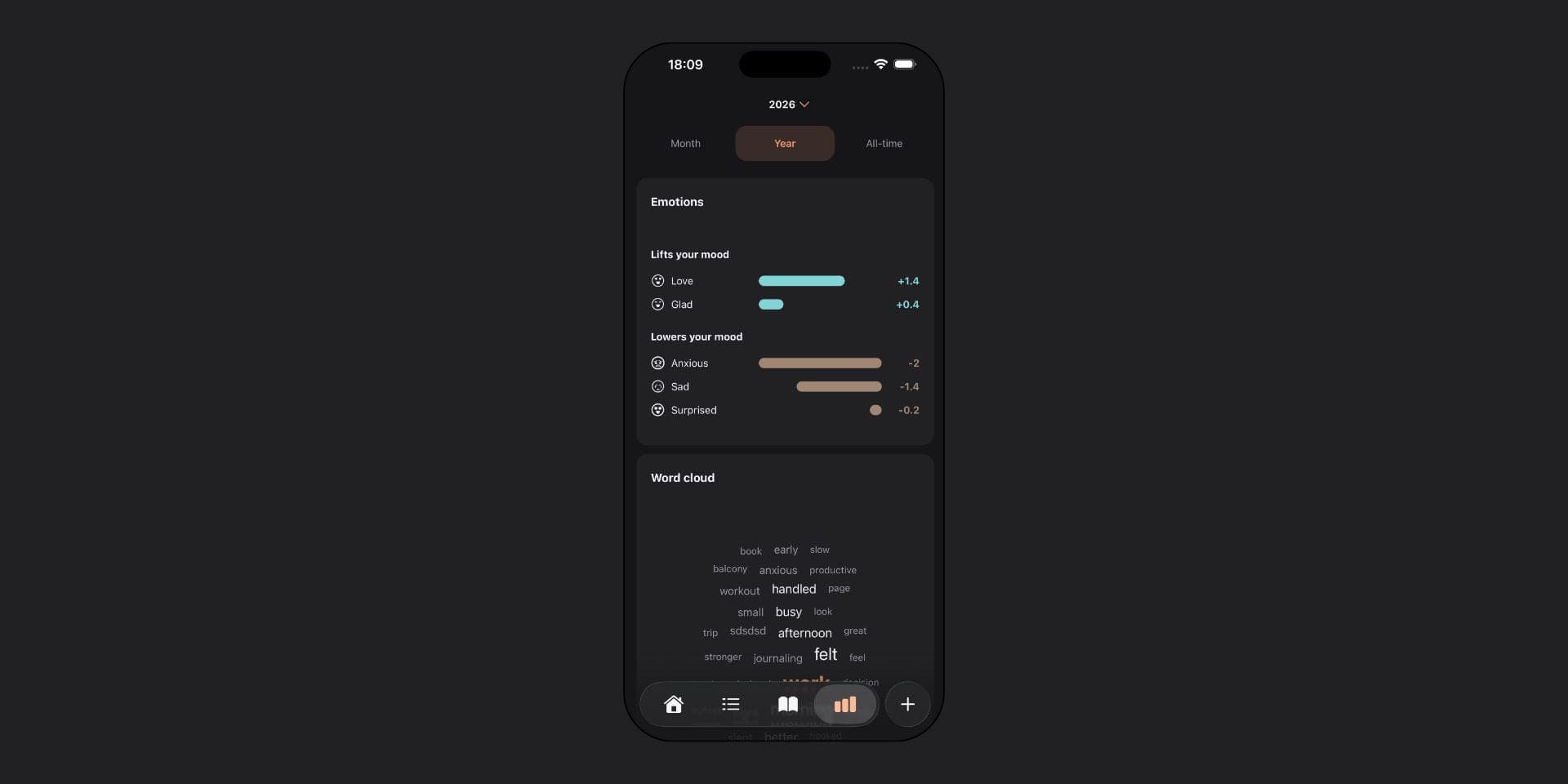
Tracking what surrounds a feeling. You can log locations, nutrition, body, people and activities with each entry, with your own custom items alongside the built-in ones. Coffee, sleep, a run, a particular meeting. Over weeks, Luci lines these up with your ratings and tells you in plain language what tends to sit next to your calmer and your harder days. This is the part that turns a mood log into a trigger log.
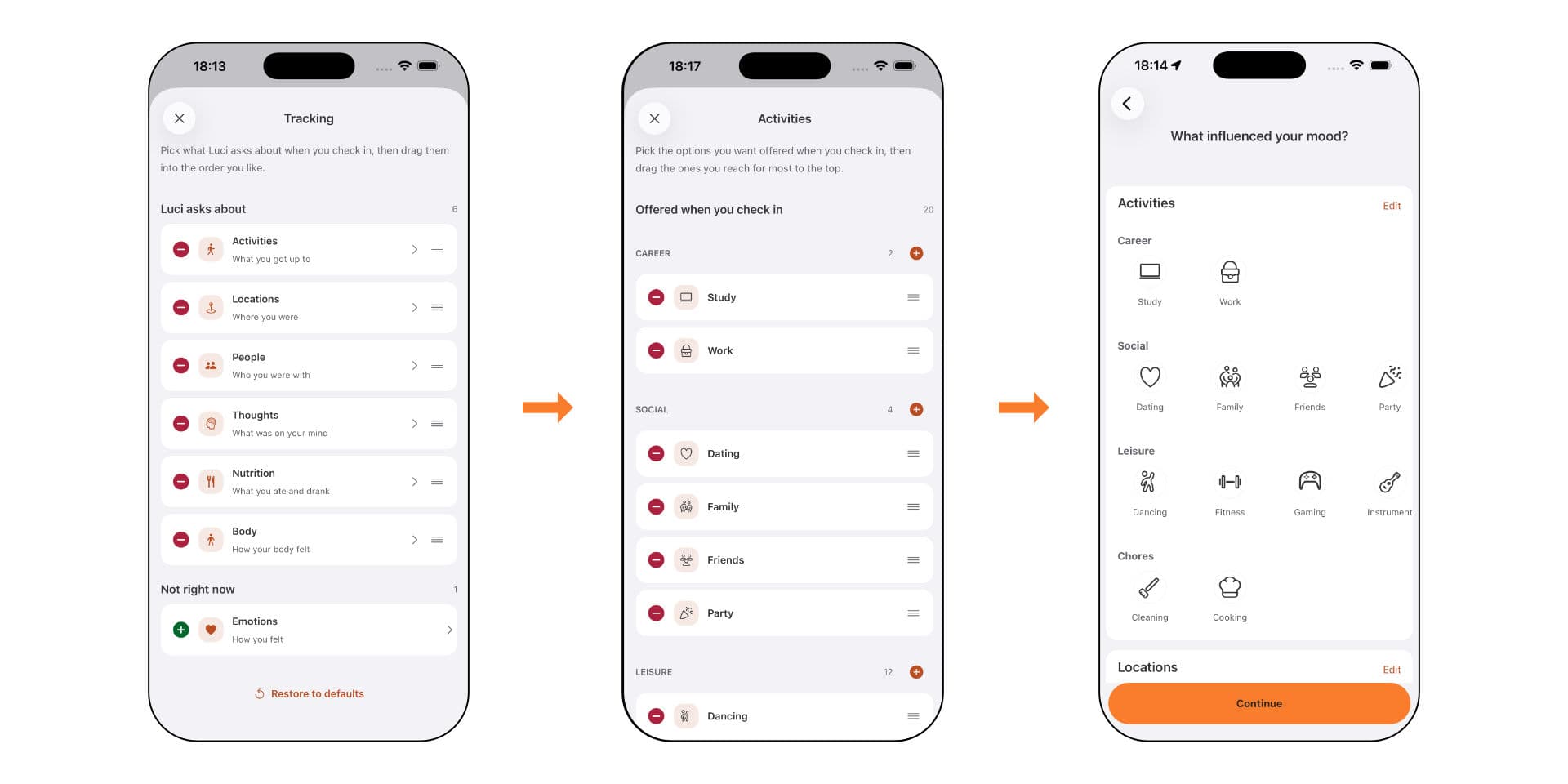
A scale that can be simple or detailed. Luci comes with three scales: simple (five options), standard (ten options) and detailed. On a heavy day the simple one is enough, and all three feed the same record.
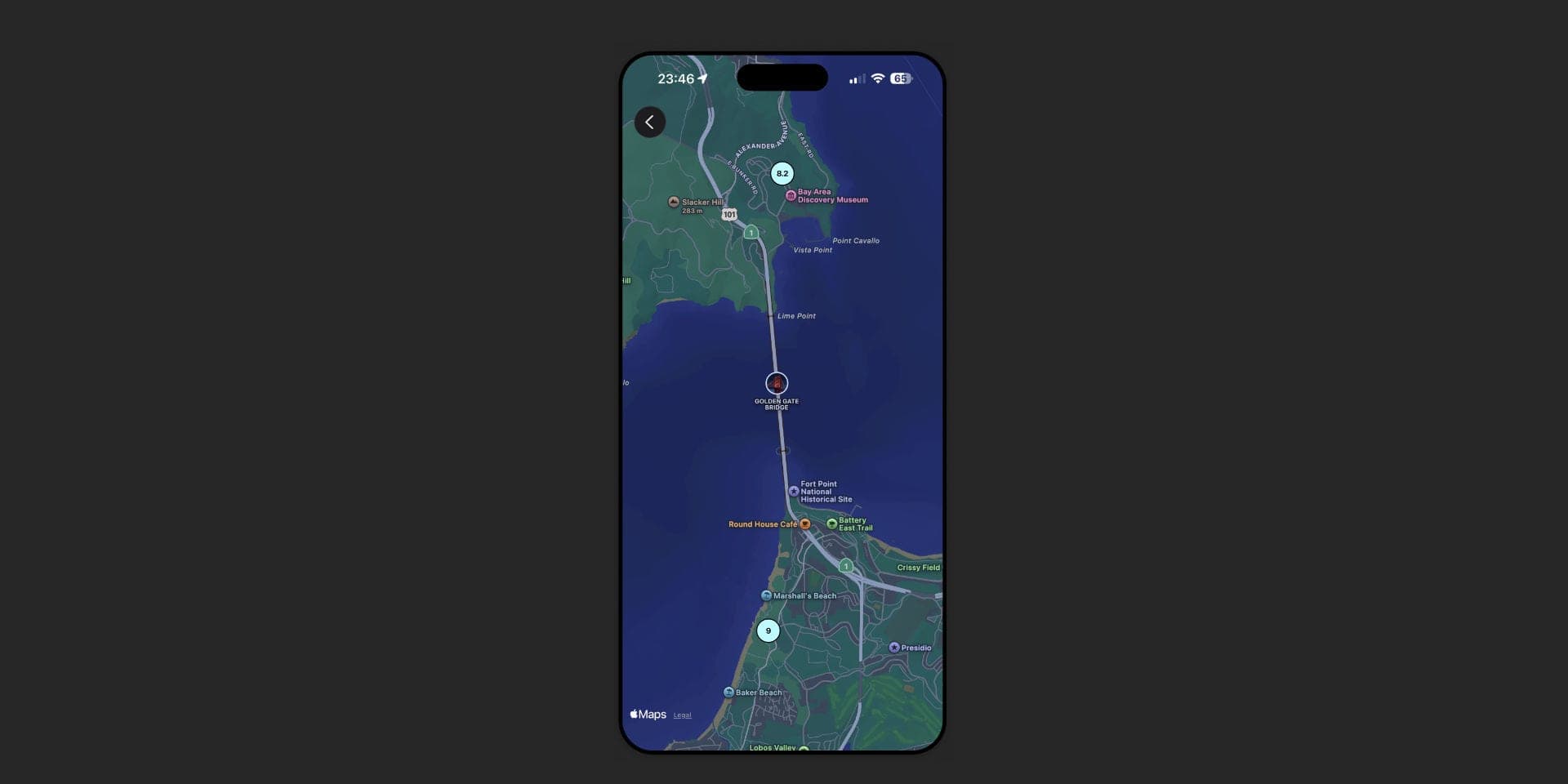
Mood on a map. Luci can show how you felt at each place you logged from. For anxiety that tends to attach to places, the office, a particular street, a parent's house, that view can be revealing in a way a list is not. You can create custom locations, track via GPS or combine both to auto-tag the places that matter to you.
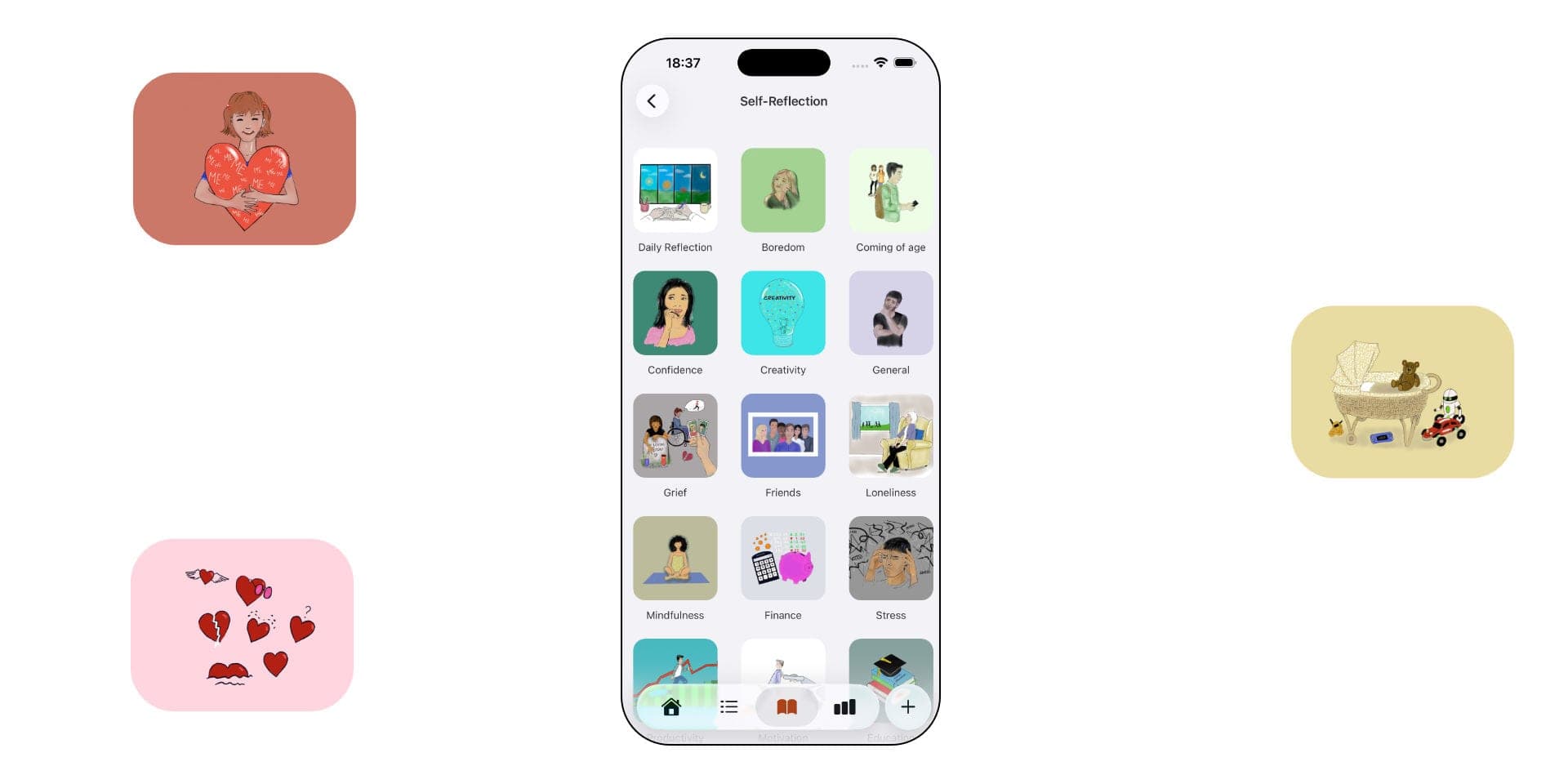
Prompts, by topic. Luci includes journal prompts organised by theme, with a set for stress and others for sleep, work, relationships, daily reflection and more. When "how was today" is not enough, a question like "what did you expect to happen, and what happened" is a small exercise in checking in with the mind.
A journal that takes more than text. Entries can hold written notes, audio and photos. A voice note is faster than typing when your hands are not steady, and a photo can hold context a sentence would miss.
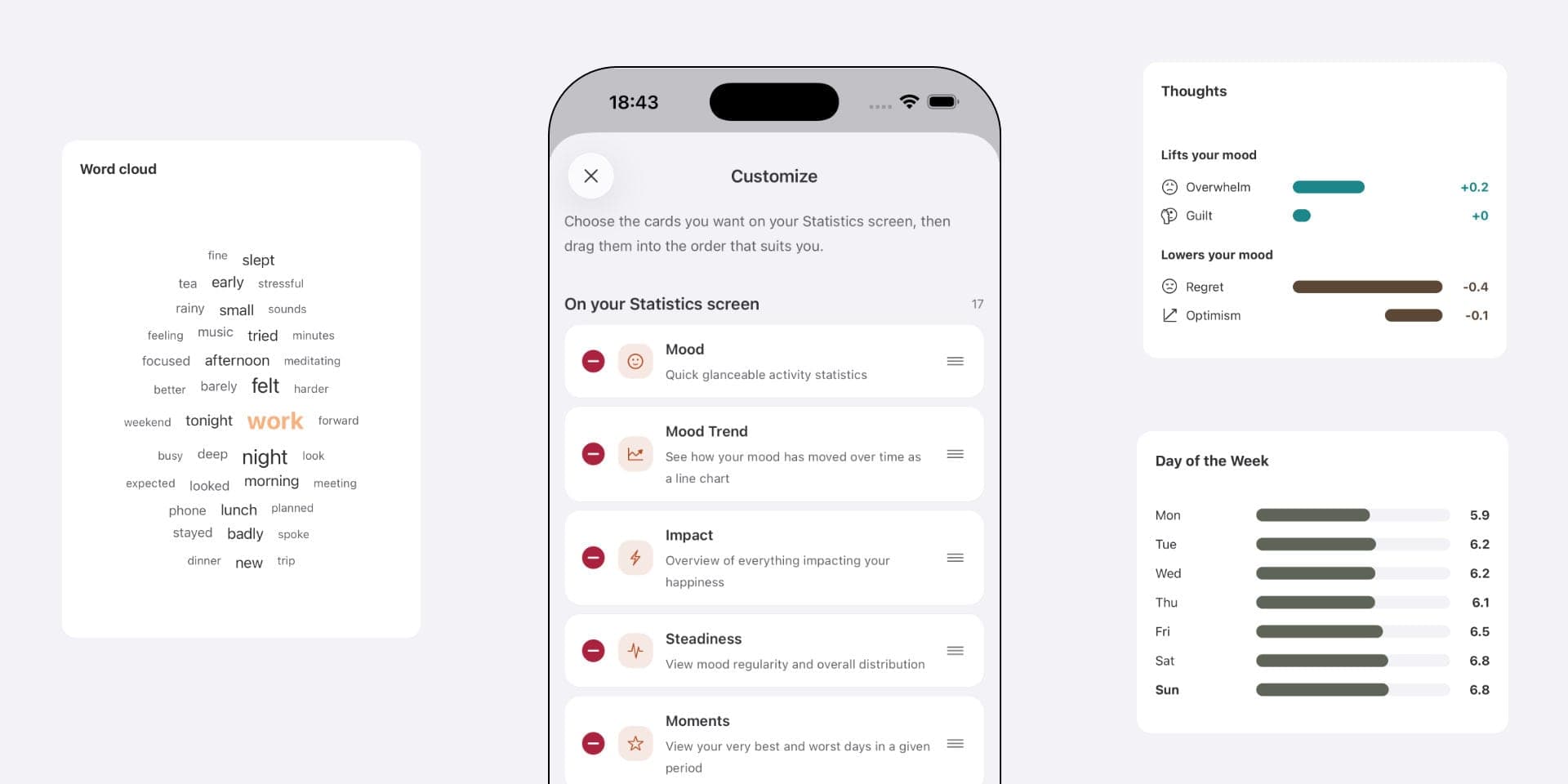
You decide what you see. Every graph on the stats screen and the home screen can be hidden or shown. If the numbers are helping, keep them close. If they are feeding the worry this week, tuck them away and keep logging. The record continues either way.
Private by default. Your entries stay on your device unless you choose to sync them, and sync is encrypted when you turn it on. There is no account to create. Read more in our privacy policy.
Export for a professional conversation. Everything can be exported and printed, for the period and at the level of detail you choose, so you can take it to a therapist or a doctor rather than reconstructing the month from memory. And if you prefer, you can leave written notes out of the export.
What Luci is not
Luci does not diagnose, treat or assess anxiety, and it is not a substitute for a clinician, a therapist or the people who know you. It surfaces patterns. What those patterns mean belongs to you and, if you choose, to the professionals you work with. If your record shows something shifting, that is worth a conversation with someone qualified, not a conclusion to draw alone.
If you are in crisis, please contact your local emergency services or a crisis line now.
Luci is on the App Store and Google Play, with Apple Watch and widgets for quick logging. The free version includes mood tracking, custom emotions, the core graphs and the journal. If it fits how you feel, it is yours to keep.
Sources (11)
- Anxiety disorders fact sheet
- Anxiety disorders
- Generalised anxiety disorder in adults
- Anxiety and panic attacks
- Generalised anxiety disorder and panic disorder in adults: management (CG113)
- What are anxiety disorders?
- Treatment of anxiety disorders
- Putting feelings into words: affect labeling disrupts amygdala activity in response to affective stimuli
- Self-monitoring using mobile phones in the early stages of adolescent depression: randomized controlled trial
- Engagement in mobile phone app for self-monitoring of emotional wellbeing predicts changes in mental health: MoodPrism
- Caffeine intake and anxiety: a meta-analysis

Luci
Bringing light to your mental health journey.