
Luci vs How We Feel

Luci vs How We Feel

One is a free nonprofit app built around naming the feeling precisely. The other is built around finding out what causes it. Here is where each one is stronger, category by category.

Updated September 14, 2026Compared: Luci 4.1.0 and How We Feel 1.17.12

How We Feel is a rare thing: a polished, science-informed mood tracker with no price, no ads and no upsell. It comes from a nonprofit set up with Yale's Center for Emotional Intelligence, built on Marc Brackett's Mood Meter, and its whole premise is that naming a feeling precisely is the first step to doing something about it. The check-in is a coloured grid of energy against pleasantness, and every word on it comes with a definition.

Luci shares the belief that a small daily entry beats a diary you abandon, and then spends its effort on the questions that come after the naming: what tracks with your better and worse days, what carries real weight, and whether the thing you changed has helped. It is also a fuller journal, with free writing and over six hundred guided prompts, and it runs on more devices.

The two overlap less than you might expect. Each of the nine sections below looks at one category, gives both apps a fair hearing, and names a winner. The table at the foot collects the verdicts, and we'll conclude by picking a winner.

The two apps in brief

Luci

Version 4.1.0

A mood tracker and guided journal that finds the patterns behind how you feel, and keeps everything on your device.

Luci logs a mood in one drag, lets you tag what was going on around it, and turns those entries into plain-language observations about what moves your mood. It doubles as a journal, with free writing and over six hundred guided prompts. It is made by a small independent team, needs no account, and does its analysis on your phone.
How We Feel

By The How We Feel Project, Inc. · Version 1.17.12

Find the right word for how you feel, then a one-minute strategy for it. Free, from a nonprofit.

How We Feel is made by The How We Feel Project, a nonprofit founded with Yale's Center for Emotional Intelligence and funded by donations. A check-in starts on the Mood Meter, a four-colour grid where you place your energy and how pleasant you feel, then narrow to one of well over a hundred named emotions. You can add tags, a note, a photo, a voice memo, sleep, exercise and weather, and the app answers with short video strategies from the scientists who made it. It is free in full, on iPhone and Android, in English and Spanish.

Look and feel

How the app looks, how it feels to use, and how fast an entry is on a day when you have no patience for it.

Luci

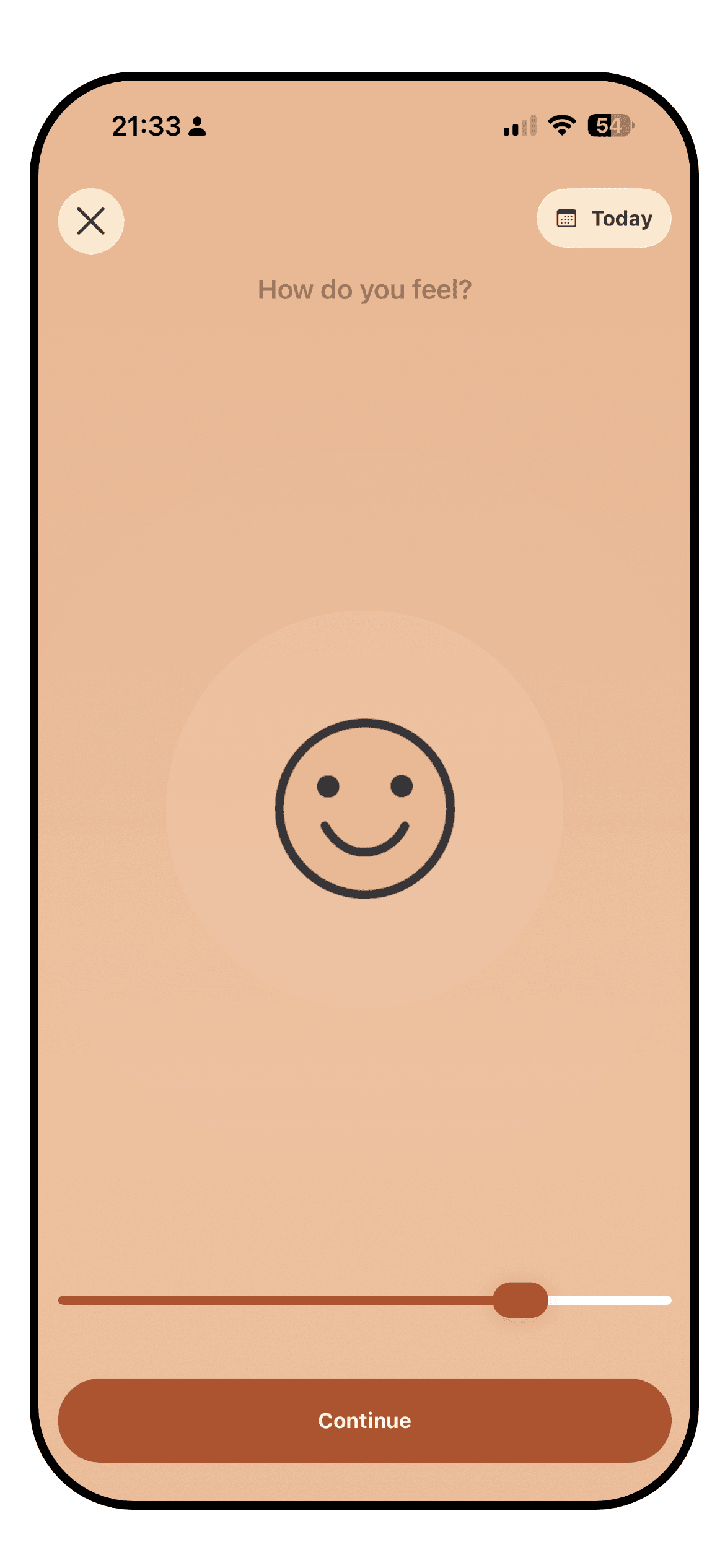
The Luci mood entry screen with the slider mid-drag and influence chips below it

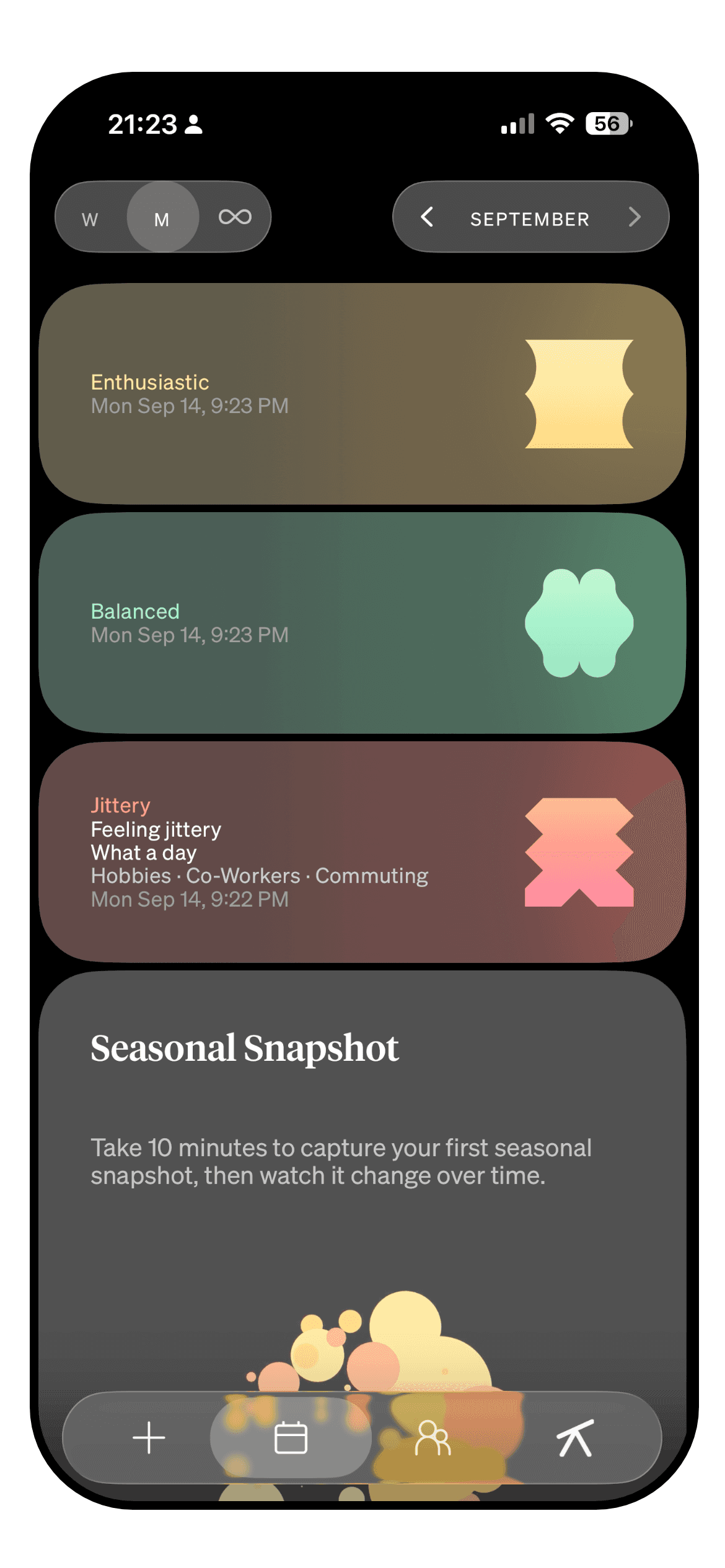
Luci opens on a slider. You drag it to where your mood sits on a one-to-ten scale, or a row of smileys if you prefer faces, and that drag on its own is a complete entry. The chips for activities, emotions, people and places sit underneath, and a note, a photo or a voice note can follow if you feel like it. It is warm, roomy and quick, and it reads as a journal that happens to be fast.

It is also a more general-purpose interface than How We Feel's. The entry screen grows as you add chips to track, and the statistics tab is a stack of cards that rewards a scroll. Luci asks you to rate the day first and name the feeling second, which suits people who want a number they can chart. People who want the naming to be the whole ritual will find How We Feel's flow more focused.

How We Feel

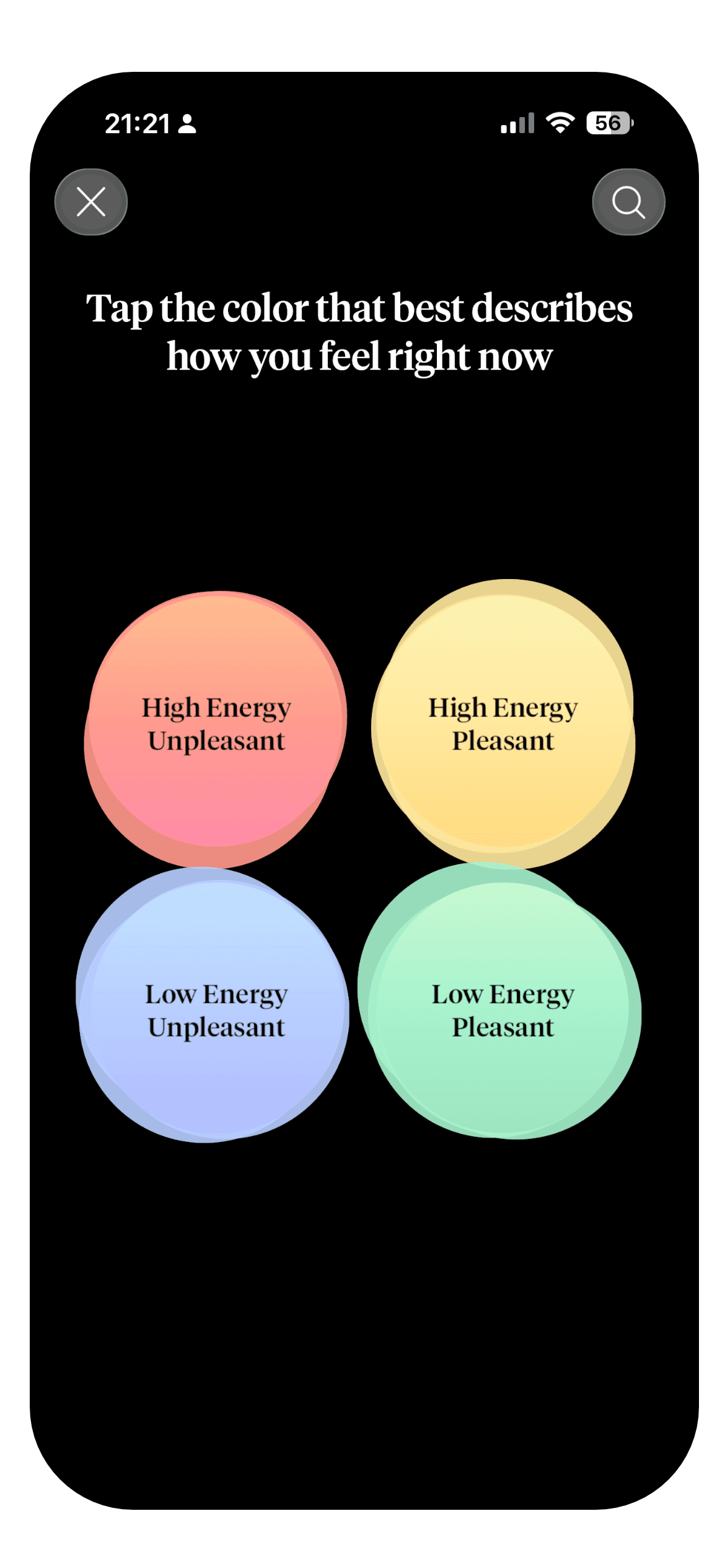
The How We Feel check-in with the four-colour Mood Meter grid and a feeling word selected

How We Feel is one of the best-designed apps in the category. The check-in is a single gesture on the Mood Meter, a grid coloured red, yellow, blue and green for high and low energy against unpleasant and pleasant, and it then offers a handful of precise words for the spot you chose, each with a short definition. Choosing between "apprehensive" and "uneasy" turns out to be a surprisingly useful thing to be asked to do.

Every step after that can be skipped with a swipe, a long press saves an entry immediately, and the animation and typography are calm without being precious. Check-ins become emotion postcards, a photo and the feeling composed together. The one cost is that the four-colour grid is a fixed vocabulary of emotion rather than a scale, so there is no "today was a seven" to lean on when words are not what you have.

WinnerHow We Feel

How We Feel. The Mood Meter check-in is a beautiful, focused ritual, and the definitions teach you something each time. Luci is quick and pleasant, and a shade more utilitarian.

Insights

What you can learn from your own entries once you have a few weeks of them: charts, correlations, trends, and how clearly they are explained.

Luci

The Luci statistics screen with a trend line and ranked influences

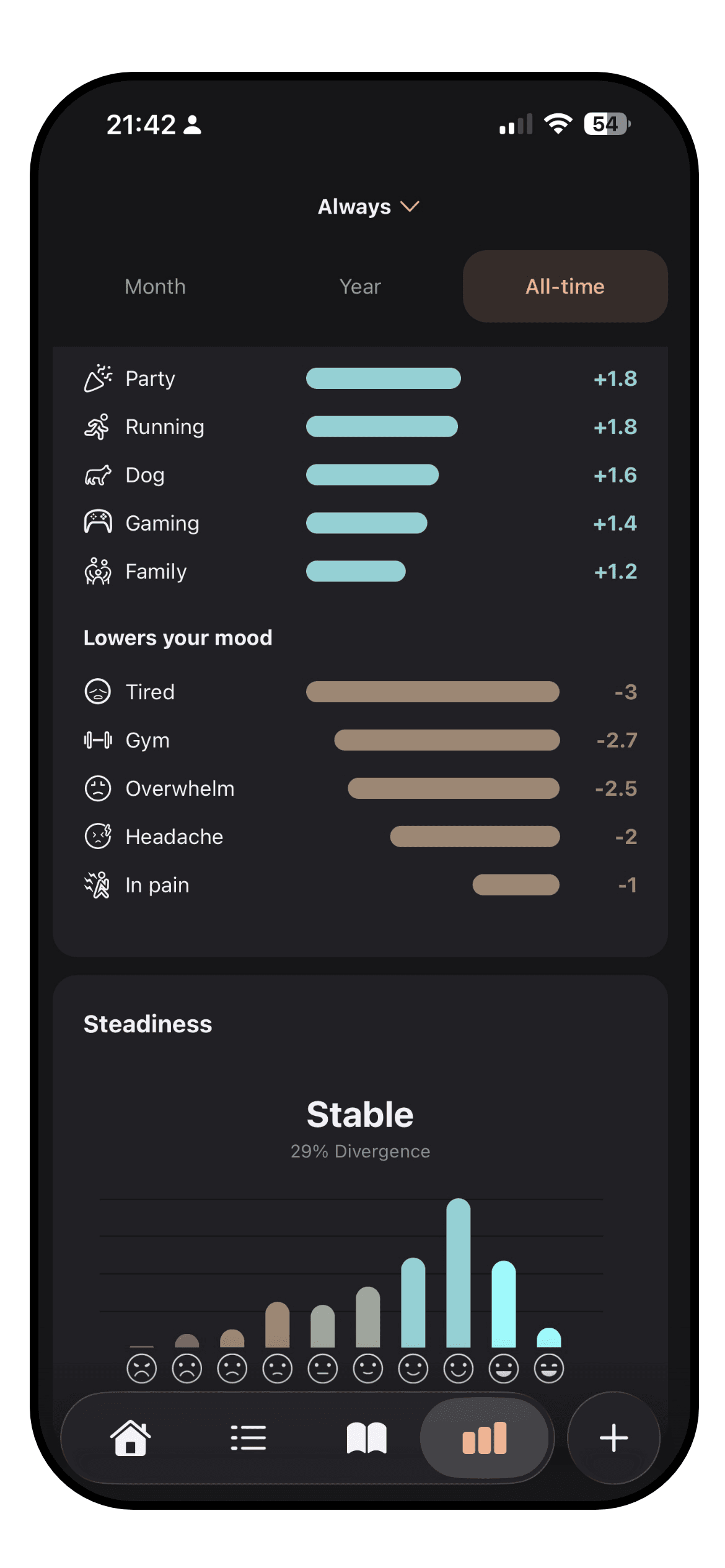
This is the category Luci is built around. Every entry can carry the people, places, activities, emotions, sleep and habits around it, and Luci reads across all of them to say, in a sentence, what tracks with your better and worse days. It ranks each thing you tag by how far it shifts your average, with a sign and a size, so a recurring meeting and a short night can be compared on one list. Each observation says how many entries it rests on.

Underneath the sentences are the charts: mood trend over any period, averages you can compare month against month, mood steadiness, time of day, day of the week, weather, location, emotions, and a word cloud drawn from your notes. It all runs on your phone with no connection, and it does not need anything switched on. The statistics are simply there once the entries are.

How We Feel

The How We Feel calendar view with a month of coloured check-ins

How We Feel is deliberately lighter here. The calendar tab shows a month of check-ins as coloured squares, so a run of red or a patch of green is easy to spot, and the app surfaces your most frequent feelings and how they sit against the sleep and exercise it has read from Apple Health. It is awareness rather than analysis, and the app is honest that this is the intent.

The deeper reading comes from the optional AI features. The Week Unfolded is a Sunday review of the last seven days that looks for themes, and Reflect is a thought partner that asks why you felt a certain way and points out thinking traps. Both are opt-in, both need you to switch them on, and both send that week's check-ins to OpenAI to be read. They are thoughtful features. They are not statistics, and they come with that trade.

WinnerLuci

Luci. How We Feel shows you the shape of a month and offers an AI review if you want one. Luci counts everything, ranks what matters, and explains it on the device.

Customisation

What you can change: the mood scale, the things you track, the icons, the colours, the layout.

Luci

A long list of user-added activities and emotions in Luci

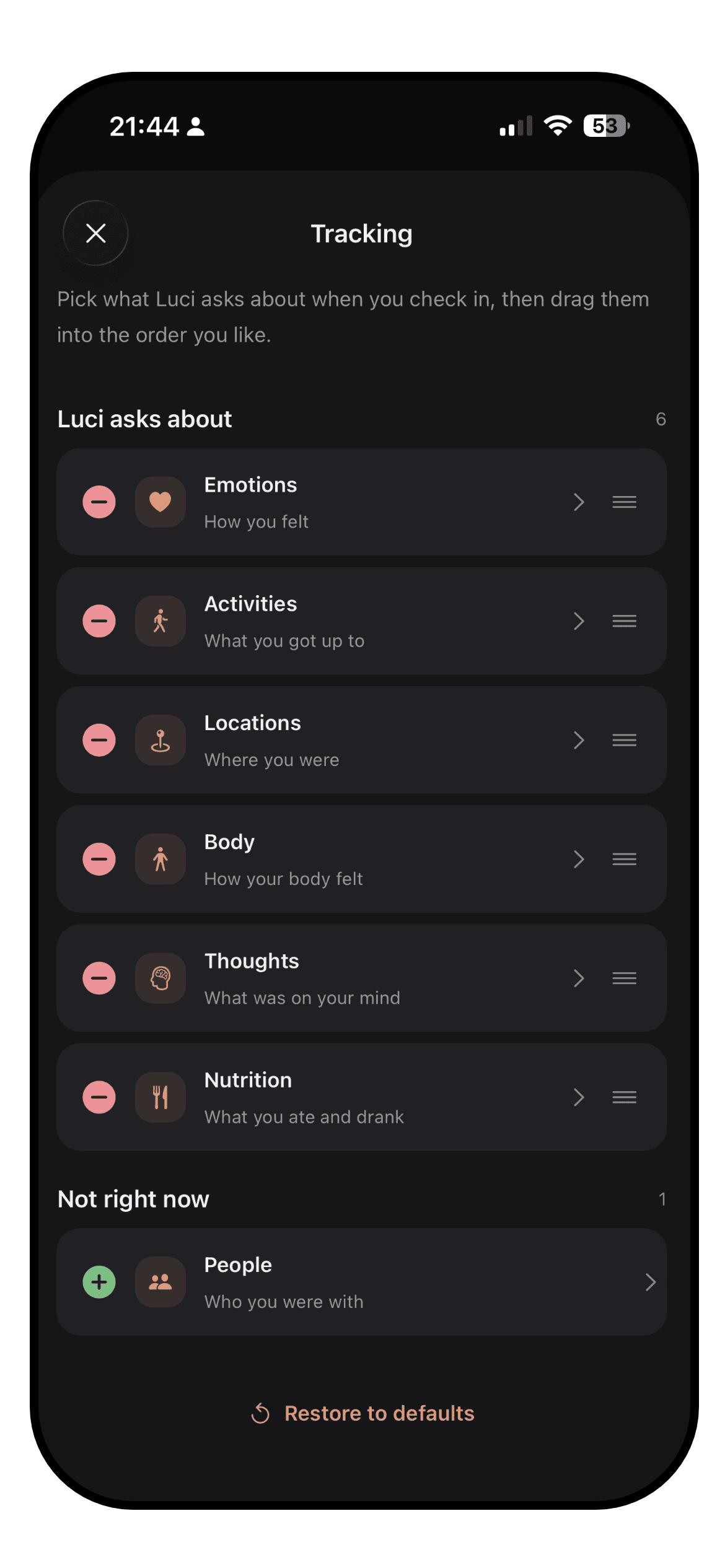
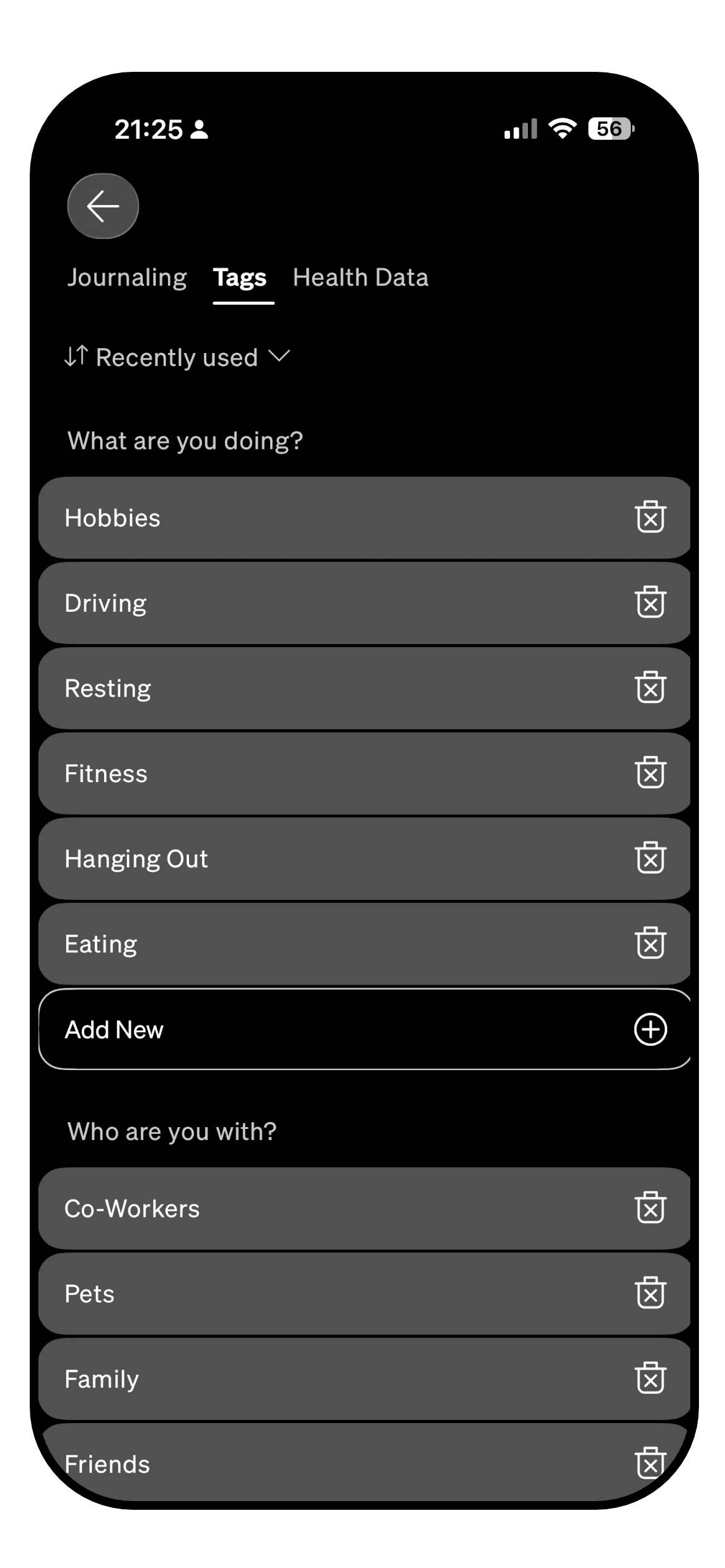
Luci lets you choose the scale itself: a one-to-ten slider, smileys, or Roman numerals, with the granularity set to what you find meaningful. Everything you track is a chip you can add, rename, remove or pin, across activities, emotions, people, places, nutrition, physical state and thought patterns. The home screen and the statistics screen can both be rearranged so the cards you care about come first.

Where Luci does less is decoration. There is a light theme and a dark theme, and cosmetic items such as mood scales and color themes you can unlock using Sparks, the in-app currency you earn by reflecting. Where Luci falls short is the amount of icons you can pick to represent each trackable item.

How We Feel

The How We Feel custom feeling screen

How We Feel is opinionated by design. The Mood Meter is the Mood Meter: four colours, one layout, one vocabulary, because the science behind it is the point. Since mid-2026 you can add a feeling of your own to the grid, which was the most requested change for years, and you can create tags for the people, places and activities around a check-in. Reminders and the friends you share with are yours to set.

That is roughly the list. There are no alternative scales, no themes beyond the system light and dark, no rearranging of screens, and the tag system is thinner than a dedicated tracker's. None of this is an oversight. A tool built to teach a vocabulary does not want you to redesign the vocabulary. It does mean the app fits you or it does not, with little room to adjust.

WinnerLuci

Luci. A choice of scales and granularity, custom chips in every category, and rearrangeable screens. How We Feel now allows custom feelings and tags, and keeps everything else fixed on purpose.

Journaling

How good it is as a journal, for people who write more than a line. Formatting, prompts, photos, voice, and reading it back.

Luci

A guided journal prompt in Luci, part-way through an answer

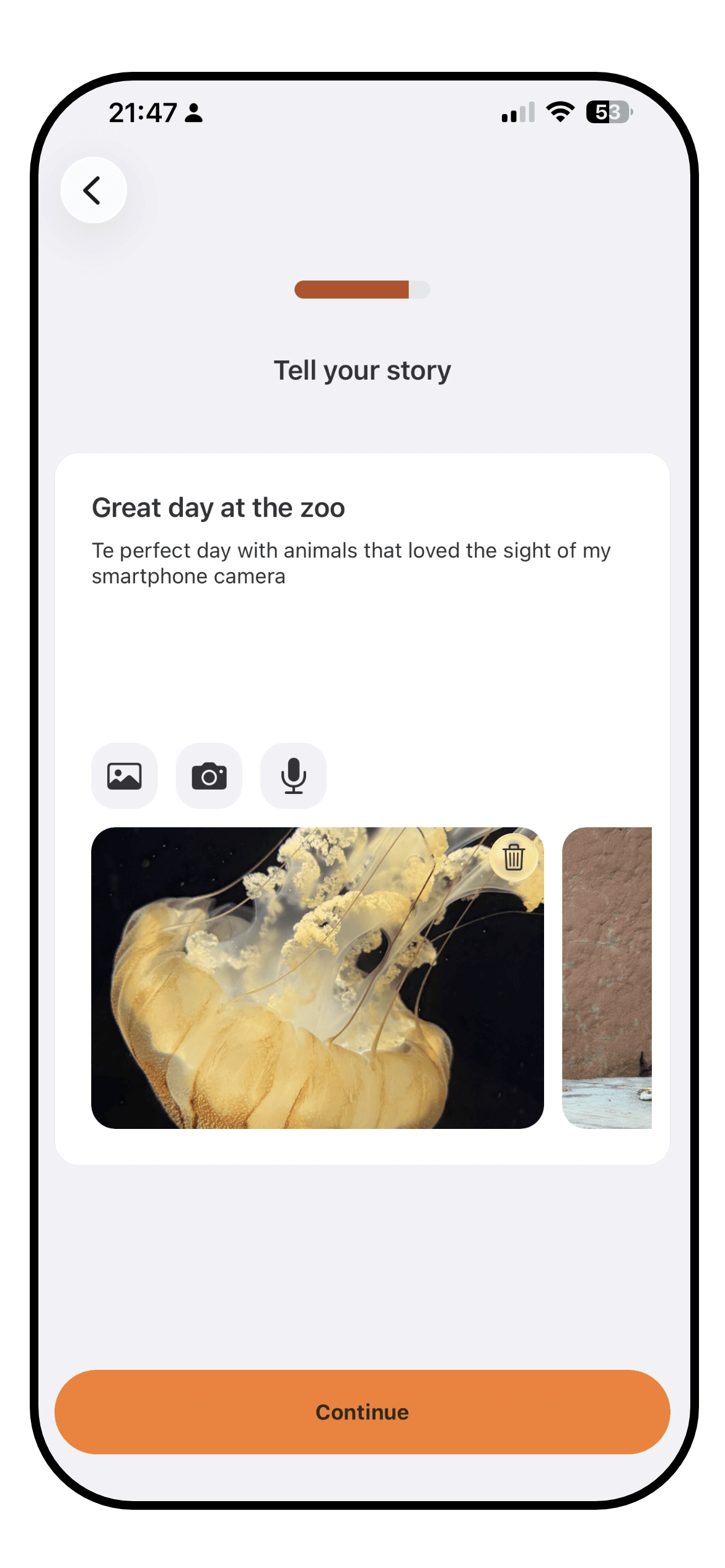
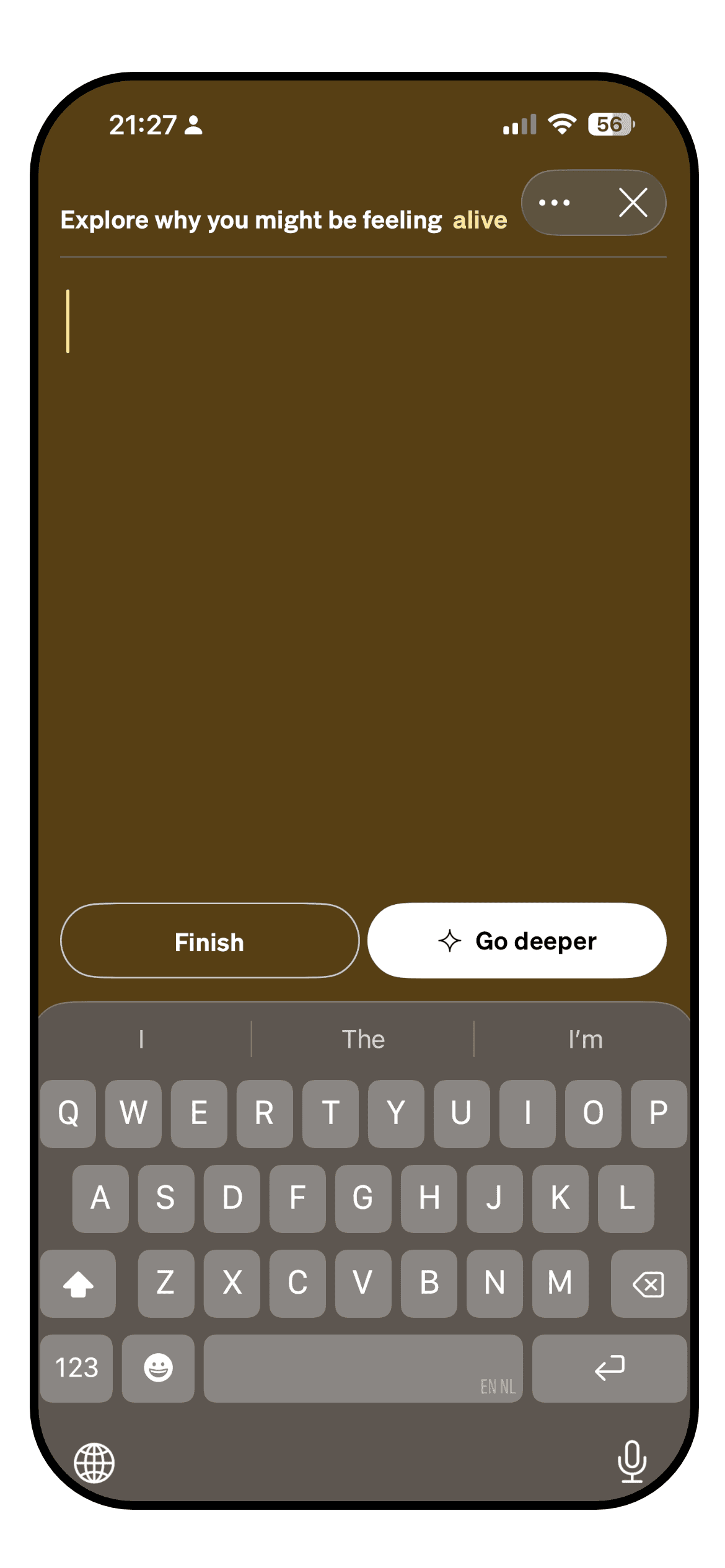
Luci is a journal as much as a tracker. A note can use headings, bold and italics, and carry photos and voice notes. When the blank page is the obstacle, there are over six hundred guided prompts across twenty topics, from stress and grief to money and motivation, each with optional guidance on how to approach it and a short tip drawn from cognitive behavioural therapy at the end of a session. A daily prompt is there for the days you want one.

Because prompts repeat, Luci can show what you wrote last time the same question came round, which is the clearest evidence of change most people ever get. Your notes also feed the statistics: the word cloud and the journal moments card read them back to you. If you write more than a line, this is the app built for it.

How We Feel

A How We Feel check-in with a note, a photo and a voice memo

A How We Feel check-in can carry a note, a photo and a voice memo, and the app calls itself an emotional wellbeing journal with some justification. The note is plain text and short by design, and the photo turns the check-in into a postcard you can look back on. Where it gets interesting is Reflect, the optional AI feature: it asks why you feel the way you do, suggests another perspective, and saves a takeaway you can revisit later.

What it does not have is a prompt library, formatting, or any way to compare an answer with what you wrote months ago. Reflect is a conversation with a model rather than a question you sit with, and it only works once you have opted into sending your entries to OpenAI. As a place to write a paragraph and read it back, How We Feel is fine. As a journal you keep for years, it is thin.

WinnerLuci

Luci. Formatting, photos, voice, six hundred guided prompts and answer comparison against short notes, postcards and an optional AI conversation.

Other features

Everything outside the core loop: goals and habits, reminders, widgets, articles, achievements, watch apps.

Luci

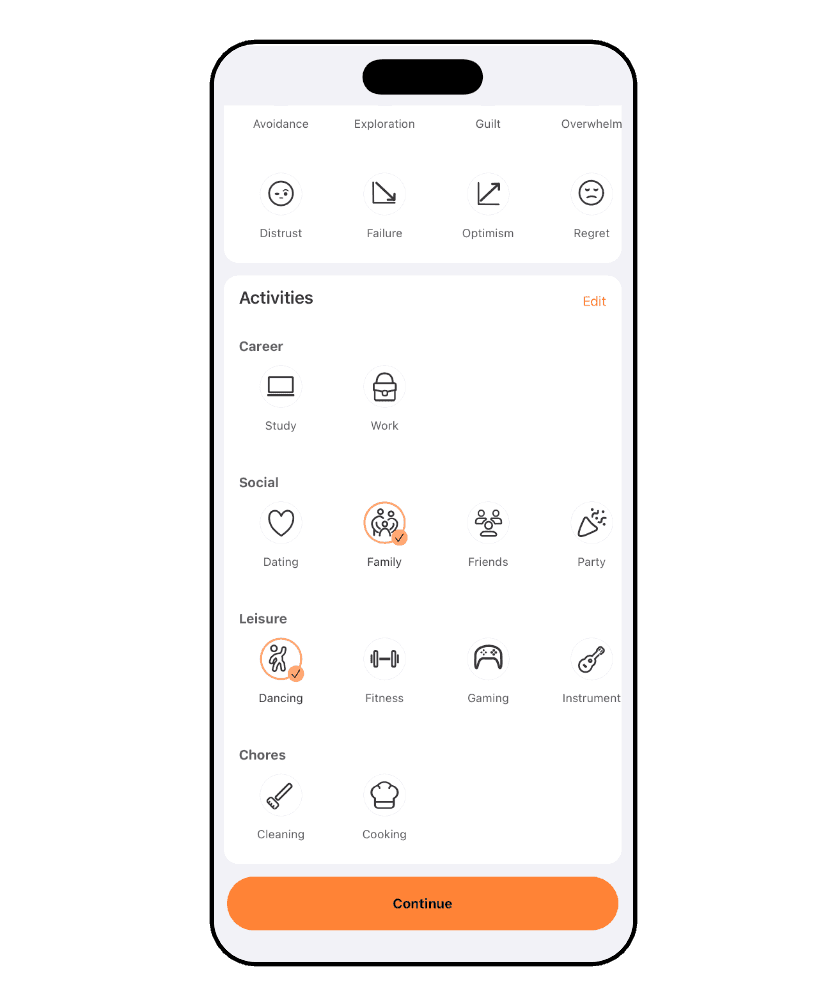
The self-reflection topic picker in Luci

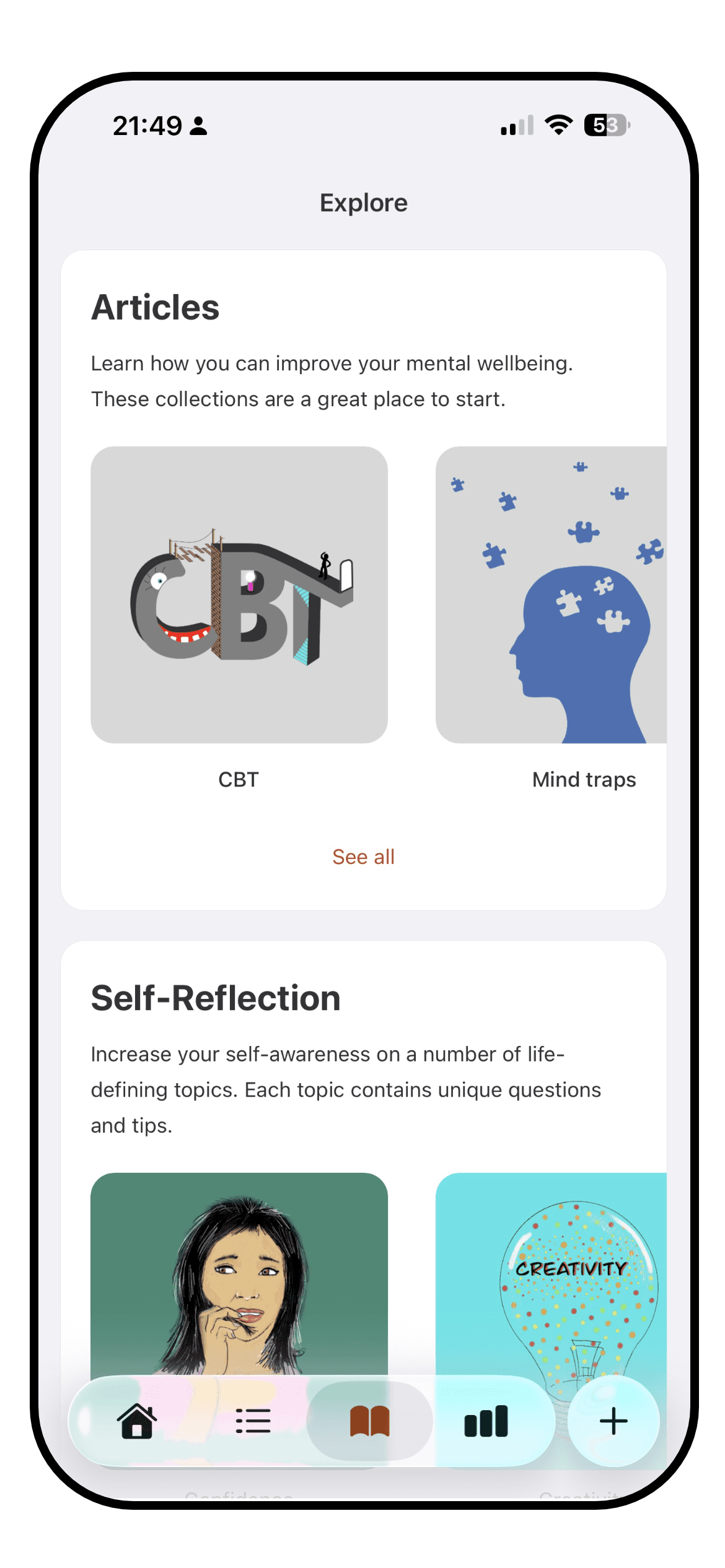
Outside the core loop Luci has a period and year in pixels, home screen and lock screen widgets, an Apple Watch app with its own widget, reminders, and a set of mental-health articles on topics like thinking traps and CBT that cite their sources at the foot of each piece. Reflecting earns Sparks, which unlock cosmetic items, and there is a set of achievements for keeping at it.

What Luci does not have is video, a curriculum, or a social layer. The CBT-inspired tips at the end of a prompt session are a paragraph, not a guided exercise, and there is no way to share a check-in with a friend. Luci is a private tool by temperament, and the features around the tracker are about reading and reflecting rather than doing something with your body or your relationships.

How We Feel

The How We Feel Tools tab with the four strategy categories

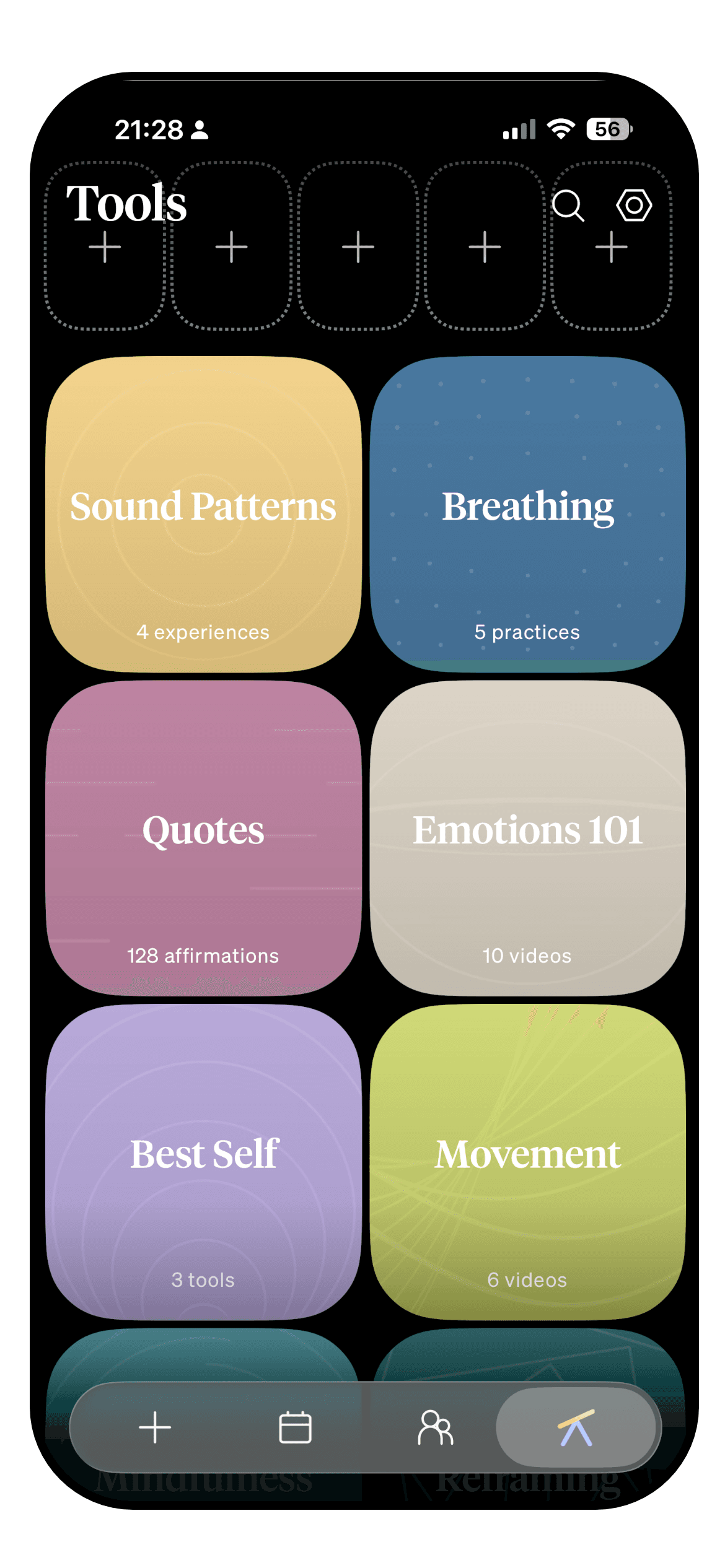
This is where How We Feel pulls ahead. Every check-in leads to a strategy: short videos, many under two minutes, from the scientists and therapists who made the app, grouped as Change Your Thinking, Move Your Body, Be Mindful and Reach Out. They are genuinely good, they are specific to the feeling you just named, and nothing in the category matches them. Body sensation mapping adds where you feel it, and the emotion vocabulary itself is a feature: over a hundred words with definitions you slowly absorb.

There is also a friends layer. You can share a check-in with people you trust in real time, choosing between the feeling alone or everything attached to it, and they can react or leave one supportive reply. Widgets, reminders, an English and Spanish interface, and an anonymous group check-in tool for teachers and facilitators round it out. It is a toolkit for regulating emotion, and the tracker is the door into it.

WinnerHow We Feel

How We Feel. Video strategies from the people who wrote the research, a friends layer and a taught vocabulary. Luci has a watch app, articles and prompts, and none of those three.

Context and integrations

How much of the world around an entry the app can capture, by hand or from your phone: sleep, steps, weather, places, people, health data.

Luci

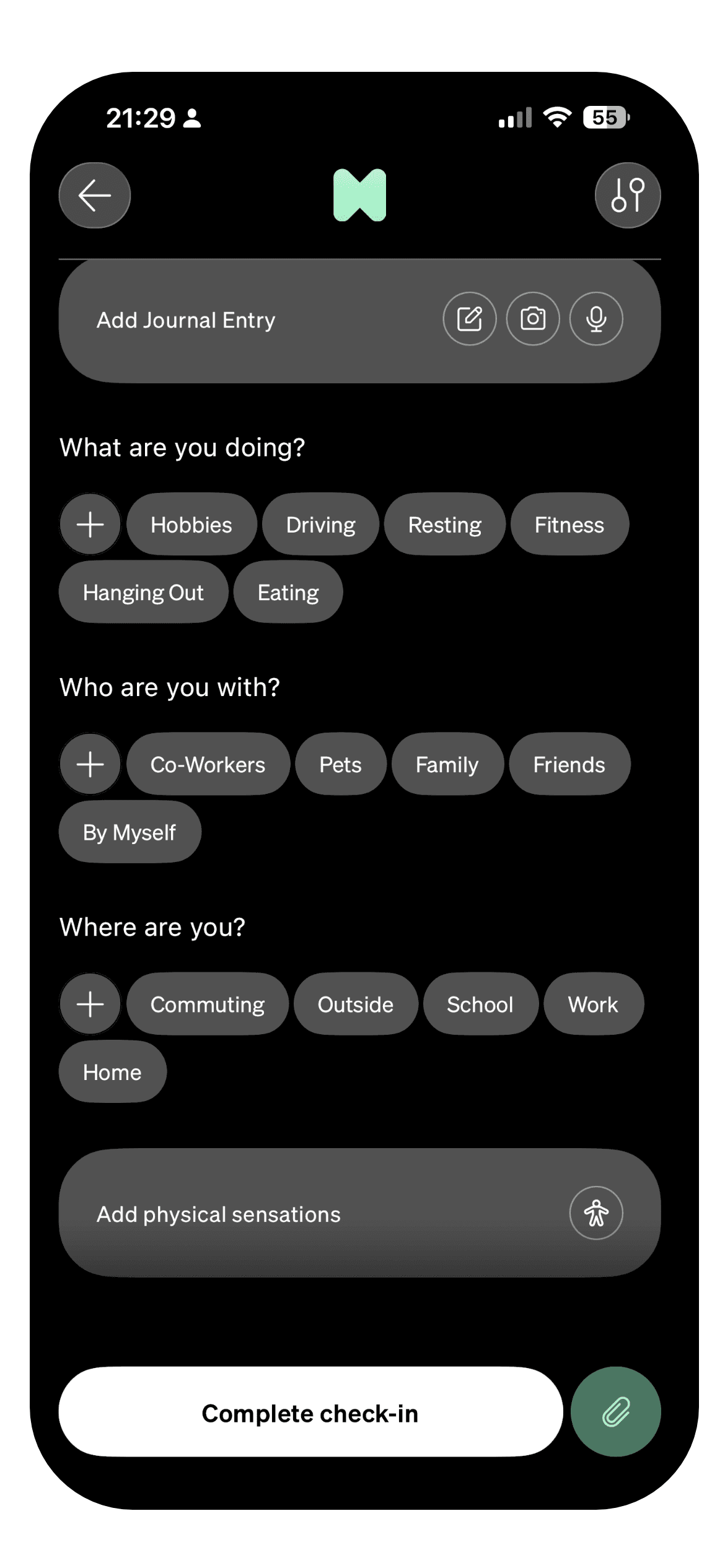
A Luci entry with people, place and activity chips selected

An entry in Luci can carry a lot of the world around it. People, places and activities are chips. Sleep and steps come in from Apple Health on iPhone once you allow it, so they sit beside a mood without being typed. A geotag attaches your location and the weather at the moment of writing, and a place can be pinned to a chip so it is selected automatically when you write from there. Nutrition, energy, rest and tension have their own sets, and so do recurring thought patterns like worry or self-judgement.

All of it becomes something the statistics can use. The location card, the weather card, the people card and the physical card each show how your mood moves with that input, and the impact ranking puts them all on one list. Health data read this way stays on your device. On Android the health connection is not currently available, which is the one gap here.

How We Feel

The How We Feel check-in options step with sleep, exercise, weather and intake fields

How We Feel captures more context than most people expect from a free app. A check-in can record sleep and exercise, read from Apple Health on iPhone or entered by hand, the weather at your location, your water, caffeine and alcohol for the day, and where in the body you feel the emotion. Tags cover the people, places and activities around it. That is a serious list, and it exists because the app wants to show you how sleep and movement relate to feeling.

The difference is what happens next. Luci turns each of those inputs into a ranked, signed number; How We Feel shows them beside your check-ins and leaves the reading to you, or to the optional AI review. There is also no location layer beyond the weather, and no pinning a place so it tags itself. Rich context, lightly used.

WinnerLuci

Luci, narrowly. Both read Apple Health and the weather. Luci adds places and people as first-class data and then does the arithmetic on all of it.

Privacy

Where your entries live, who can read them, whether an account is required, and how easily you can leave with your data.

Luci

Luci needs no account and no email address. Entries live on the device you wrote them on, and every statistic is calculated there too, so the app works in full with no connection. Sync is off until you turn it on. Switch it on and your journal follows you between phone, tablet and watch, encrypted, tied to an account you create at that point and not before. Nothing you write is used to train anything and nothing is sent to a model to be read.

Leaving is a two-tap operation: export the lot as a readable PDF or as a backup file you can import again later. If you never turned sync on, there was never anything on our side to delete; if you did, there is a page in the footer that explains exactly how to remove it. Purchases go through Apple or Google, and crash reports are optional and carry no journal content.

How We Feel

How We Feel's privacy position is as good as Luci's, and it comes from a nonprofit with no revenue to protect. No account is needed. Check-ins are stored on the device and the organisation says plainly that it cannot read them. Backups go to your own iCloud or Google Drive. Research use is opt-in and anonymised, and export is a CSV you can carry to a new phone.

The edges are where you should read carefully. The AI features send your check-ins to OpenAI when you switch them on, with an agreement that they are not retained or trained on, and they stay off until you choose otherwise. Sharing with friends necessarily passes through a server. Weather needs your location. Each is a clear choice rather than a default, which is exactly how it should be done.

WinnerTie

A tie. Both keep everything on the device with no account. Luci does its analysis there too; How We Feel asks first before any feature that would send a check-in anywhere.

Platforms

Where the app runs: iPhone, Android, iPad, watch, desktop, and whether your entries follow you between them.

Luci

iPhone, iPad, Apple Watch with its own app and complications, Mac with Apple silicon, Apple Vision, and Android. With sync on, one journal across all of them. Widgets on iOS and Android home screens.

How We Feel

iPhone and Android, with Apple Vision in compatibility mode. No Apple Watch app, no iPad or Mac build, and no sync between devices; a new phone is restored from a backup file. Widgets on iPhone. English and Spanish interfaces.

WinnerLuci

Luci. Both are on iPhone and Android. Luci adds a watch app, a tablet and Mac app, and sync between them.

Pricing

What is free, what is paid, and roughly what the paid tier costs. Prices vary by country, so these are the options and a rough figure, not a quote.

Luci

Free, with no account and no time limit: mood logging, journaling, photos and voice notes, the statistics and pattern discovery, six of the twenty prompt topics, widgets and the watch app. Luci Pro adds sync across devices, the remaining guided prompt topics and the advanced statistics.

Pro is a subscription at roughly $6 a month or $35 a year, or a one-off lifetime purchase at roughly $200. A subscription bought on one platform works on the other once you sign in. There are also optional tips, which buy nothing and simply support a small team.

How We Feel

Free. All of it, on both platforms, with no ads, no subscription, no premium tier and no locked features. How We Feel is a nonprofit funded by donations, and it says so in the app rather than asking you for one on the way in. There is nothing to compare here except to note that it is unusual, and that it is real.

The honest caveat is the one that applies to any donation-funded project: its future depends on the funding continuing, and the AI features depend on a third party. Neither has been a problem so far, and the app has been shipping steady updates for years.

WinnerHow We Feel

How We Feel. Entirely free with nothing held back. Luci's free tier is generous, and Pro exists.

The short version

Every category from the page above, in one table. Stars are our rating on a five-point scale; platforms and pricing are listed as they are.

CategoryLuciHow We FeelWinner
Look and feelSlider entry, warm and roomy, busier once fully set upMood Meter grid with definitions, calm and beautifully finishedHow We Feel
InsightsPlain-language patterns, ranked influences, trends, all on deviceCalendar and top feelings; AI weekly review if switched onLuci
CustomisationCustom scale and granularity, custom chips everywhere, rearrangeable screensCustom feelings and tags, otherwise fixed by designLuci
JournalingRich text, photos, voice, 600+ prompts, compare past answersShort notes, photos, voice memos, optional AI ReflectLuci
Other featuresWatch app, widgets, articles, achievements, Sparks, no socialVideo strategies, friends sharing, body sensations, widgetsHow We Feel
Context and integrationsApple Health sleep and steps, weather, geotag, people, places, rankedApple Health sleep and exercise, weather, water, caffeine, alcohol, bodyLuci
PrivacyOn device, no account, on-device analysis, opt-in encrypted syncOn device, no account, own-cloud backup, AI and sharing opt-inTie
PlatformsiOS, iPadOS, Android, Apple Watch, Mac, VisioniOS, Android, Vision (compatibility)Luci
PricingFree core; Pro ~$6/mo, ~$35/yr, ~$200 lifetimeFree in full, donation-funded, no premium tierHow We Feel

Conclusion

On the count, Luci takes five categories, How We Feel takes three and one is a tie. The count undersells how different the two apps are. How We Feel is a tool for naming and regulating an emotion in the moment, with a tracker attached. Luci is a tracker and journal for understanding your mood over months, with reflection attached. Plenty of people would be well served by either, and a few by both.

Where Luci is stronger

  • Insight. It counts everything, ranks what moves your mood with a sign and a size, and explains it in sentences, all on the device with nothing to switch on.
  • Journaling. Formatting, photos, voice notes, six hundred guided prompts and the ability to see what you wrote last time the same question came round.
  • Flexibility. Your choice of scale, custom chips in every category, and screens you can rearrange.
  • Reach. A watch app, tablet and Mac apps, and one journal synced across all of them if you turn sync on.

Where How We Feel is stronger

  • The check-in. The Mood Meter and its definitions are a beautiful, focused ritual that teaches you an emotional vocabulary as you use it.
  • Strategies. Short video exercises from the researchers behind the app, matched to the feeling you just named.
  • Connection. Sharing a check-in with people you trust, with control over how much they see.
  • Price. Free in full, from a nonprofit, with no upsell anywhere.

Choose Luci if

  • You want to know why. If the point of tracking is to learn what actually affects your mood, and to have it ranked and explained rather than left for you to read off a calendar, Luci is built for that.
  • You write. Even a few sentences a day. Prompts, formatting and answer comparison turn a mood log into a journal you will read back.
  • You wear an Apple Watch or use an iPad or Mac, and want the same journal on all of them.
  • You want your entries analysed without any of them leaving the phone, with or without AI features switched on.

Choose How We Feel if

  • You struggle to name what you feel, and want an app that helps you do that precisely and then hands you something to do about it.
  • You want guided strategies, from breathing to reframing, made by the people who study them.
  • You want to share how you feel with a partner or a close friend inside the app.
  • You want an app that will never ask you for money.

A fair way to decide is to ask what you want at the end of a check-in. If the answer is "a word for this and something to do about it", How We Feel is the better app and it will cost you nothing. If the answer is "to find out, over time, what is doing this to me", Luci will do more with the same ten seconds a day. Both are free to try, and a week of your own entries in each is a better test than any page.

How this comparison was made

Both apps were used side by side on the versions above, on an iPhone, with the free tier and the paid tier of each. Ratings are on the same five-point scale used across every comparison on this site. How We Feel is a registered product of its maker and is not affiliated with Luci. Prices are rough US figures and change by country; check the store listing for yours.

Common questions

  • Can I use Luci and How We Feel together?

    Yes, and some people do. How We Feel for the naming and the strategies in the moment, Luci for the long record and the patterns. It is two check-ins instead of one, which is the real cost, so most people settle on whichever answers the question they actually have.

  • Is How We Feel really free?

    Yes. There is no premium tier, no subscription and no ads. The How We Feel Project is a nonprofit funded by donations. Luci is free to use as well, with an optional Pro tier for sync, the full set of prompt topics and the advanced statistics.

  • Which app keeps my data more private?

    They are close. Both keep entries on your device and need no account. Luci also does its statistics on the device and never sends an entry to be read. How We Feel's AI review and Reflect send check-ins to OpenAI, but only if you switch those features on, and it says so clearly before you do.

  • Does either app work on Apple Watch?

    Luci does, with its own watch app and complications, so a mood can be logged from the wrist. How We Feel has no watch app at the time of writing; its check-in is designed for the phone screen.

  • How current is this comparison?

    The date and version numbers at the top are the honest answer. How We Feel in particular ships often and has added custom feelings, a calendar view and Android backups in 2026 alone. If you spot something that is no longer true, we would rather hear about it than have you rely on it.

Read more about Luci

The categories above in more depth, one page each.

Other comparisons

All comparisons

Try Luci for yourself

Free, works offline, no account needed. The fairest comparison is a week of your own entries.

Download Luci on the App StoreGet Luci on Google Play