
What are magnification and minimization?
Magnification and minimization are two sides of one thinking habit. Magnification blows small things out of proportion, often your own mistakes or other people's strengths. Minimization shrinks things that do matter, often your own successes or a problem that needs attention. In cognitive behavioral therapy they count together as one of the common cognitive distortions.
Example: You return a library book a few days late and are sure a big fine is coming. Meanwhile the unpaid bills on your desk are "no big deal", and you will deal with them later.
"Beauty is in the eye of the beholder," a phrase you've likely heard before. It's true: we all interpret the world through our own unique perspectives and experiences. One way this manifests is through the thought traps known as minimization and magnification, which can significantly shape how we perceive events. Let's explore some examples.
Magnification and minimization is one of the 12 common cognitive distortions, the thinking traps everyone falls into from time to time.
Common examples
Magnification occurs when we take something minor and inflate it without sufficient evidence. For instance, you might believe you're in conflict with a friend simply because you missed their birthday and haven't heard from them since. Or you may assume you're going to face a fine just because you returned a book to the library a few days late.
Minimization works the other way around. Imagine you forget your homework and reassure yourself that it’s no big deal because you can easily do it tomorrow. Or you skip paying a bill, thinking, “I'll wait for the reminder and deal with it later.” In reality, perhaps you've been neglecting your homework and those unpaid bills are actually stacking up, leading to unnecessary stress.
Both magnification and minization can also rear their ugly heads when looking inward. For example you may think your success is all down to coincidence, or alternatively, think everything you touch turns to gold.
Impact on your health
Everyone engages in these habits occasionally, and they usually won’t severely affect your well-being if you maintain a healthy relationship with your successes and mistakes. However, if you notice the following behaviors, it could be a sign you're dealing with more intense forms of magnification or minimization:
- You are having a hard time accepting gifts or compliments
- You always downplay your success as luck or temporary
- You tend to think mistakes are always on you and will have a major impact on your life
- Friends or loved ones warn you for behaviour that you don’t recognise at all
Self-correction
Consider setting aside a specific moment of the day to write down your thoughts. When you notice magnification or minimization, try to write down a few potential outcomes. Both positive and negative outcomes, but try to be unbiased and balanced. If you notice a lack of self-love, try writing down a few things you think you do really well. If you find this exercise hard, consider asking a friend or someone you trust.
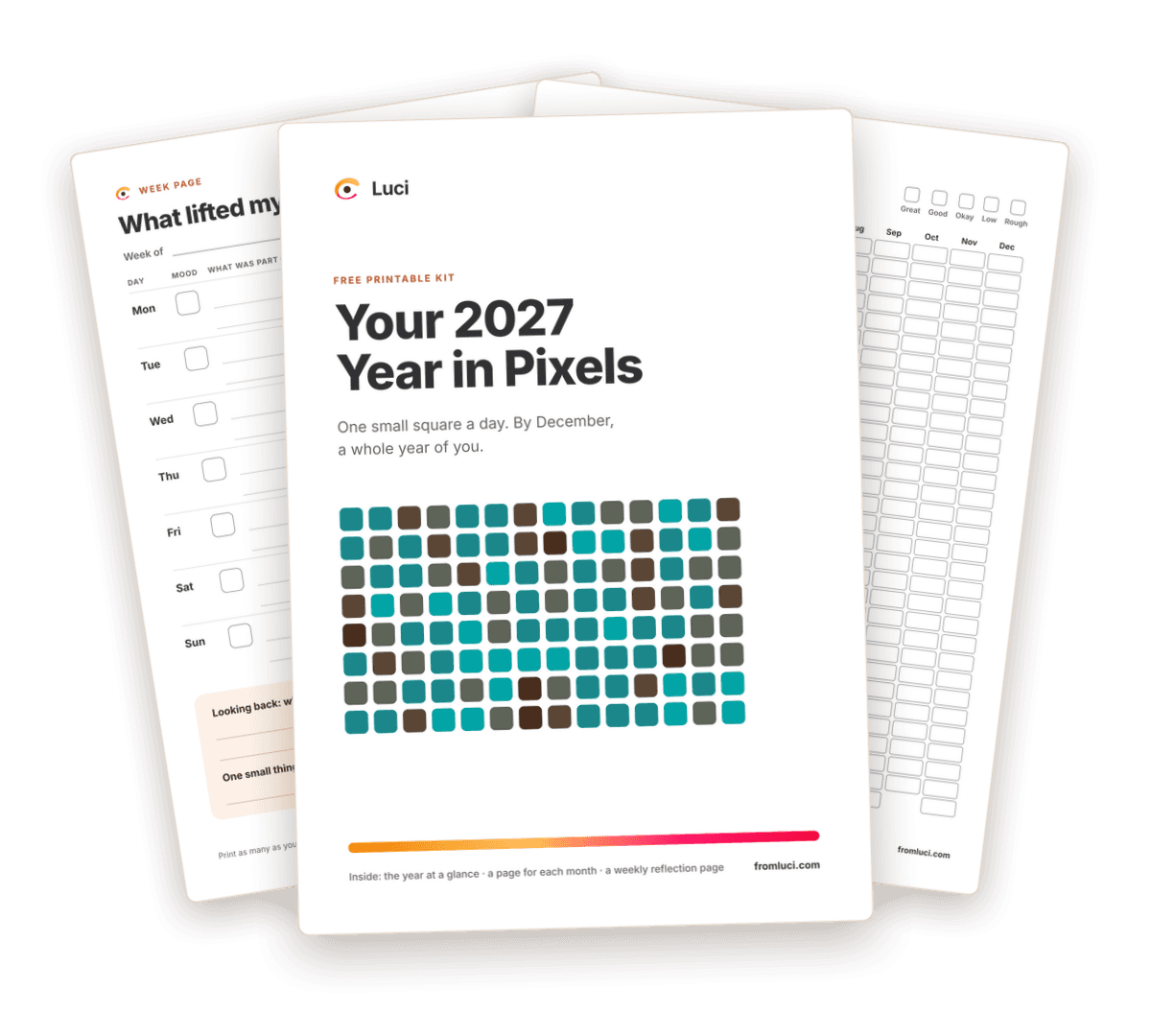
Free printable kit
Your 2027 Year in Pixels, free
A printable grid for every day of next year, plus a weekly page to note what lifted your mood. One square a day.
- The whole of 2027 on one page, a square for every day
- A month page and a week page that ask what lifted your mood
- A one-page guide, so you can start tonight

Luci
Find out what lifts your mood, and have more good days.