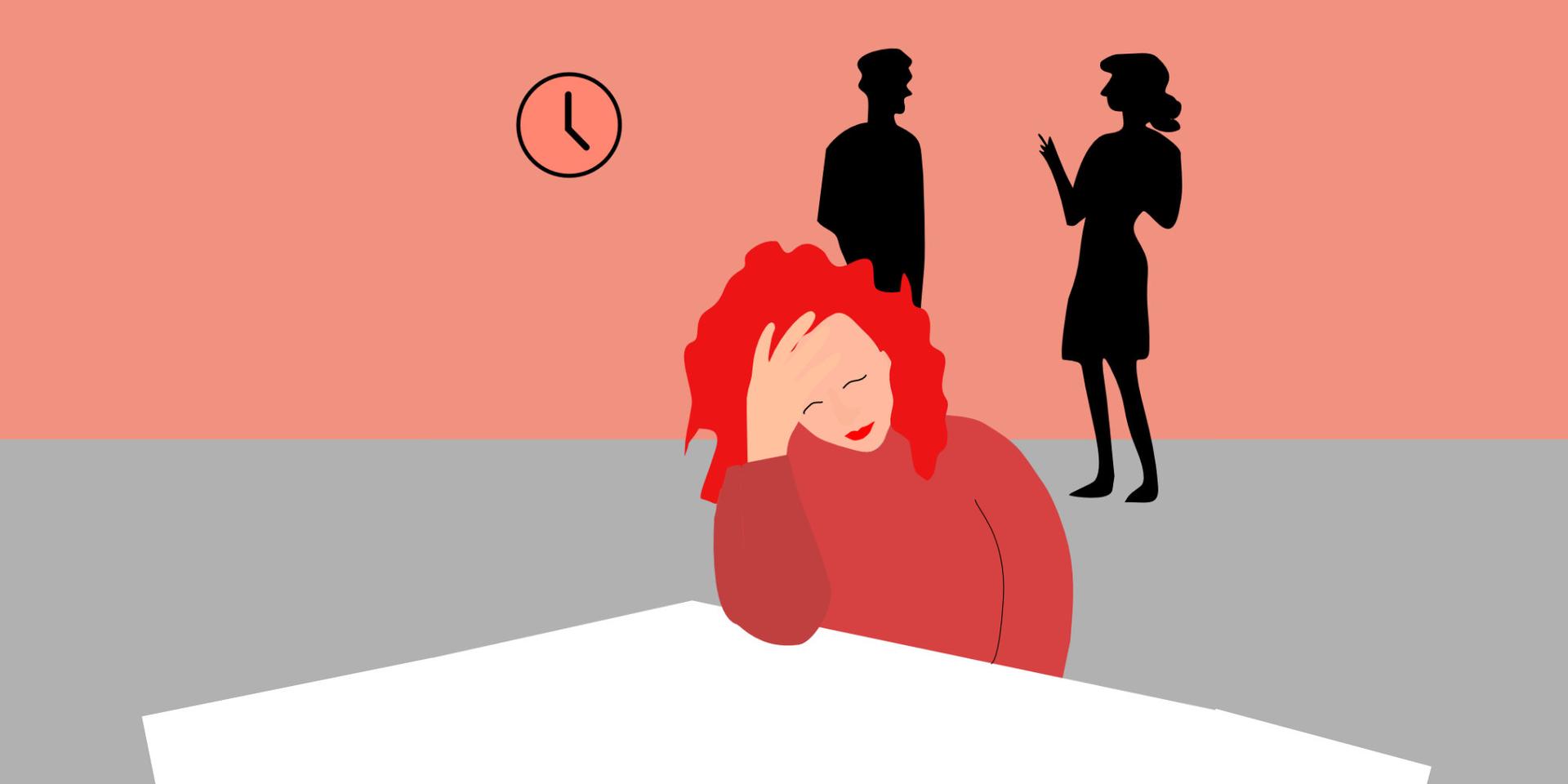
Mind reading is a mental shortcut where we assume what someone is thinking without having much information to go on. It’s a way to navigate the information-dense world and protect our feelings or reinforce our biases. Mind reading is common and often does not cause problems; in fact, it can sometimes help us. For example, if someone’s jaw drops, we often correctly assume they are in awe. However, mind reading can also have dangerous side effects, especially as it can strengthen other thinking biases we may have. Let’s go through some examples, and dig deeper into the impact of mind reading.
Common Examples
Imagine you are going out to a fancy restaurant. Your plan was to go out and eat with a friend, but they had to bail at the last minute, so instead you find yourself there alone. The waiter comes by and takes your order. As you read from the menu you catch something out of the corner of your eye. A couple at another table are looking your way. They hold their gaze for a second, then quickly turn back the moment you start turning your head to get a better look. As the waiter walks away, you find yourself thinking, “Everyone must think I’ve been stood up, eating here alone. They probably think I have no friends.”
This is mind reading in play. There’s no way to know why the couple was watching while the waiter took your order. Yet in your mind you connect being alone in a fancy restaurant with being stood up by a friend, and make an assumption about what everyone else is thinking. The social norm you might hold, that a fancy restaurant means a special occasion, may also play a part here.
Another example. Imagine you are late for work. As you walk in, you see the stares of colleagues and you start thinking, “They must question my professionalism. They must think I’m a messy and unorganized person.” In both examples, you are projecting thoughts without really knowing what others are actually thinking about you, or if they are thinking about you at all.
In both examples, because these are fictional, we can fill in what actually happens. As the waiter was taking your order in the restaurant, the other couple was watching because they were actually trying to order another drink and had failed to get the waiter’s attention. As you started looking, they quickly turned their gaze away, not wanting you to feel uncomfortable. And the colleagues were not thinking about you at all. They had just come out of a meeting and were not yet deeply focused on their work, instead allowing themselves to be distracted by office movement and chatter.
These are cases where mind reading backfired and reinforced doubts and biases we may have. But it can also work in our favor. Instead of having to ask for things, we can often read body language and have a pretty good understanding of what is going on. Your friend is a bit hesitant to ask for another coffee, or your boss is clearly nervous about the meeting.
So rather than trying to remove mind reading, a better approach is to understand where mind reading can quietly act as an echo chamber for all of our doubts, fears and beliefs.
Impact on Your Health
Mind reading is often not a problem directly, but it can lead to behavior changes, such as social anxiety, as we start to act on our false beliefs. Or it may cause very specific problems in relationships. For example, a friend passes you on the street and fails to say hello. You may now think, “They must not like me anymore.” As a result, your behavior towards the friend might change, while in reality, your friend was just lost in thought and did not see you walk by at all.
As our minds map the world around us, the stronger and more frequent a connection becomes, the harder those beliefs are to challenge.
Identify the Mind Reading Thoughts
Luckily, knowing the process of mind reading, we can begin to filter unproductive mind reading from the helpful, by asking ourselves a few questions.
First, identify the mind reading thought you are having. Write down the thoughts you believe others are having about you. Remember that often in mind reading, it is reinforcing a thought you currently have. Channeling all the energy into one or multiple beliefs is what causes confirmation bias. Here are a few questions to challenge a situation where you spot mind reading:
- What is the thought costing me?
- Is this thought benefiting me in any way?
- How likely is this thought to be true?
- Should and can I test if my assumption is correct?
Example Answers
It may seem a bit abstract and daunting at first, so let’s take an example.
You are a student and are very self-conscious about your voice. Every time you hear yourself back it makes you a bit uncomfortable. During a conversation with a professor at college that day, you sensed they were silently laughing at you as you walked away. That was the scenario, now to the questions.
The cost of this thought might be that it is causing you stress and anxiety. After all, you probably need your voice at least a few times per day.
You think that being aware of your voice may help you pronounce words differently, or say them more confidently. But you are not sure that it actually works.
On reflection, you realize that the thought in this case is probably not true. You don’t have any evidence that the professor was laughing at you; you did not even hear a sound as you walked away. And it has not happened before.
Lastly, you conclude that you probably should not ask them if they were actually laughing. After all, the outcome would not change your day or your life in any way, and you are already aware of your own doubts about your voice.
By answering these questions on paper, we give ourselves a moment to reflect on our fears and doubts. And how we may project these onto the real world.
Concluding
Mind reading is extremely common and often not a problem. It can only really impact your well-being once you start projecting your own thoughts and fears onto situations in the real world that may or may not have happened. By applying these strategies, a small dose of CBT you can practice in real life, you can better manage the effects of mind reading and maintain a healthier mental state. Curious what other shortcuts your mind takes? Browse the full mind traps series.
Sources (3)

Luci
Bringing light to your mental health journey.