
Luci vs Finch

Luci vs Finch

Two apps that want you to check in with yourself every day. One gives you a little bird to raise by looking after yourself. The other shows you what moves your mood. Let's go over the categories one by one to see which app is stronger where.

Updated November 24, 2026Compared: Luci 4.3.0 and Finch 3.73.240

Finch is one of the most loved self-care apps there is. It is made by Finch Care, a public benefit corporation in California, holds an App Store Editors' Choice badge and a 4.9 rating from hundreds of thousands of reviews, and has been downloaded more than ten million times on Android alone. The idea is as simple as it is clever: you hatch a baby bird, and it grows as you look after yourself. Tick off a goal, take a slow breath, write a line of gratitude, and your bird has the energy to go exploring.

Luci overlaps with part of that. Both apps want a few minutes of your day, both offer guided reflection, and both work without an account and without ads. The difference is the center of gravity. Finch is built around doing: a list of small daily goals, with reflections and exercises on the side. Luci is built around the mood and the day around it, the people, places, activities, sleep and weather, and reads them back to you in plain words.

So the real question is what you want help with: getting the small things done, or understanding how you feel. Each of the nine sections below looks at one category, gives both apps a fair hearing, and names a winner. The table at the foot collects the verdicts, and the conclusion says who should pick which.

The two apps in brief

Luci

Version 4.3.0

A mood tracker and guided journal that finds the patterns behind how you feel, and keeps everything on your device.

Luci logs a mood in one drag, lets you tag what was going on around it, and turns those entries into plain-language observations about what moves your mood. It doubles as a journal, with free writing and over 550 guided prompts. It is made by a small independent team, needs no account, and does its analysis on your phone.
Finch

By Finch Care Public Benefit Corporation · Version 3.73.240

A self-care pet app where a little bird grows as you complete daily goals and short self-care exercises.

Finch is made by Finch Care Public Benefit Corporation in California. You hatch a bird, name it, and give it energy by completing goals and short exercises: reflections, breathing, movement, soundscapes and quizzes. A fully energized bird goes on an adventure and comes back with a story, and the Rainbow Stones you earn buy outfits, furniture and trips. Friends can send each other good vibes, and a seasonal event runs every month. Finch Plus adds more customization and content. It runs on iPhone, iPad, Apple Vision and Android, in English.

Look and feel

How the app looks, how it feels to use, and how fast an entry is on a day when you have no patience for it.

Luci

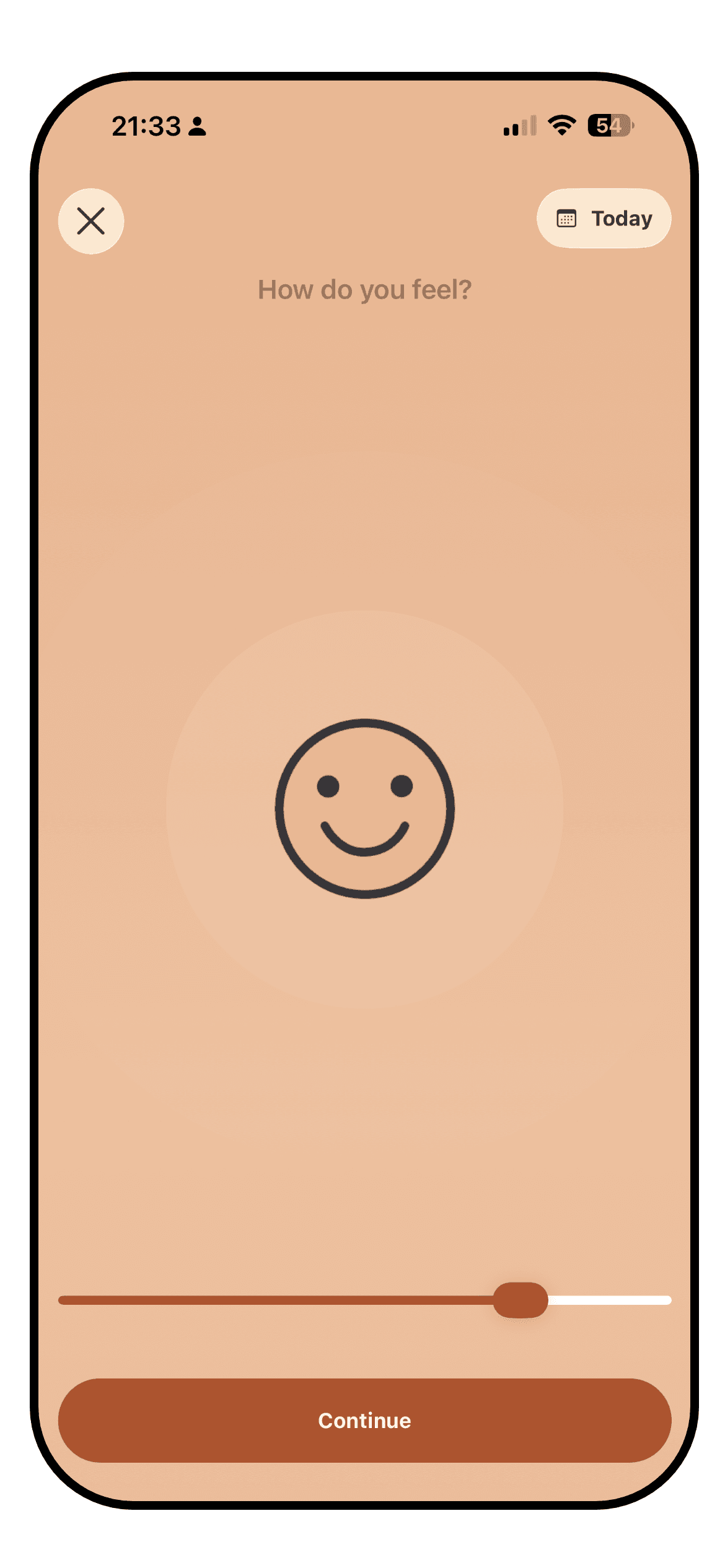
The Luci mood entry screen with the slider mid-drag and influence chips below it

Luci opens on a slider. You drag it to where your mood sits, on a simple, standard or detailed scale shown as numbers, smileys or one of the illustrated icon packs, and that drag on its own is a complete entry. Everything else is optional: the activity, emotion, people and place chips underneath, a photo, a note. The screen is warm and unhurried, with a lot of white space, and the mood is always the first thing you see.

The cost of that depth is a busier interface once you start using it fully. Chips are grouped by kind, so the entry screen grows as you add things to track, and the statistics tab is a stack of cards that rewards a scroll. Luci is warm and tidy, but nothing in it is as easy to love as Finch's bird.

Finch

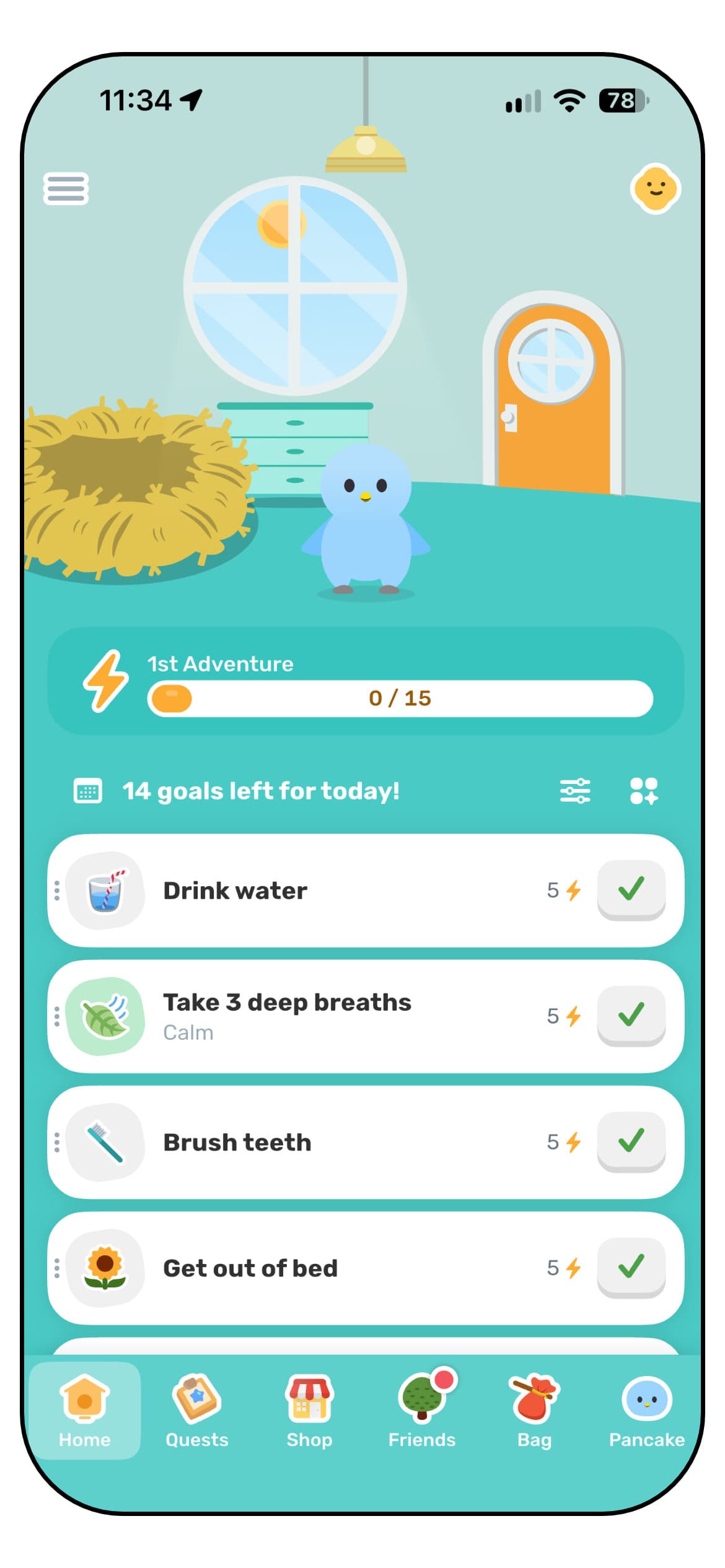
The Finch home screen with the bird in its room and a list of goals for the day

Finch is a joy to open. Your bird is waiting on the home screen, dressed in whatever you last bought it, with today's goals listed underneath. Completing them fills its energy, and once it is full the bird sets off on an adventure and comes back later with a story to tell. The illustrations are soft and consistent, the writing is kind, and nothing scolds you for a bad day. Few apps in any category are this easy to love, and close to 800,000 App Store ratings averaging 4.9 say the same.

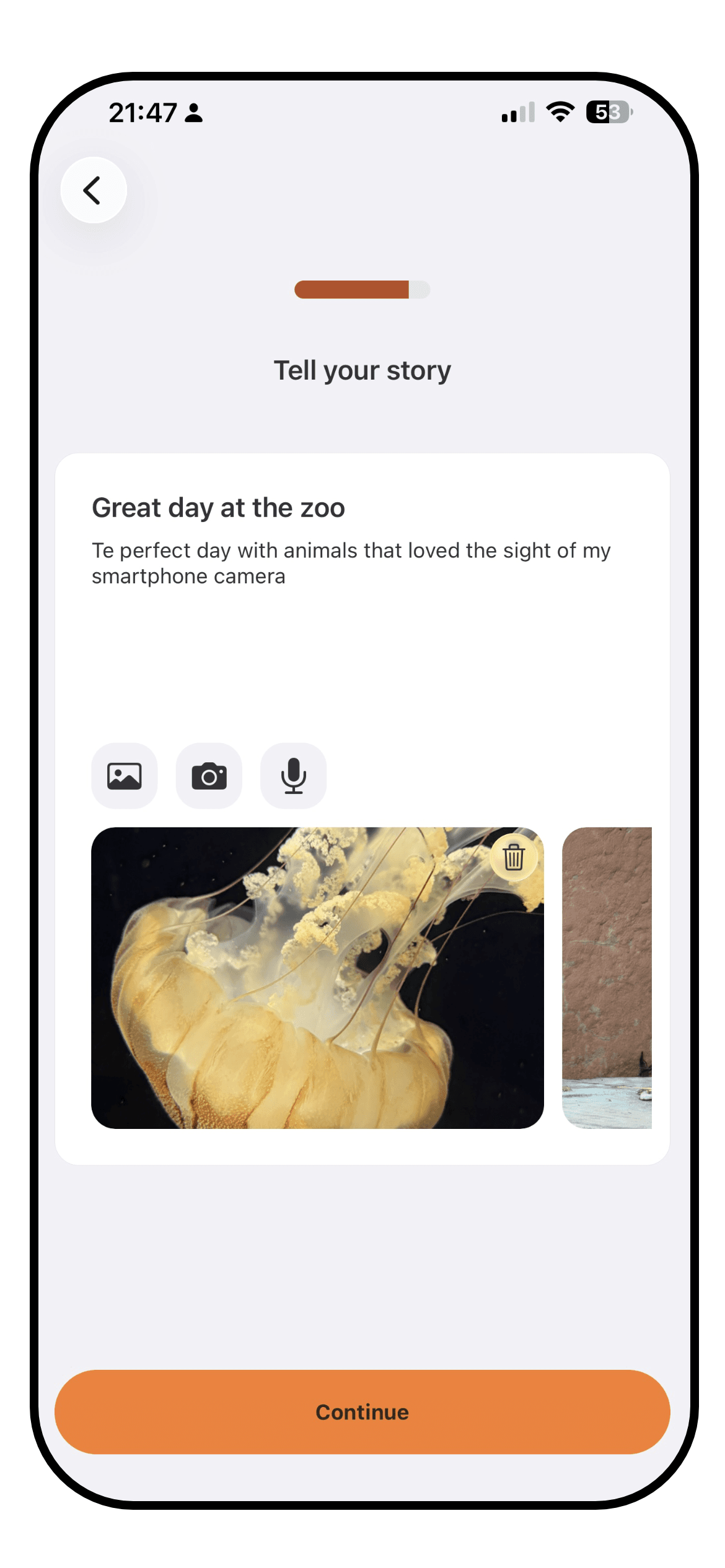
It is also a game, and that is a matter of taste. Goals, quests, a shop, a bag, friends, micropets and seasonal events all ask for attention, and each day opens on a list of tasks to complete in several categories, fourteen of them on our first day. In our test it was hard to find things. Journaling sits under the Gratitude Jar, and we could not find a way to simply tell Finch how we felt. Some long-time users say the bird can start to feel like one more thing to look after. It is a large download too, at over 500 MB.

WinnerTie

A tie. Finch is one of the most charming apps on either store, and the bird gives you a reason to come back that a chart never will. The game around it is a matter of taste, and it can be hard to find what you are looking for. Luci is plainer and calmer, and the mood is always the first thing you see.

Insights

What you can learn from your own entries once you have a few weeks of them: charts, correlations, trends, and how clearly they are explained.

Luci

The Luci statistics screen with a trend line and ranked influences

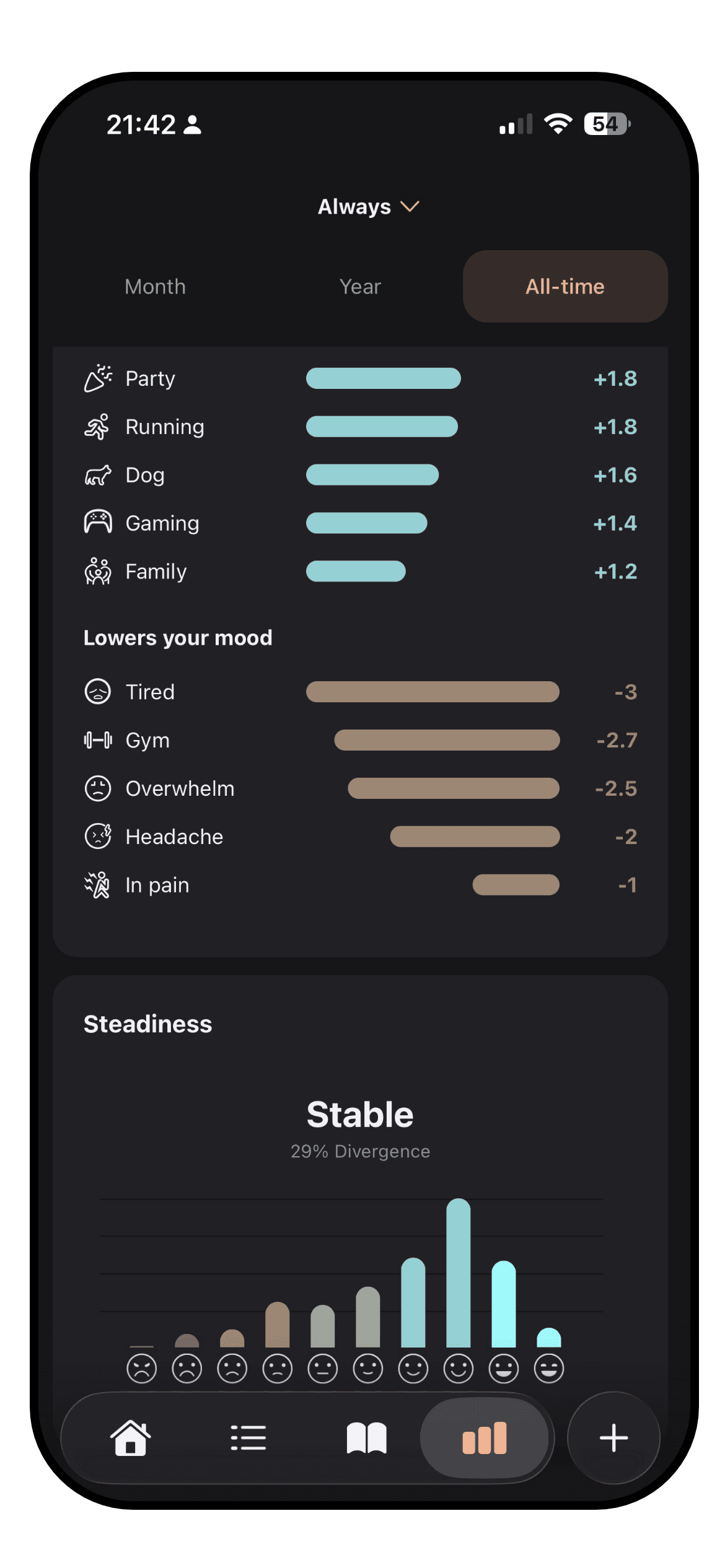
This is the category Luci is built around. Every entry can carry a lot of information, from people, places, activities and emotions to sleep and the thoughts you had. Luci reads across all of your entries and says, in a sentence, what tracks with your better and worse days. It ranks each thing you tag by how far it shifts your average, so you can see that a particular meeting costs you more than a short night does. Each observation says how many entries it rests on, so five weeks of evidence carries more weight than five days.

Under the plain-language patterns are the charts: mood trend over any period, averages you can compare month against month, mood steadiness, time of day, day of the week, weather, location, steps and a word cloud drawn from your notes. The period in pixels view stretches from a single month to your whole history. It all runs on your phone, with no connection or account required, and the pattern discovery is part of the free app.

Finch

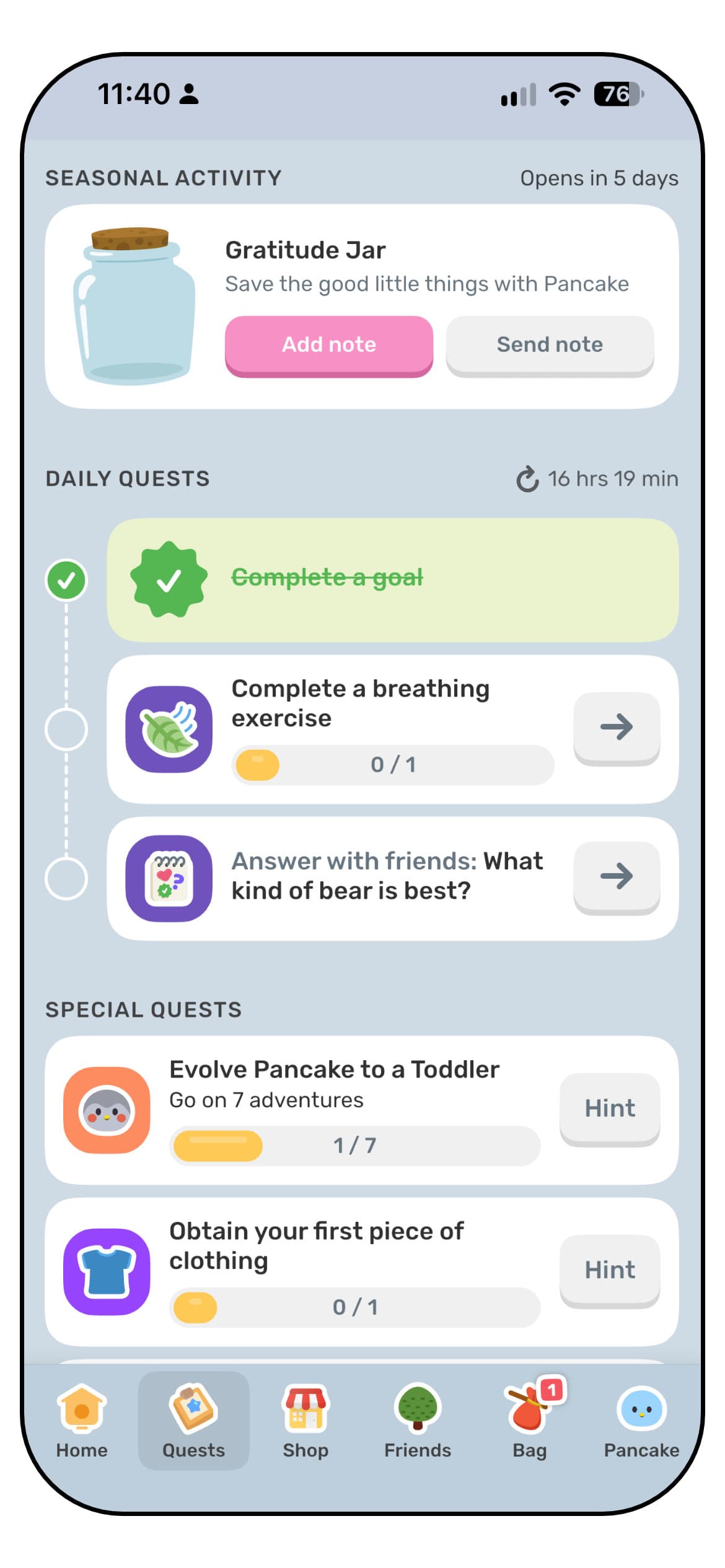
The Finch Quests tab with the Gratitude Jar, daily quests and progress bars

Finch's store listing mentions quick mood checks, mood trends and an Insights view that combines moods, tags, goals and quizzes. In our test we found none of it: no way to tell Finch how we felt, and no mood insights anywhere in the app. What Finch follows from day to day is your goals: which ones you completed, in which Self-Care Areas, and how long your streak is.

That makes Finch a habit tracker more than a mood tracker. There is no ranking of what moves your mood and nothing that says how many entries a pattern rests on, because there is no mood data to work from. People, places, sleep and weather are missing from the picture too. For an app about habits that is a fair trade. It is just a thin place to look when you want to understand a hard month.

WinnerLuci

Luci. Finch follows your habits: goals completed, areas and streaks. In our test there was no way to log a mood and no mood insights to read. Luci ranks what moves your mood by size, says how much evidence each pattern rests on, and covers far more of your day.

Customization

What you can change: the mood scale, the things you track, the icons, the colors, the layout.

Luci

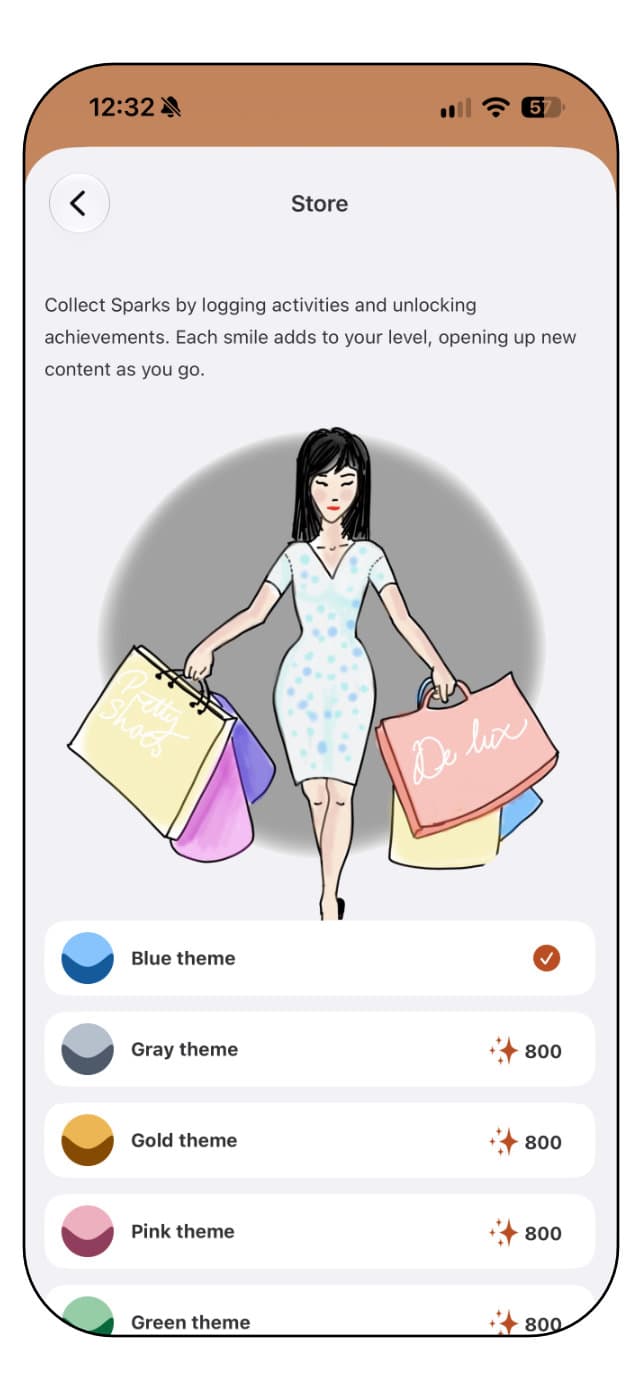
The Luci store of color themes and icon packs unlocked with Sparks

Luci lets you choose the mood scale itself: simple, standard or detailed, shown as numbers, Roman numerals, smileys, or one of five illustrated packs with cats, dogs, frogs, ghosts and glimmers. Everything you track is a chip you can add, rename, remove or pin, across activities, emotions, people, places, nutrition, physical state and thought patterns. The cards on the home screen and the statistics screen can be added, removed and reordered.

Looks are covered too. There are eight color themes, each in light and dark, and the extra themes and icon packs are unlocked with Sparks, which you earn simply by logging. It is the same idea as Finch's Rainbow Stones, on a much smaller scale.

Finch

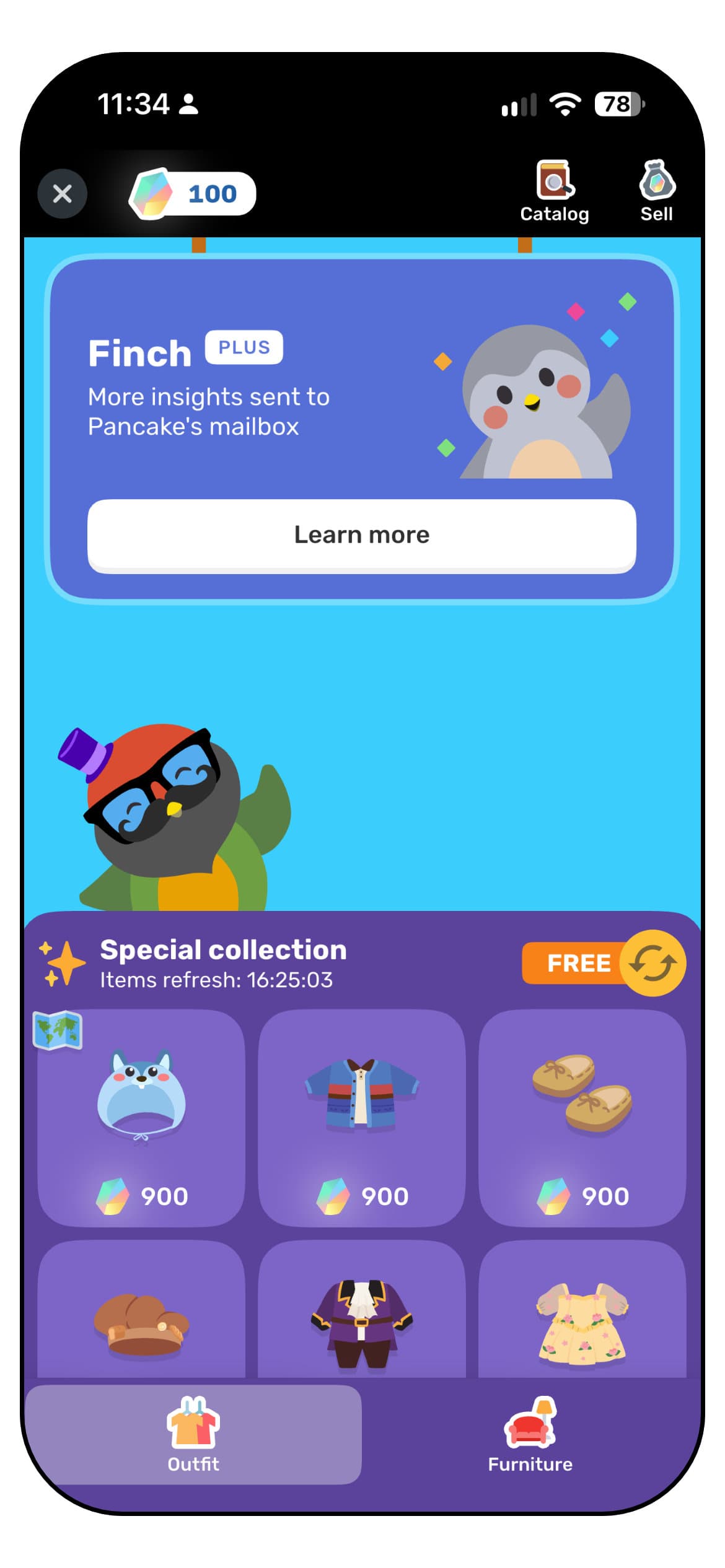
The Finch outfit shop with clothes for the bird priced in Rainbow Stones

Finch turns customization into a game. The bird has a name, pronouns and colors you choose, a wardrobe of outfits, and a home you furnish piece by piece, all bought with Rainbow Stones you earn by completing goals. New items arrive with every monthly event, and micropets hatch along the way. The self-care side bends to you as well: you write your own goals, set how often they repeat, group them into Self-Care Areas, and mute tags or exercises you would rather not see.

What you will not find is tracking to adjust. There is no mood scale to choose and no set of things to tag, because Finch is organized around goals. Some of the personalization is also part of Finch Plus, including an emoji of your choice for every goal, more rare item slots in the shop and the full set of good vibes.

WinnerTie

A tie. Finch lets you dress a bird, furnish its home and write your own goals, and there is always something new to collect. Luci lets you choose the mood scale and how it is drawn, edit every chip you track, and arrange the cards on screen. One personalizes the world around your habits, the other the tracking itself.

Journaling

How good it is as a journal, for people who write more than a line. Formatting, prompts, photos, voice, and reading it back.

Luci

A guided journal prompt in Luci, part-way through an answer

Luci is a journal as much as a tracker. A note can use headings, bold and italics, and carry photos and voice notes. When the blank page is the obstacle, there are over 550 guided prompts across twenty topics, from stress and grief to money and motivation, each with optional guidance on how to approach it and a short tip drawn from cognitive behavioral therapy at the end of a session. You choose the topic, or take the daily prompt.

Because prompts repeat, Luci can show what you wrote last time the same question came round, which is the clearest evidence of change most people ever get. Your notes also feed the statistics: the word cloud and the journal moments card read them back to you. And on the days you want no prompt at all, the page is blank and yours.

Finch

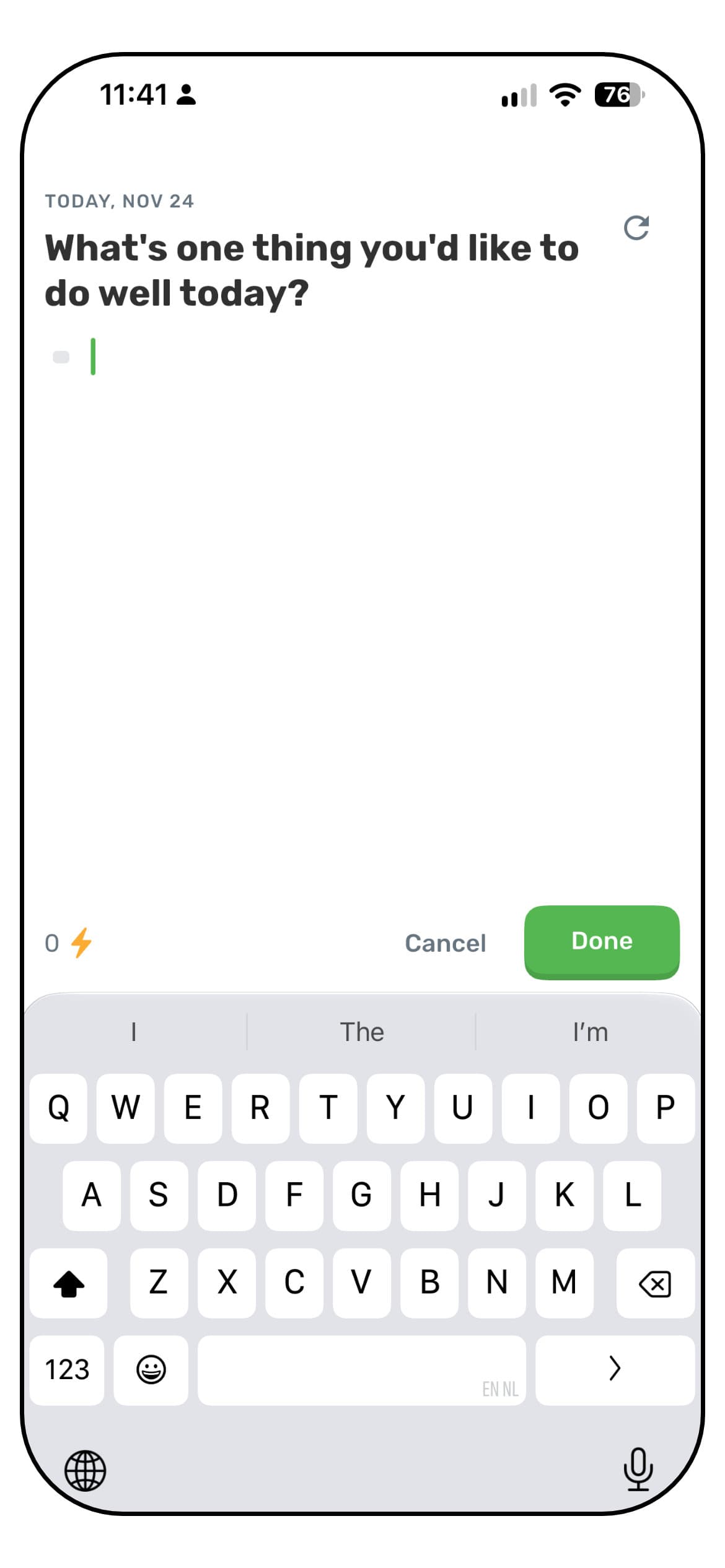
A Finch reflection prompt asking what one thing you would like to do well today

Finch calls its journaling reflections, and they are built to be short. There are guided bullet journaling prompts for clearing your head, gratitude prompts, and a Gratitude Jar that can hold photos. For someone who has never kept a journal, one kind question from a bird is an easy way in.

It is a light journal by design, and not an easy one to find. In our test the journal prompts were tucked away under the Gratitude Jar, and it took a while to get to them. A reflection is an answer to a prompt, usually a line or a few. We found no voice notes, no text formatting and no topics of prompts to work through, and additional reflection prompts are part of Finch Plus. If you want to write at length, Finch will feel small.

WinnerLuci

Luci. Over 550 guided prompts, formatting, photos and voice notes, against short guided reflections that are hard to find. Finch's prompts are a gentle start, which is what they are for.

Other features

Everything outside the core loop: goals and habits, reminders, widgets, articles, achievements, watch apps.

Luci

Logging a mood in the Luci app on an Apple Watch

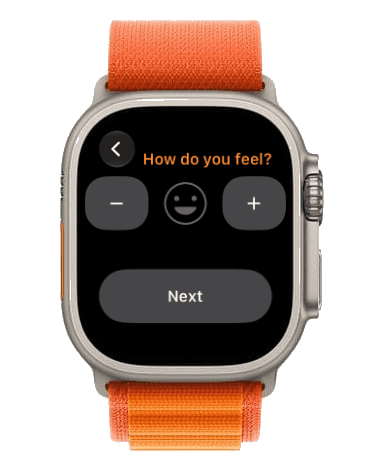
Outside the core loop Luci has home screen and lock screen widgets, an Apple Watch app with its own complications, reminders, and a set of mental health articles on topics like thinking traps and CBT that cite their sources at the foot of each piece. Logging earns Sparks, which unlock themes and icon packs, and there are achievements for keeping at it.

What Luci does not have is a habit or goal tracker, breathing exercises, soundscapes, or friends to cheer you on. It is a place to log and reflect rather than a companion that gets you through a to-do list.

Finch

A Finch soundscape with home sounds to choose from and the longest lengths locked

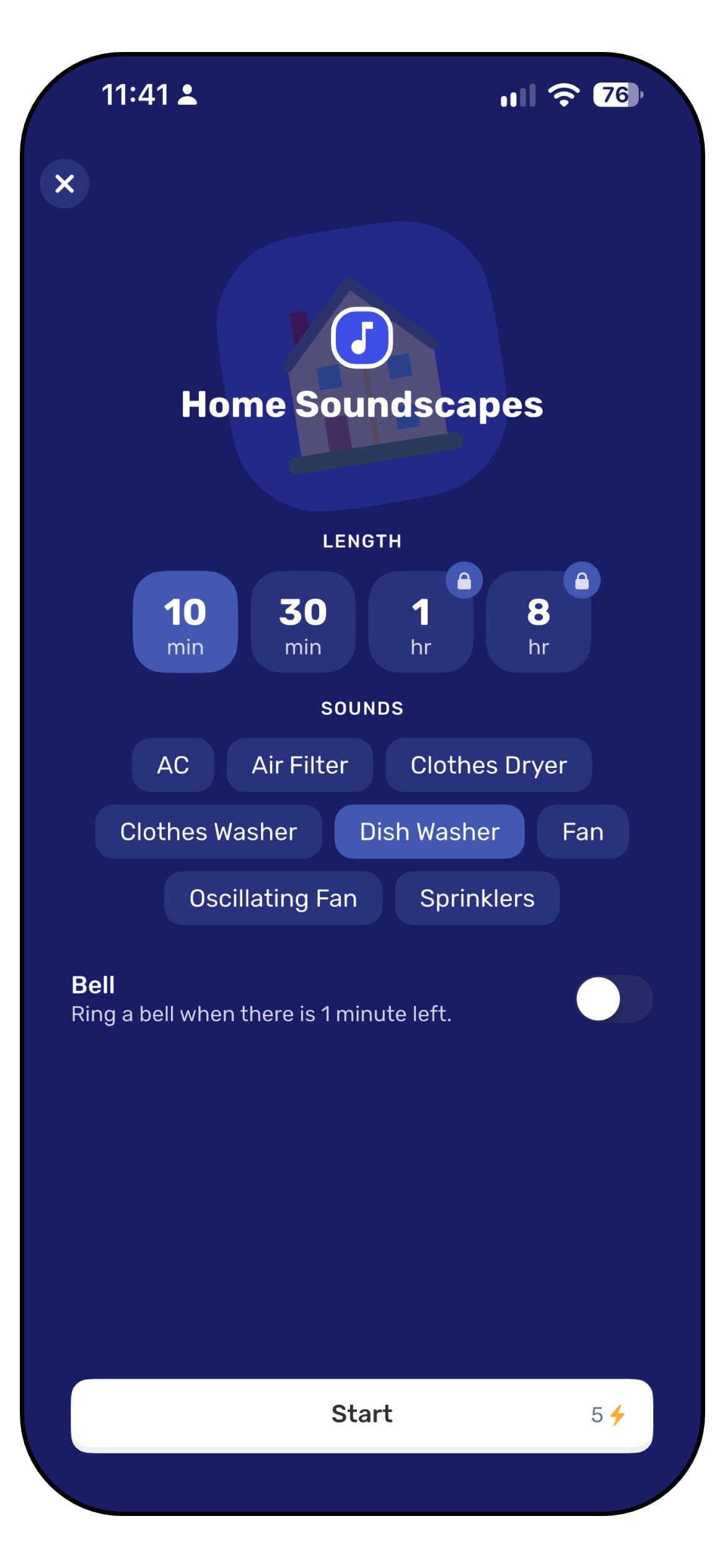
This is Finch at home. Goals are a full habit tracker, with repeats, reminders, snoozing and Self-Care Areas. Around them sit guided breathing, soundscapes, movement, focus timers, quotes, quizzes and a First Aid Kit for hard moments. Daily quests and monthly seasonal events keep it fresh, streaks reward showing up, and Pause Mode freezes your streak when you need a break. Friends can send each other good vibes and share a goal as Goal Buddies, and a home screen widget shows what your bird is up to.

The basics of all of it are free. Finch Plus unlocks every breathing, movement and soundscape option, all timer lengths and all quizzes. There is no Apple Watch app.

WinnerFinch

Finch, clearly. A habit tracker, breathing, soundscapes, movement, timers, quizzes and friends, against a watch app, articles and achievements. If you want one app to get you through the day, Finch has far more in it.

Context and integrations

How much of the world around an entry the app can capture, by hand or from your phone: sleep, steps, weather, places, people, health data.

Luci

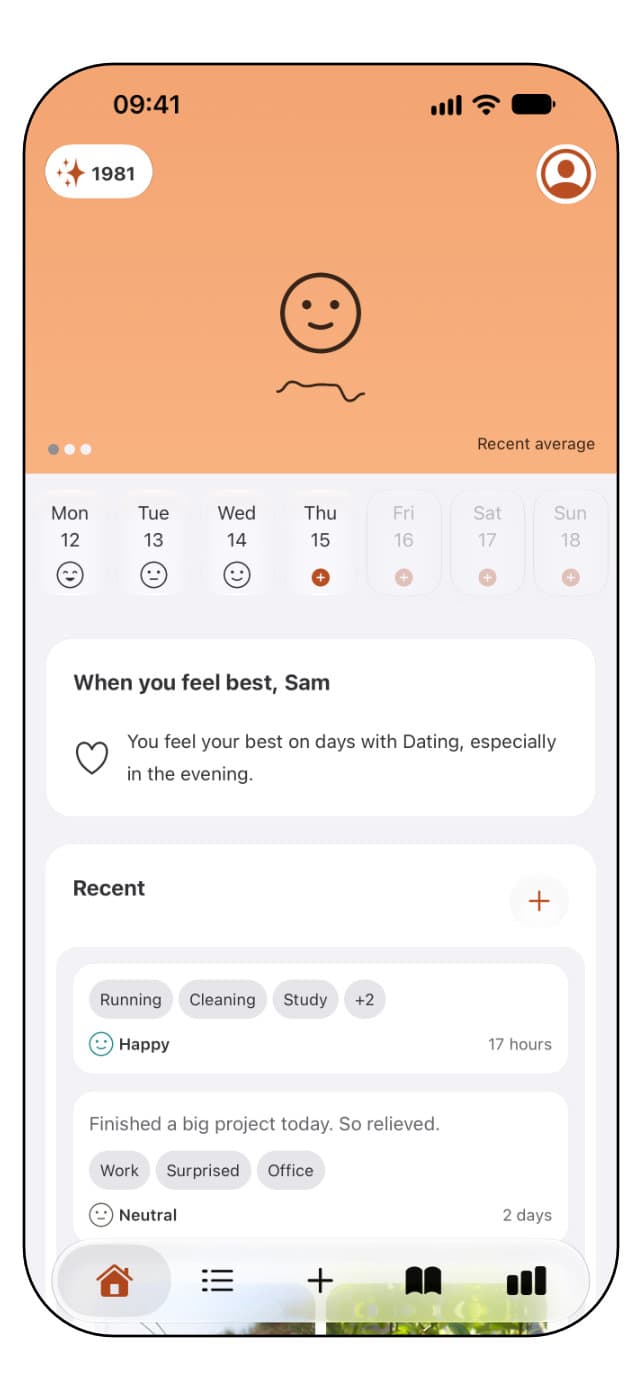
The Luci home screen with recent entries, their chips, and when you feel best

An entry in Luci can carry a lot of the world around it. People, places and activities are chips. Sleep and steps come in from Apple Health on iPhone once you allow it, so they sit beside a mood without being typed. A geotag attaches your location and the weather at the moment of writing, and a place can be pinned to a chip so it is selected automatically when you write from there. Nutrition, energy, rest and tension have their own sets, and so do recurring thought patterns like worry or self-judgement.

All of that becomes something the statistics can use. The steps card, the weather card, the location card and the people card each show how your mood moves with that input, and the impact ranking puts them all on one list. Health data read this way stays on your device. The limits are real, though. Luci reads sleep and steps only, and on Android the health connection is not currently available.

Finch

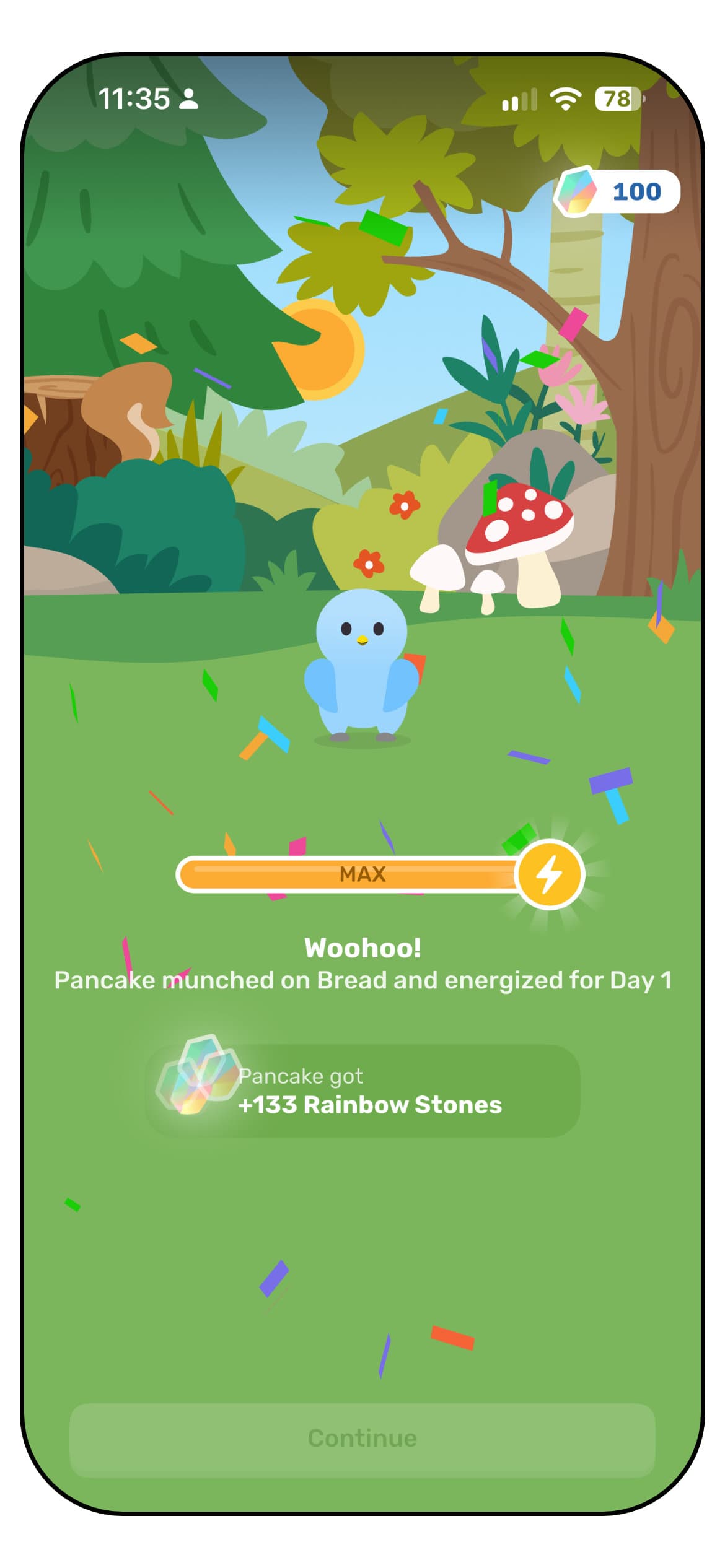
Finch celebrating a fully energized bird with confetti and Rainbow Stones

In Finch, the record of a day is what you did. Completed goals show whether you walked, drank water or called a friend, sorted into Self-Care Areas. That is useful in its own way, because it shows which habits are holding.

There is no mood entry to hang context on, and everything is entered by hand. We found no connection to Apple Health or to Google's health services, so sleep and steps are not read from your phone, and there is no weather or location. There are no tags for the people you were with or the place you were in. Finch knows what you ticked off, and little else about the day.

WinnerLuci

Luci. People, places, activities, sleep, steps, weather and location sit beside each mood as data the statistics can use. Finch records which goals you completed, and leaves the rest of the day out.

Privacy

Where your entries live, who can read them, whether an account is required, and how easily you can leave with your data.

Luci

Luci needs no account and no email address. Entries live on the device you wrote them on, and every statistic is calculated there too, so the app works in full with no connection. Sync is off until you turn it on. Switch it on and your journal follows you between phone, tablet and watch, encrypted, tied to an account you create at that point and not before. Nothing you write is used to train anything, and nothing is sent to a model to be read.

Leaving is a two-tap operation: export the lot as a readable PDF or as a backup file you can import again later. If you never turned sync on, there was never anything on our side to delete; if you did, there is a page in the footer that explains exactly how to remove it. Purchases go through Apple or Google, and crash reports are optional and carry no journal content.

Finch

Finch takes privacy more seriously than most apps its size. It works without an account, and by default everything stays on your device. Creating an account, with a phone number or an email address, turns on a daily cloud backup that Finch encrypts, and an Advanced Data Protection option gives you a recovery key that only you hold, so that Finch cannot read what you wrote. You can delete your data from the settings, and make a backup file by hand. Its privacy policy says it does not sell personal information and runs no ads for other companies.

It is a little more open than Luci. Finch's App Store privacy label lists identifiers linked to you for analytics and personalization, and its policy describes sharing some identification and activity information with analytics and advertising services, to measure Finch's own campaigns. Without Advanced Data Protection, Finch holds the key to your cloud backup. Finding friends through your contacts is optional and uses scrambled phone numbers. The company is based in the United States and handles data there.

WinnerLuci

Luci, narrowly. Both work without an account, keep entries on your device by default and show no ads. Finch's optional backup can be locked with a key only you hold, which is better than most. Its privacy label still lists identifiers linked to you for analytics, and its policy shares some data with advertising services for its own campaigns. Luci does its analysis on the phone and syncs only if you ask it to.

Platforms

Where the app runs: iPhone, Android, iPad, watch, desktop, and whether your entries follow you between them.

Luci

iPhone, iPad, Apple Watch with its own app and complications, Mac with Apple silicon, Apple Vision, and Android. With sync on, one journal across all of them. Widgets on iOS and Android home screens, and the app in fourteen languages.

Finch

iPhone, iPad, Apple Vision and Android. There is no Mac app and no Apple Watch app. A Finch account backs your bird and your history up to the cloud once a day and restores them on a new phone. A home screen widget on iOS and Android. English only.

WinnerLuci

Luci. Both cover iPhone, iPad, Vision and Android. Luci adds an Apple Watch app and a Mac app, and comes in fourteen languages where Finch is in English only.

Pricing

What is free, what is paid, and roughly what the paid tier costs. Prices vary by country, so these are the options and a rough figure, not a quote.

Luci

Free, with no account, no ads and no time limit: mood logging, journaling, photos and voice notes, the statistics and pattern discovery, six of the twenty prompt topics, widgets and the watch app. Luci Premium adds sync across devices, the remaining guided prompt topics and the advanced statistics.

Premium is a subscription at roughly $6 a month or $35 a year, or a one-off lifetime purchase at roughly $200. A subscription bought on one platform works on the other once you sign in. There are also optional tips, which buy nothing and simply support a small team.

Finch

Finch is free to use, with no ads, and its makers say the core self-care features will always be free: the bird, goals, reflections, good vibes and seasonal events. After three days you get a short preview of Finch Plus, which ends by itself and charges nothing.

Finch Plus is roughly $10 a month or $70 a year, with a family plan at roughly $120 a year and a seven-day trial on the yearly plan. It adds extras: more reflection prompts, every breathing, movement and soundscape option, all quizzes, an emoji of your choice for every goal, and more from the shop and the seasonal events. There is no lifetime purchase. If you cannot afford it, a monthly raffle paid for by supporters called Guardians gives subscriptions away.

WinnerTie

A tie. Finch's free tier leaves out nothing essential, and Plus is extras. Luci's free tier includes the statistics and pattern discovery, and when you do pay, Premium costs roughly half as much per year and has a lifetime option. Neither shows ads.

The short version

Every category from the page above, in one table. Stars are our rating on a five-point scale; platforms and pricing are listed as they are.

CategoryLuciFinchWinner
Look and feelSlider entry, warm and roomy, busier once fully set upCharming bird and world; the game feel is a taste, and things are hard to findTie
InsightsPlain-language patterns, ranked influences, trends, freeGoal progress and streaks; no mood insights foundLuci
CustomizationThree scales, eight icon sets, eight themes, custom chips, movable cardsBird, outfits, home, your own goals and areasTie
JournalingRich text, photos, voice, 550+ prompts, compare past answersShort guided reflections under the Gratitude Jar, photosLuci
Other featuresWatch app, widgets, articles, achievements, SparksHabit goals, breathing, soundscapes, movement, quizzes, friends, widgetFinch
Context and integrationsApple Health sleep and steps, weather, geotag, people, placesCompleted goals only; no health, weather or locationLuci
PrivacyOn device, no account, on-device analysis, opt-in encrypted syncOn device by default, optional encrypted backup, analytics identifiersLuci
PlatformsiOS, iPadOS, Android, Apple Watch, Mac, VisioniOS, iPadOS, Android, Vision; no watch or Mac app; English onlyLuci
PricingFree core, no ads; Premium ~$6/mo, ~$35/yr, ~$200 lifetimeFree core, no ads; Plus ~$10/mo, ~$70/yr, family ~$120/yrTie

Conclusion

On the count, Luci takes five categories, Finch takes one, and three are tied. The count hides how different the two apps are. Finch is a self-care companion and, at heart, a habit tracker: it gets you to drink the water, take the walk and say one kind thing about your day, and it turns that into a game. Whether the game suits you is a matter of taste. Luci is a mood tracker. It asks how you feel, records the day around it, and shows you what moves your mood.

Where Luci is stronger

  • Insight in plain words. It explains what moves your mood, ranks it by size, and keeps pattern discovery free.
  • Context filled in for you. People, places, sleep, steps, weather and location sit beside a mood without being typed.
  • Journaling. Over 550 guided prompts, formatting, photos, voice notes, and what you wrote last time the same question came round.
  • Reach. An Apple Watch app, a Mac app, and fourteen languages.

Where Finch is stronger

  • Charm. A bird that grows as you do is one of the best reasons there is to open an app every day.
  • Habits. Daily goals, reminders, streaks and Self-Care Areas turn small tasks into a routine.
  • Self-care tools. Breathing, soundscapes, movement, timers and a First Aid Kit in the same place.
  • Company. Friends, good vibes and Goal Buddies, for people who do better with someone alongside.

Choose Luci if

  • You want to know why some days are harder, and would like the app to explain what it found in plain words.
  • You want sleep, steps, weather and the people you were with in the picture without typing them in.
  • You want to write, with a prompt when you need one and a blank page when you do not.
  • You wear an Apple Watch, or want the app in a language other than English.

Choose Finch if

  • You want help getting small things done, and a habit tracker that feels like a game.
  • A little bird to look after is what will keep you coming back.
  • You want breathing, movement and soundscapes in the same app as your goals.
  • You would like friends in the app to cheer you on.

A fair way to decide is to ask what you want help with. If the answer is “doing the small things that are good for me”, Finch is one of the best ways to build that habit. If the answer is “to understand what in my days is behind my moods”, Luci is built for that, and does it on your phone. Both are free to try, and the two sit side by side more easily than most pairs.

How this comparison was made

Both apps were used side by side on the versions above, on an iPhone, with the free tier and the paid tier of each. Ratings are on the same five-point scale used across every comparison on this site. Finch is a registered product of its maker and is not affiliated with Luci. Prices are rough US figures and change by country; check the store listing for yours.

Common questions

  • Is Finch free?

    Yes. Finch's core features are free, with no ads: the bird, goals, reflections and seasonal events. Finch Plus is an optional subscription that adds more customization and content, at roughly $10 a month or $70 a year. Luci is free to use too, with mood tracking, statistics, pattern discovery, photos and voice notes included, and an optional Premium tier for sync, the full set of prompt topics and the advanced statistics.

  • Is Finch a mood tracker?

    Not really. Its store listing mentions mood checks and trends, but in our test we could not find a way to tell Finch how we felt, or any mood insights. What it does well is habits: daily goals, streaks and short self-care exercises such as breathing and soundscapes, wrapped in a game. If tracking your mood and understanding what moves it is the main thing you want, a dedicated mood tracker like Luci goes much further.

  • Can I move my entries from Finch to Luci?

    Not directly at the moment. Luci can import from Daylio and Pixels, and if you would like Finch on that list, tell us at [email protected], because requests are how features get prioritized.

  • Can I use Luci and Finch together?

    You can, and they fit together better than most pairs, because they do different jobs. Some people keep Finch for their daily goals and the bird, and use Luci for mood check-ins, journaling and the patterns behind them.

  • How current is this comparison?

    The date and version numbers at the top are the honest answer. Finch ships an update almost every week and runs a new seasonal event every month. If you spot something that is no longer true, we would rather hear about it than have you rely on it.

Try Luci for yourself

Free, works offline, no account needed. The fairest comparison is a week of your own entries.

Download Luci on the App StoreGet Luci on Google Play